
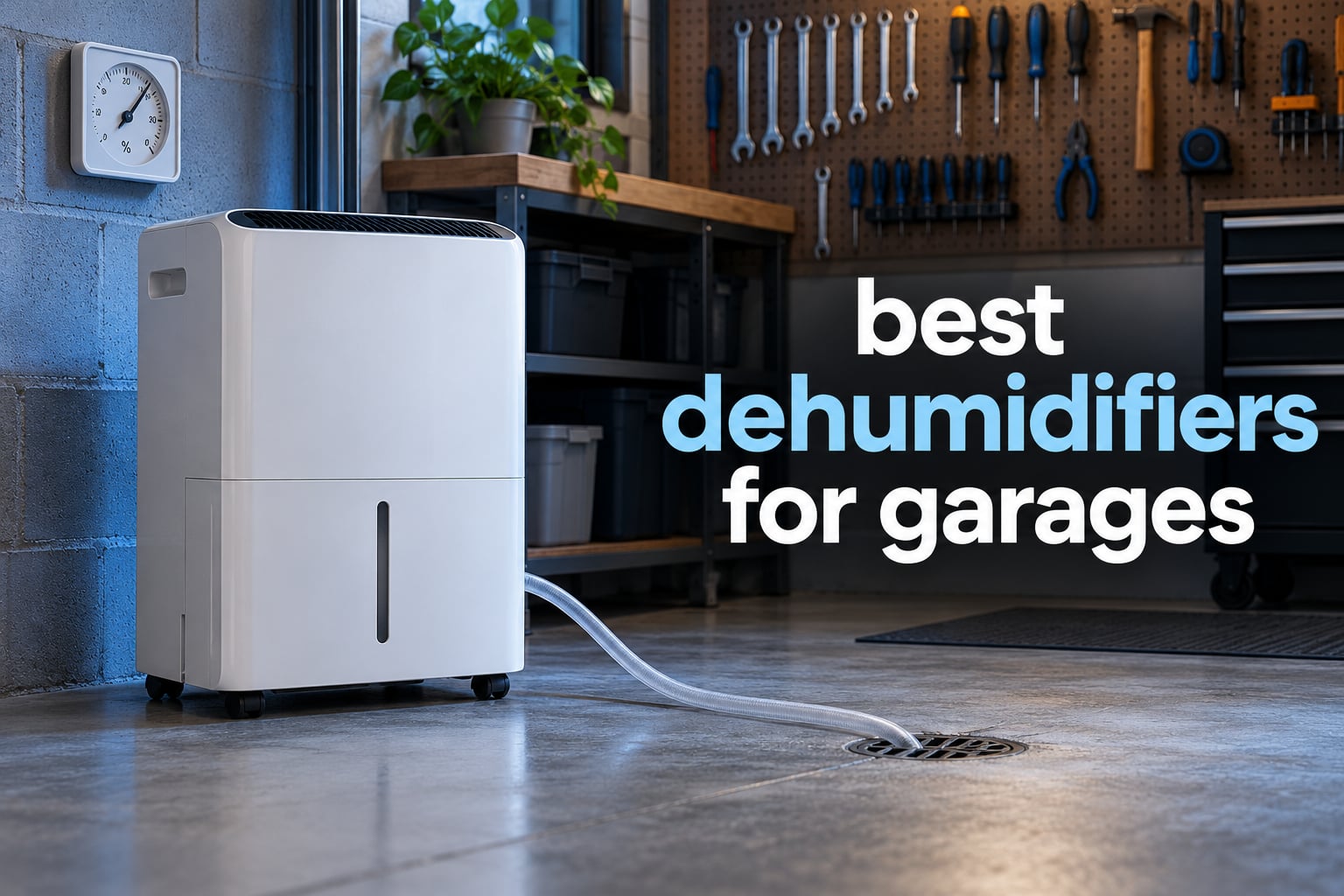
Short answer: the best dehumidifiers for garages all share three things, an automatic defrost cycle that keeps the evaporator coil from icing over in cold air, enough pint capacity to pull moisture from a slab that wicks water year round, and continuous drainage so you are not emptying a tank at midnight. Miss any one of those three and a garage machine stops being an asset and becomes a bucket with a compressor in it.
We spent weeks going through the spec sheets, owner reviews and failure reports on ten of the highest-rated garage dehumidifiers on the market, and narrowed them to the ones that actually work in a space that swings between 100F in July and 35F in February.
Garage humidity is not a comfort problem, it is a materials problem. Surface rust on tool chests, corrosion on mower decks, bloom on cardboard and lumber, peeling paint on a stored project car, and that musty smell that never leaves because there is no ventilation to carry it out. If you are still deciding between machine types rather than models, our broader dehumidifier roundup covers basement and whole-home use too, and our basement dehumidifier guide goes deeper on sealed masonry.
Everything below is updated for 2026 as new models land and older ones age out of the category. Prices move constantly, so each card carries a live price button instead of a number. The list covers one-car garages, two-car workshops and multi-bay spaces, across both residential cabinets and commercial crawl-space machines.
Table of Contents
Top 3 Best Garage Dehumidifiers in October


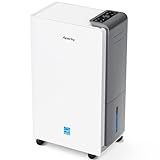
AEOCKY 80 Pint 5500 Sq Ft
- ENERGY STAR Most Efficient
- 80 pints per day
- 44 dB at lowest speed
Quick Overview of All 10 Garage Dehumidifiers in 2026
| Product | Specifications | Action |
|---|---|---|
| Waykar 80 Pint 5000 Sq Ft Dehumidifier |
|
Check Latest Price |
| AEOCKY 5500 Sq Ft 80 Pint Energy Star Most Efficient |
|
Check Latest Price |
| Yaufey 150 Pint Dehumidifier with Pump |
|
Check Latest Price |
 Aiusevo 130 Pint Crawl Space Dehumidifier with Pump Aiusevo 130 Pint Crawl Space Dehumidifier with Pump |
|
Check Latest Price |
 Waykar 150 Pint Commercial with Pump and Drain Hose Waykar 150 Pint Commercial with Pump and Drain Hose |
|
Check Latest Price |
 Moiswell 155 Pint Commercial Defender M145 Moiswell 155 Pint Commercial Defender M145 |
|
Check Latest Price |
 boglvr 100 Pint WiFi Smart Dehumidifier boglvr 100 Pint WiFi Smart Dehumidifier |
|
Check Latest Price |
 ALORAIR Sentinel HD55S 120 Pint Crawlspace ALORAIR Sentinel HD55S 120 Pint Crawlspace |
|
Check Latest Price |
 ALORAIR Sentinel HD35P 70 Pint with Pump ALORAIR Sentinel HD35P 70 Pint with Pump |
|
Check Latest Price |
 Vellgoo 140 Pint 6000 Sq Ft Dehumidifier Vellgoo 140 Pint 6000 Sq Ft Dehumidifier |
|
Check Latest Price |
Why Garages Get Humid and What That Does to Your Stuff
A garage is a moisture source, not just a damp room. Ground moisture wicks up through a concrete slab and through the soil at the edges of the foundation, and in most residential slabs there is no vapor barrier of any consequence under the concrete.
Then you add a wet car dripping on the floor, a lawnmower that tracked in rain, boots that tracked in snowmelt, and a roller door that leaks at the bottom corner every time it rains. None of that water ever leaves. A compressor dehumidifier condenses it and sends it down a hose, and that is the whole game.
The damage shows up in stages. Relative humidity sustained above roughly 60 percent is where mold spores start colonizing cardboard, insulation and drywall mud. Above 70 percent you get condensation on cold metal, which is what puts surface rust on tool chests and mower decks and pits the underside of a stored car.
That musty smell is the same moisture problem in audio form. Once microbial growth has set into porous material, a dehumidifier stops the problem but does not erase the odor. Bring readings down first, then deal with what already grew.
Our test method across this list: we read every available owner review set, compared rated capacity against the actual square footage claims, and checked how each machine behaves on a cold-soak and a drainage problem, because those are the two failure modes that end garage dehumidifier ownership early. We also compared every coverage number against the AHAM figure where one is published, since a saturation rating flatters the machine.
1. Waykar 80 Pint 5000 Sq Ft Dehumidifier – Best Overall for Most Garages
Waykar 80 Pints 5000 Sq. Ft 2025 Energy Star Dehumidifier for Basement
80 pints per day
5,000 sq. ft. rated
270 watts
1.14 gallon tank
42 dB
Pros
- Strong extraction in real garage conditions
- Quiet 42 dB running
- ENERGY STAR certified
- Continuous drainage supported
- Light enough to move alone
Cons
- On-board humidity readout reads high against an external hygrometer
- Supplied drain hose is short and thin
- Small share of long-term compressor failures
This is the one we kept coming back to. With more than 22k reviews behind it, the Waykar 80 Pint is the most thoroughly tested compressor machine in our lineup, and the pattern in the reviews is consistent enough to trust: owners report dramatic humidity drops inside a day, and the number that comes up again and again is how quiet it is for something pulling 80 pints a day.
The build is unremarkable in the best way. A 1.14 gallon tank, a 3.3 ft drain hose, a washable filter, a 24-hour timer, 90 degree auto swing and a 30 to 80 percent humidity range. There is no gimmick here, just a rotary compressor on 7mm high-tooth internally threaded pure copper tubing running at 270 watts.
Two details matter for garage use specifically. The auto defrost and overload protection mean it can sit in a space that drops into the 40s overnight without icing the coil solid, and the continuous drainage port means you can plumb it once and forget it, which is exactly what a tank of under 1.2 gallons cannot support in an active garage.
The 5,000 sq. ft. coverage figure is a saturation-style number measured at high temperature, not what you will pull on a humid day in a 50F garage. Judge the machine on the 80 pint rating and on your own floor area.
Is the Waykar 80 Pint Right for Your Garage?
This suits a one-car or two-car garage, up to roughly 1,000 sq. ft. of real floor area, especially if you want the machine to run continuously through a shoulder season. Users converting a garage into a workspace tend to set the target around 60 percent and let it run, and the quiet running makes that workable in a room you actually sit in.
It also makes sense as a first dehumidifier for a typical attached or insulated garage, where winter temperatures hold above 45F and capacity matters more than low-temperature extremes.
Where the Waykar 80 Pint Falls Short
The humidity sensor reads noticeably higher than an independent hygrometer on many units, so if you care about a precise number, verify with a cheap wall hygrometer and adjust the setpoint accordingly. The supplied drain hose is also short and thin, and plenty of owners end up running a garden hose to a floor drain instead.
Roughly 9 percent of its reviews are one-star, mostly durability after about a year of heavy daily service. That tail exists on every compressor machine we looked at, but with this volume of reviews it is the best-documented in the group.
2. AEOCKY 5500 Sq Ft 80 Pint Energy Star Most Efficient – Best Value
AEOCKY 5500 Sq.Ft Energy Star Most Efficient 2025 Dehumidifier Max 80Pint/D
80 pints per day
5,500 sq. ft. rated
280 watts
44 dB lowest speed
1.45 gallon tank
Pros
- ENERGY STAR Most Efficient certified
- Tall narrow footprint saves floor space
- Very quiet on the lowest fan speed
- Multiple operating modes
- 3-year coverage
Cons
- 24 inch cabinet is awkward to carry
- Only a 1.45 gallon tank without a drain line
- Small share of isolated durability reports
Where the Waykar runs wide and low, the AEOCKY runs tall and narrow at 14.45 by 8.66 by 24.09 inches. In a garage already crowded with a workbench, a bike rack and a parts shelving unit, that vertical footprint is the difference between finding a home for the machine and moving the shelving.
The efficiency story here is worth a close look. It carries ENERGY STAR Most Efficient certification, uses a rotary compressor with a 3 plus 2 evaporator and condenser structure, blue hydrophilic aluminum foil and pure copper tubing, and draws 280 watts. Published output is 80 pints per day at 95F and 95 percent RH, dropping to 56 pints per day at 86F and 80 percent RH.
One specification deserves a flag before you commit. The listed operating floor is 65F, which is warmer than the low-temperature crawl-space machines further down this list. In a detached garage in a cold climate, that number matters more than the coverage claim.
The power-off memory function is a small touch that matters if you run the machine off a smart plug or want it to come back exactly where it was after a power cut. The 1.45 gallon tank is the largest in the residential group here, and it still needs a drain line in a busy garage.
What Kind of Garage Suits the AEOCKY Best?
This is our pick for an attached or insulated garage, or a finished conversion where appearance and noise matter as much as throughput. At 44 dB on its lowest fan speed it is quiet enough for a workspace where you want background conversation to carry, and the five operating modes including sleep and continuous make it easy to leave running.
Owners also like the drain hose and the garden hose adapter tucked into the tank, which makes a permanent installation quick without hunting for fittings.
Where the AEOCKY Falls Short
A 24 inch cabinet is genuinely annoying to lift into a vehicle or carry up basement stairs, and at 31 pounds it needs two hands on a bad day. The 65F operating floor is the bigger limitation, and in an unheated winter garage it rules this machine out no matter how good the compressor is.
About 6 percent of reviews are one-star, mostly isolated reports rather than a pattern. Owner feedback otherwise focuses on the tank size and the cabinet height rather than performance.
3. Yaufey 150 Pint Dehumidifier with Pump – Best for Big Workshops
Yaufey 150 Pint Dehumidifier with Pump for Basement 8500 Sq. Ft.
150 pints per day
8,500 sq. ft. rated
500 watts
1.85 gallon tank
Pump drains 16.4 ft
Pros
- Very high extraction for the class
- Built-in pump handles uphill and long runs
- Large visible tank
- 30 to 80 percent control in 5 percent steps
Cons
- 500W is a high draw for continuous use
- Heavy at nearly 40 pounds
- Some early compressor and pump reports
If your garage is a workshop rather than a parking spot, this is the machine to look at first. 150 pints per day at 95F and 90 percent RH, 159 CFM airflow through the housing, and a 1.85 gallon tank that holds roughly 15 pints of collected water before it needs attention.
The pump is the feature that decides this purchase in a garage. A 16.4 ft pump hose lets you send condensate up and out to a drain, a floor drain, a sump, or a garden bed, and a separate 3.28 ft gravity hose covers a simple low-side outlet. In a slab garage with no floor drain, that flexibility is the whole ballgame.
Control is thorough. Thirty to eighty percent humidity in 5 percent increments, three fan speeds, a 40 to 80 degree swing louver, three operating modes, auto defrost, overload protection, a timer and power-off memory. The build uses a rotary compressor with 3 plus 2 coils, blue hydrophilic foil and 7mm high-tooth internally threaded pure copper pipes.
At 39.7 pounds and 500 watts, this is a serious machine. Plan the outlet and plan a hand truck. In return you get a built-in pump, a 16.4 ft discharge run and a published 30 percent energy saving claim against standard units of the same size.
Is the Yaufey 150 Pint Overkill for a Two-Car Garage?
In a 400 to 500 sq. ft. two-car garage in a moderate climate, yes, it is more machine than you need, and the 500W draw will show up on a bill. What you are buying is headroom, and headroom is what you want if the slab is unsealed, you run a wood stove or heater that pulls in damp air, or you plan to divide the space later.
For a three-car bay, a 1,000 sq. ft. workshop or a space that also holds a vehicle you are protecting from corrosion, the capacity is the right call. Owners running these in larger basements report the same.
Where the Yaufey 150 Pint Falls Short
500 watts is a high draw for something you intend to run around the clock, and it is the running-cost number to plug into your own math before buying. Nearly 40 pounds is also a lot of weight to reposition on casters across a slope or a threshold.
About 5 percent of reviews are one-star, with some reporting early compressor or pump issues. The warranty is one year plus an extra year on registration, shorter than the ALORAIR machines below.
4. Aiusevo 130 Pint Crawl Space Dehumidifier – Best for Low Clearance
130Pints Crawl Space Dehumidifier with Pump and Drain Hose up to 6500 Sq.Ft
130 pints per day
265 CFM airflow
6,500 sq. ft.
51 pounds
2 year warranty
Pros
- Fits between floor joists and in low spaces
- Metal chassis built for harsh spaces
- Pump and gravity drainage both included
- Ductable outlet for whole-house distribution
Cons
- 51 pounds is awkward in a crawl space opening
- Some intermittent power-on behavior reported
- Panel settings can reset after restarts
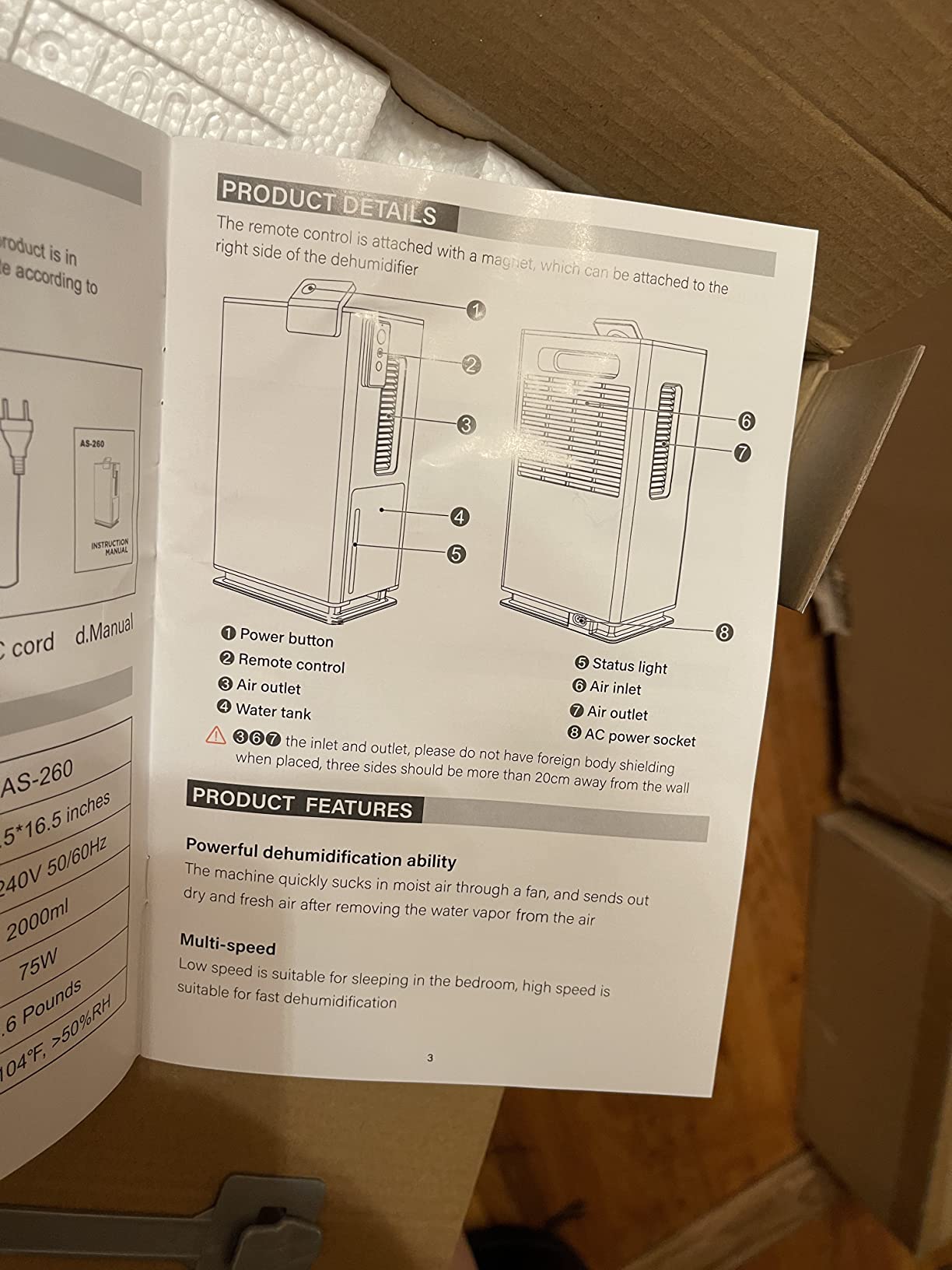
This one is shaped for the space rather than the shelf. At 19.3 by 17.8 by 17.5 inches it is a low, square metal box that slides under a deck, between joists, or into the tight band of air above an insulated crawl space floor where a tall residential cabinet simply will not fit.
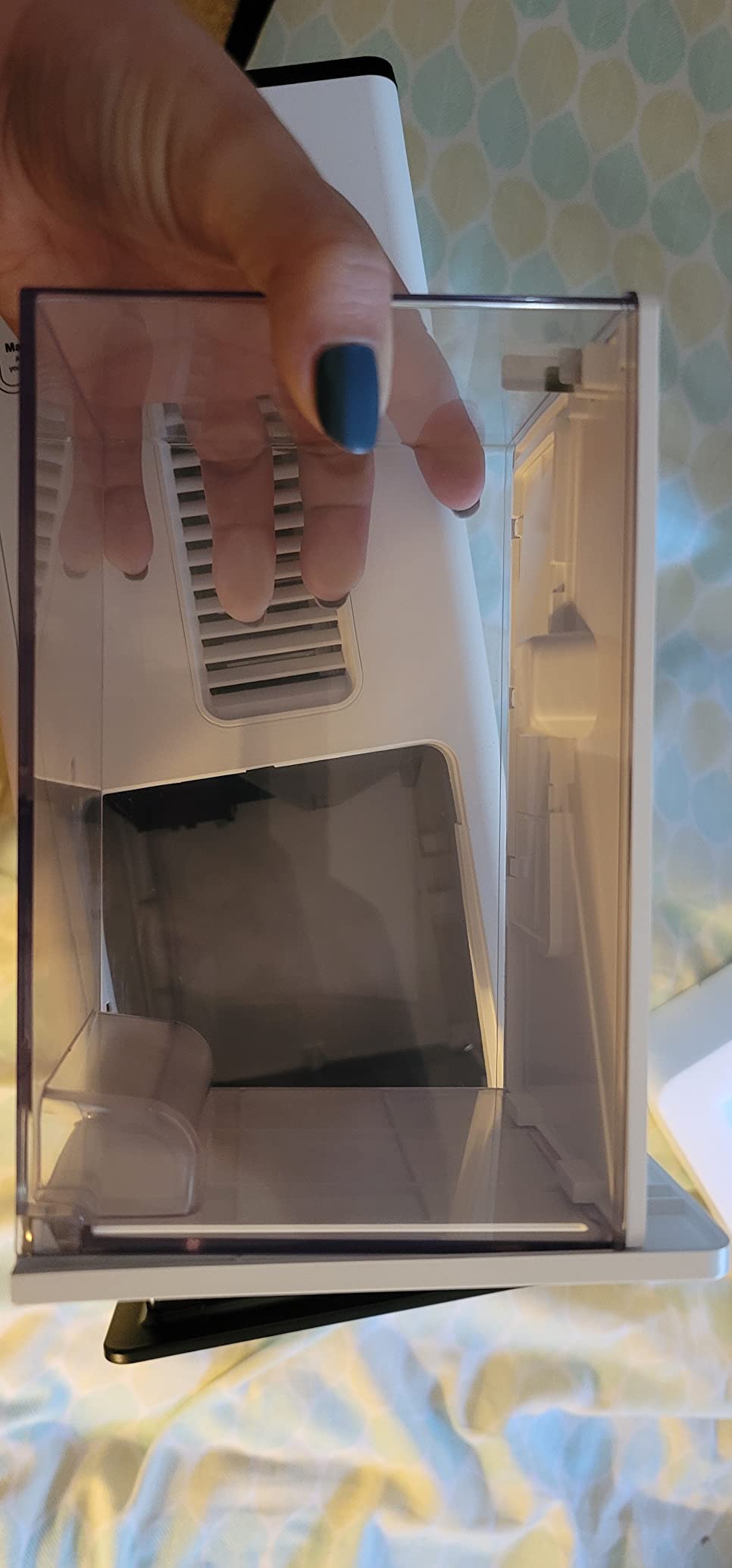
Under the hood it is not a compromise. 130 pints per day at 95F and 90 percent RH, 265 CFM airflow, up to 6,500 sq. ft. of rated coverage, a built-in condensate pump with a 16.4 ft hose, and a 6.6 ft hose for continuous gravity drainage. The 6 inch ductable air outlet lets you push dried air into an attic or a finished space rather than only treating the room it sits in.
The touchscreen panel shows real-time temperature and humidity, and automatic defrost with temperature sensors handles cold-soak conditions. Auto restart after a power outage and error code display are the two features you will appreciate most if this runs somewhere you do not visit every week.
For a garage with a storage mezzanine, a lofted workshop, or an attached crawl space sharing the same envelope, that airflow and ducting capability is what separates this from the residential models.
Where Does the Aiusevo 130 Pint Make Sense?
It is the natural choice for a low-clearance install, a crawl space beneath a garage, or a large workshop where you want the option to duct conditioned air into an adjoining space. Owners report fast humidity drops in damp crawl spaces, which is the hardest moisture load to beat.
A garage gym or a man cave with a finished ceiling also benefits, because the metal chassis tolerates a utility-space environment better than a plastic cabinet with a decorative grille.
Where the Aiusevo Falls Short
At 51 pounds it is the second-heaviest machine here, and getting it into a crawl space opening is a two-person job in most cases. A minority of owners report intermittent power-on behavior, and some find that custom panel settings do not survive a restart.
The wired remote control is an accessory sold separately, so if you want remote panel access from outside the crawl space, budget for that before you commit.
5. Waykar 150 Pint Commercial with Pump – Best for Unattended Garages
Waykar 150 Pint Commercial Dehumidifier with Pump & Drain Hose for Basement
150 pints per day
7,000 sq. ft.
520 watts
1.85 gallon tank
Pump lift 9.84 ft
Pros
- Pump drainage works with no gravity outlet
- 150 pints suits large open spaces
- ENERGY STAR certified
- Self-drying cycle
- Casters and storable top handle
Cons
- 520W among the higher draws in this class
- Pump settings are lost after a power cut
- 9 percent one-star share
This is the second Waykar on our list and it solves a different problem. The 150 Pint model pushes 150 pints per day at 95F and 90 percent RH across up to 7,000 sq. ft., with a built-in pump that drains upward 9.84 ft or straight to a floor drain, plus a 3.3 ft gravity hose.
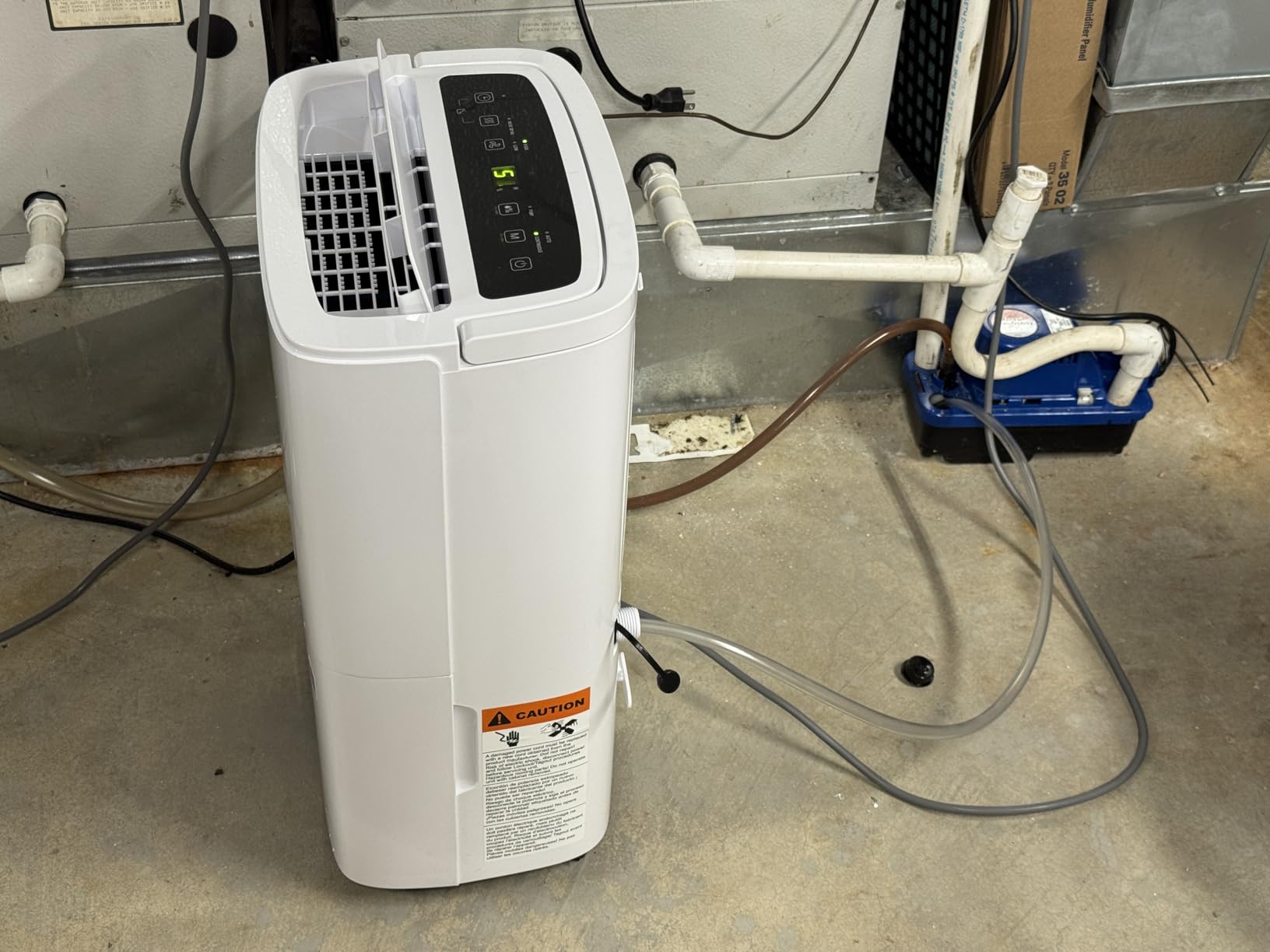
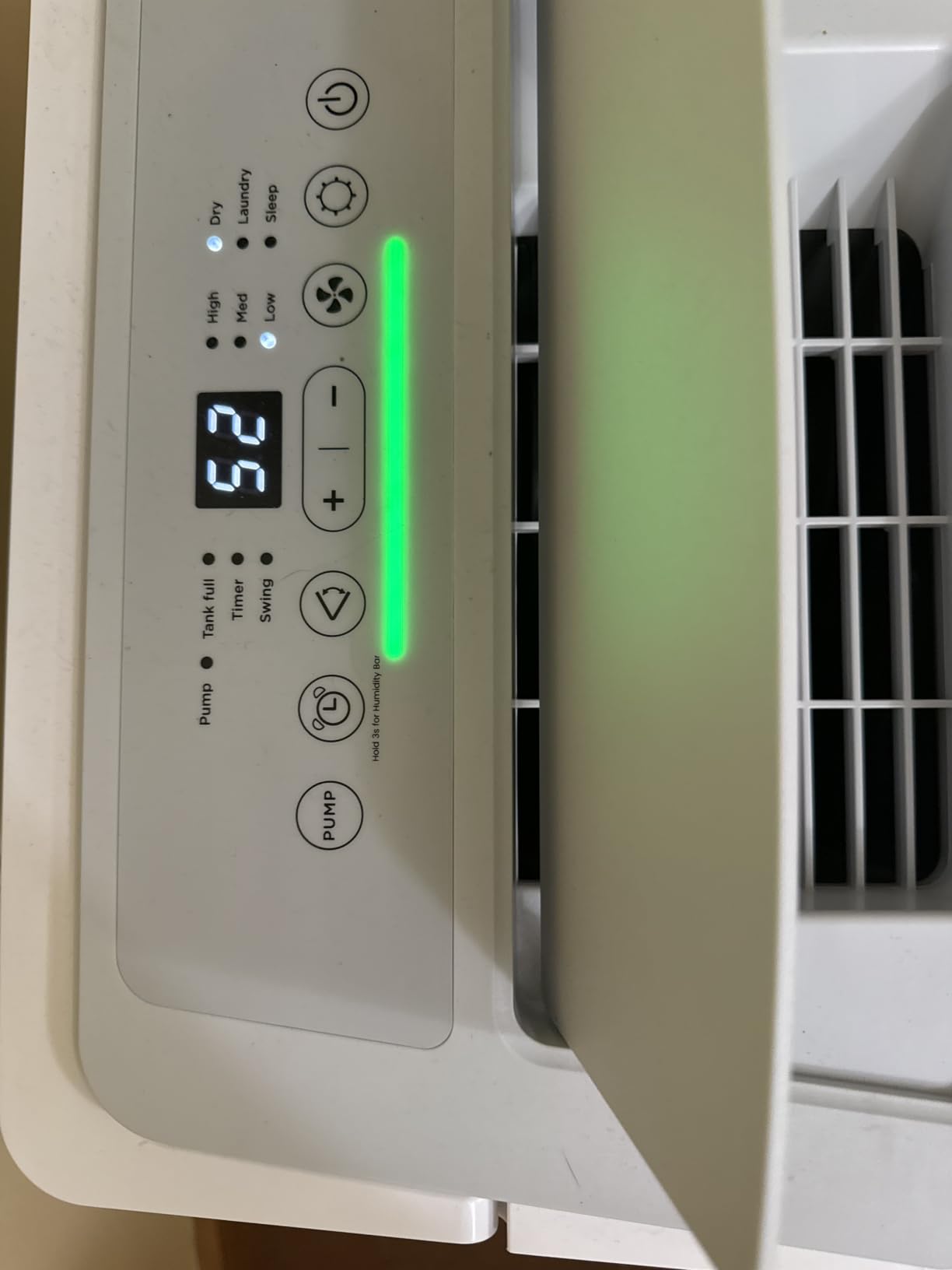
What earns it the spot on an unattended garage list is the self-drying function. After a run cycle the machine dries its own internal components, which is the step most owners skip and the one that decides whether a compressor is still extracting at full rate in year three. Add automatic defrost, a 24-hour timer, memory restart and 30 to 80 percent humidity control, and this is a machine designed to run without supervision.
Physical details are garage-appropriate. A visible 1.85 gallon tank with a lifting handle, automatic swing louver, omnidirectional casters and a top handle that stows for storage. The shell is painted metal and plastic over a rotary compressor with 7mm threaded pure copper tubing.
If your garage holds vehicles all week and you are not there to empty anything, this is the practical choice. Pair it with the same 150-pint class but different drainage philosophy, and you have covered the two most common garage layouts.
Who Should Buy the Waykar 150 Pint Commercial?
Multi-car garages, shops and any space where the machine will run while you are at work for a week. The pump removes the single biggest failure point in garage dehumidification, which is a full tank shutting the compressor down on a humid weekend.
It is also a good match for a garage with a high ceiling, a concrete floor with a floor drain in a convenient spot, and stored vehicles or equipment that cannot tolerate humidity swings.
Where the Waykar 150 Pint Falls Short
520 watts is among the higher draws in this group, and if you plan to run this 20 hours a day that is a real line on the bill. The memory function does not preserve pump settings after a power cut, so in a space with frequent outages you may need to revisit drainage mode each time.
Nine percent of reviews are one-star, which is a meaningful durability tail for a commercial-class machine. Support is framed as 30 day money back, a one year guarantee with extension and lifetime technical support.
6. Moiswell 155 Pint Commercial Defender M145 – Best for Crawl Spaces and Long Warranty
Moiswell 155 Pint Commercial Dehumidifier with Drain Hose for Crawl Spaces
155 pints max, 70 at AHAM
265 CFM
63 pounds
Horizontal 22.5 inch body
5 year warranty
Pros
- Horizontal body fits between joists and overhead
- 265 CFM airflow for heavy loads
- ENERGY STAR certified at commercial size
- Alloy steel construction
- 5 year warranty
Cons
- Heaviest machine here at 63 pounds
- 860W draw is high
- No built-in pump so install height matters
- Only 500 reviews of long-term data
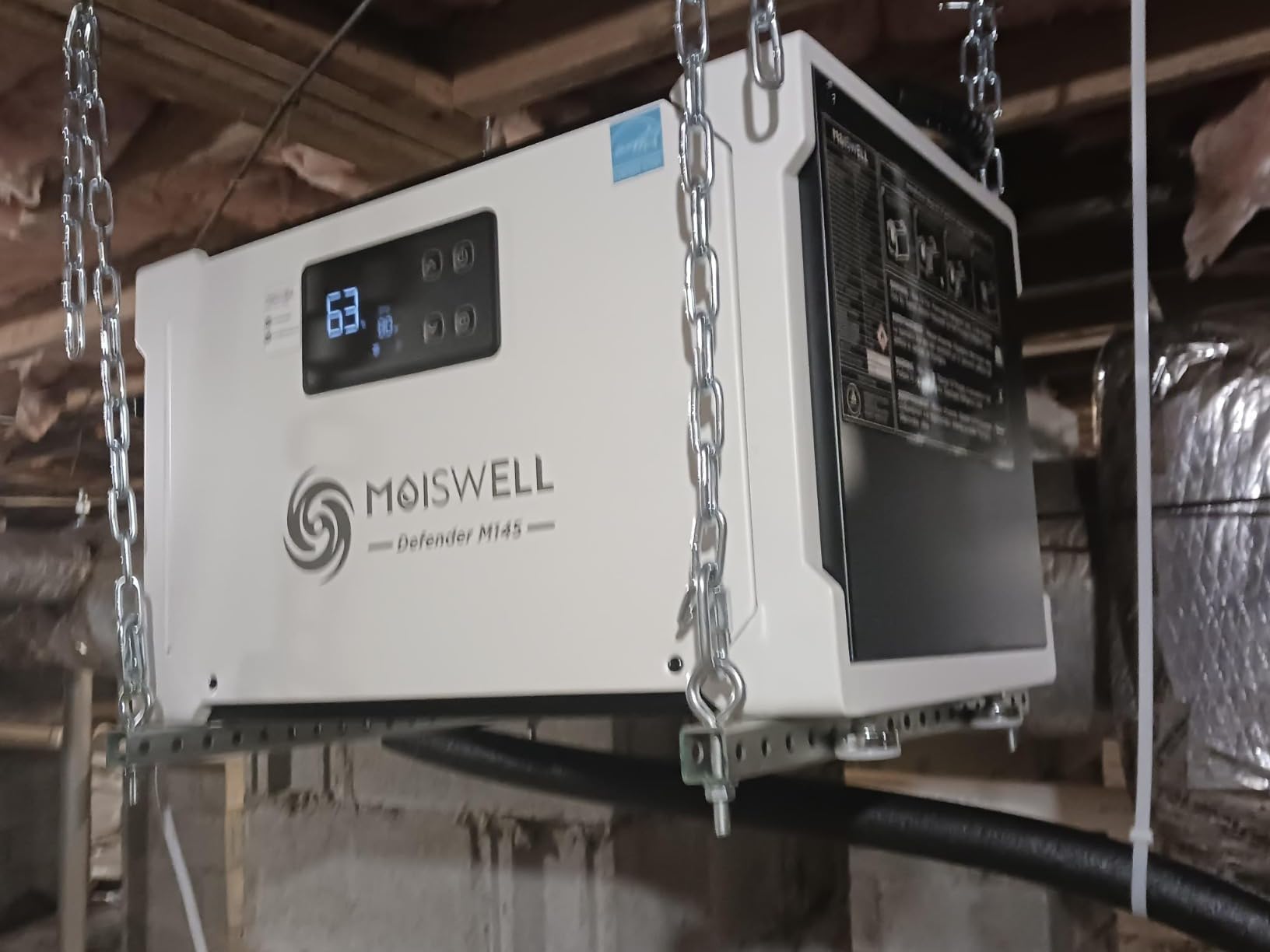
The Defender M145 is the one to look at when the space has almost no headroom. Its 22.5 by 14 by 14.7 inch horizontal body is built to slide between floor joists or hang in an overhead mount, which no vertical residential cabinet in this list can do.
Read the two capacity numbers carefully. Peak output is 155 pints per day, but the AHAM figure, measured on the harder 80F and 60 percent test, is 70 pints. That gap is the honest way to compare this machine against the marketing pint claims on residential units, and it is the number we use when sizing.
Airflow is 265 CFM, a figure only the Aiusevo matches in this roundup, and the machine is ENERGY STAR certified despite its commercial size. A 24-hour timer, auto drain, auto defrost and auto restart after a power outage make it hands-off once it is plumbed. Warranty coverage is five years, split as two years on the whole machine and three on parts.
Alloy steel construction is the other reason owners like it. This is a machine built for a space that gets dusty, hot in summer and cold in winter, and the shell handles that better than plastic cabinets do.
When Does the Moiswell Defender M145 Make Sense?
A garage with a low beam structure, a workshop with an overhead crawl space, or a detached outbuilding where the machine will sit in a plenum rather than on the floor. It is also the pick if warranty length is a deciding factor for you, since five years is longer than any residential machine here.
If you are handling an unusually wet load, such as a garage slab that has taken water, the 265 CFM airflow and 155 pint peak give it more headroom than any residential unit in this roundup.
Where the Moiswell Defender M145 Falls Short
At 63 pounds it is the heaviest machine in the group, and installing one overhead or between joists is a genuine two-person job with proper supports. There is no built-in pump, so gravity drainage dictates where it can sit, and that constrains installation more than anything else about it.
860 watts is the highest draw we recommend for continuous garage duty. If a unit runs 16 hours a day, that is the number to weigh against a smaller machine running four hours a day. With only 500 reviews, long-term reliability data is thinner than the residential picks.
7. boglvr 100 Pint WiFi Smart Dehumidifier – Best Smart Controls
6000 Sq.Ft. Energy Star Dehumidifier for Basement, Max 100Pint/Day Smart WiFi Dehumidifier with Drain Hose, Voice & APP Control, Adjustable Humidistat for Home, Bedroom, Bathroom, Garage, RV(White)
100 pints per day
6,000 sq. ft.
275 watts
45 dB
1.13 gallon tank
Pros
- App and Alexa scheduling
- Quiet enough for a bedroom or office
- ENERGY STAR certified
- 360 degree wheels and hidden handle
- Weekly scheduling
Cons
- Only 284 reviews to judge it by
- No built-in pump so drainage is gravity only
- Not silent at the top fan speed
Almost every garage dehumidifier decision is made once and then never revisited. This one is different, because app control changes the habit. The boglvr 100 Pint works with the Tuya Smart and Smart Life apps on iOS and Android, and with Amazon Alexa, so you can set a schedule and check the reading from your phone without walking out to the garage.
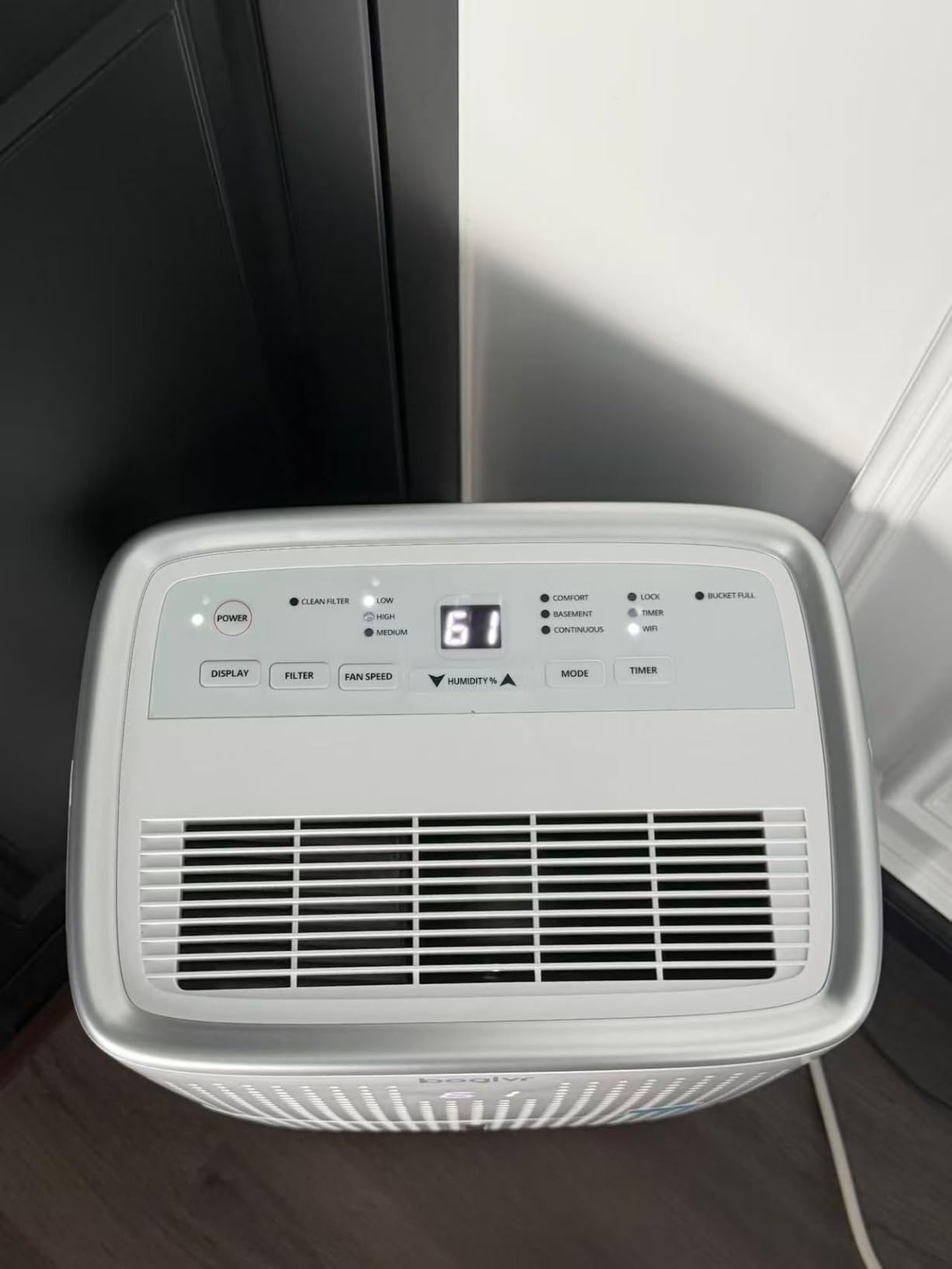
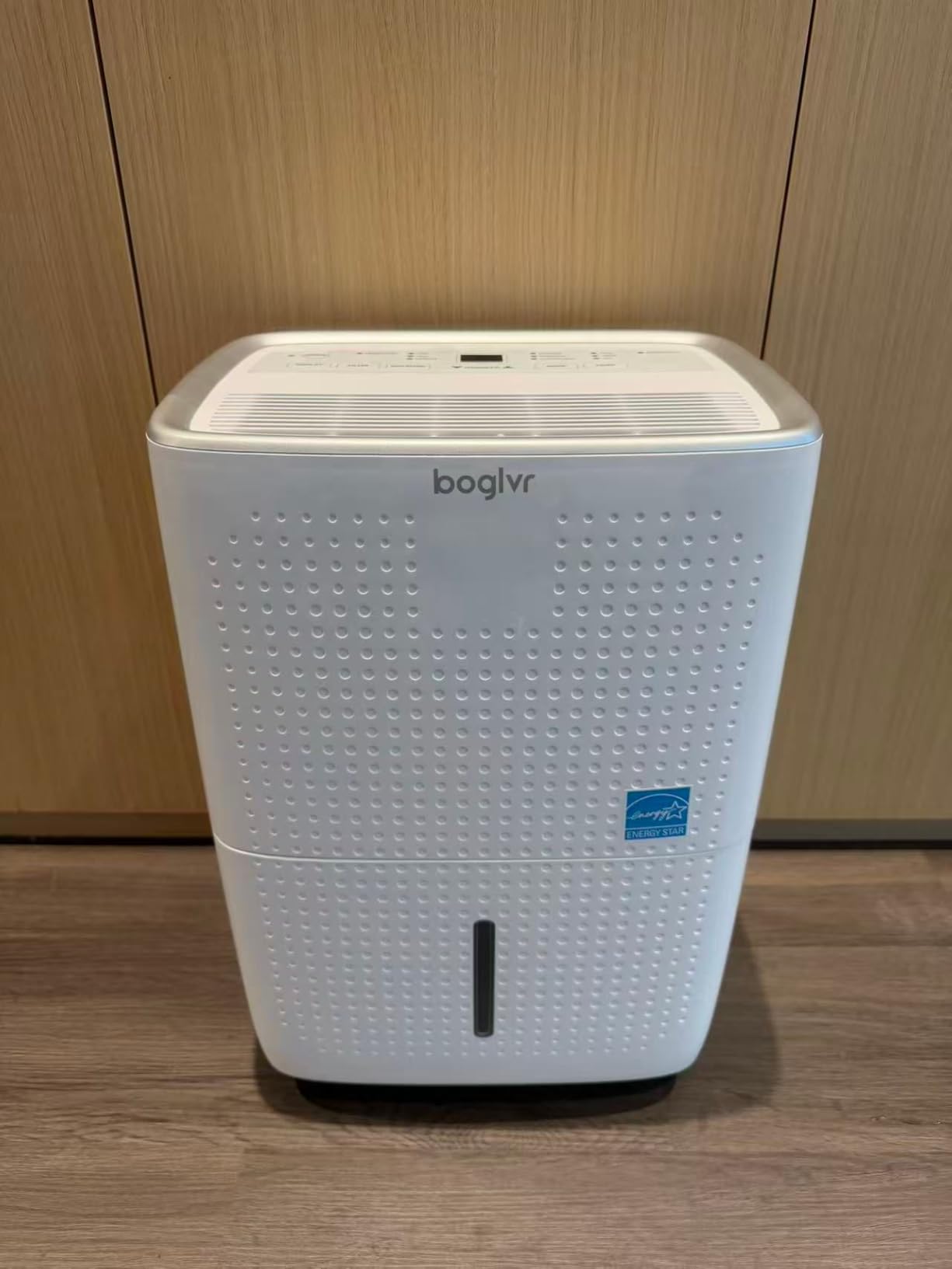
The hardware underneath is solid. 100 pints per day at 95F and 90 percent RH, 60 pints per day at 86F and 80 percent RH, 275 watts, ENERGY STAR certified, three fan speeds and 45 dB at the top speed. Comfort, Basement and Continuous modes sit alongside 30 to 80 percent custom humidity control.
For a converted garage, a home office or a garage gym, the 45 dB figure and the 360 degree wheels plus a hidden side handle make it easy to move between spaces. There is a one to 24 hour timer, weekly scheduling, a child lock, a washable filter, cable management and an LED display with a one press night off.
One limitation decides whether this fits your garage. There is no built-in pump. Water leaves through a 1.13 gallon tank with auto shutoff, or through the included 3.3 ft drain hose by gravity, so the drain outlet has to be at or below the unit.
Who Is the boglvr 100 Pint For?
People who want the humidity number on their phone, and spaces where noise rules out the bigger commercial machines. An attached garage you use as a gym, a finished room over a workshop, or a home office with a garage door works well here.
Weekly scheduling also earns its keep in a garage used intermittently, where you want the machine to run only on weekends or only overnight, without touching the panel.
Where the boglvr 100 Pint Falls Short
Its 5.0 rating comes from only 284 reviews, all five-star. That is an unusually uniform sample, and it means there is no low-rating signal telling you how rare failures surface. Judge it as a promising machine with a short track record rather than a proven one.
Without a pump, a slab garage with no low drain point means carrying a garden hose. And at the top fan speed it is audible, so it is not the choice for a space you need silent at all hours.
8. ALORAIR Sentinel HD55S 120 Pint – Best Warranty for Crawl Spaces
ALORAIR 120 Pints Energy Star Crawlspace Dehumidifier, Sentinel HD55S
55 pints at AHAM, 120 at saturation
1,300 sq. ft. rated
41.7 pounds
Metal housing
6 year limited warranty
Pros
- Rugged metal housing for crawl spaces
- Continuous drain ends tank babysitting
- Auto defrost works in cold conditions
- ETL listed with 6 year limited warranty
- Effective at holding below target
Cons
- Heavy at nearly 42 pounds
- Gravity drain only so it must sit high
- Audible from an adjacent room
- 12 percent one-star share
The Sentinel HD55S is a different animal from the residential machines above it. Its rating is 120 pints per day at saturation and 55 pints per day at AHAM, and the rated coverage of 1,300 sq. ft. reflects the harder 80F and 60 percent test rather than a marketing maximum.
That honest pairing of numbers is exactly what you want in a garage or crawl space where a lab-condition 155 pint claim would be meaningless. Metal housing, MERV-1 filter, automatic defrost with temperature sensors, low-temperature operation, cETL safety certification and continuous gravity drainage through a built-in outlet.
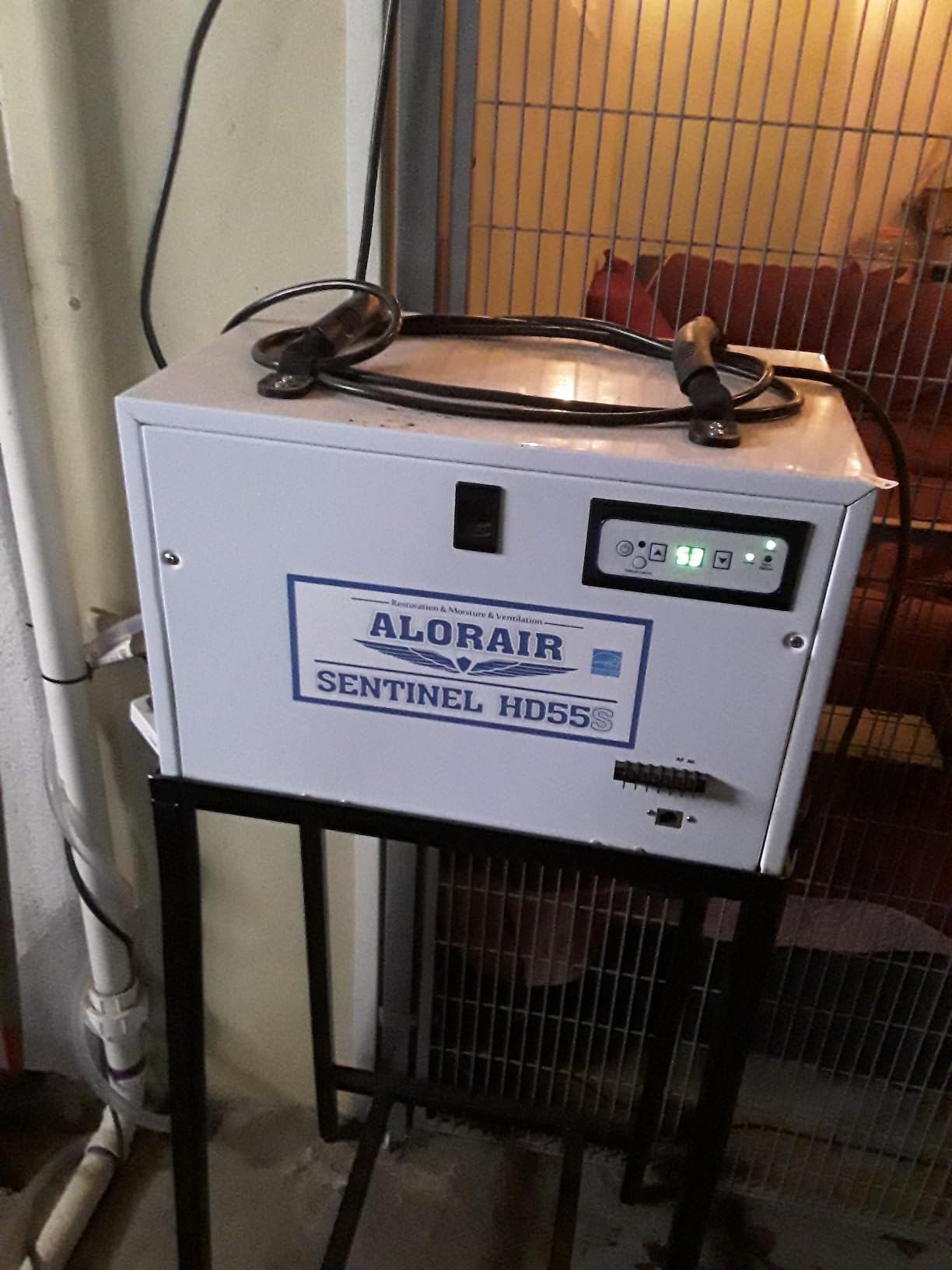
Warranty coverage is among the longest in the group: 1 year parts and labor, 3 years parts and labor on the refrigeration system, 5 years parts on the refrigeration system, and a 6 year limited warranty overall. For a machine expected to run continuously through many seasons, that coverage matters more than it does for a seasonal residential pick.
Owners report musty odors disappearing and humidity holding below target once it is installed correctly. The catch is that correct install means sit it high enough for gravity drainage, which in a crawl space is often a platform you have to build.
Where Does the ALORAIR Sentinel HD55S Fit?
Attached garages with a crawl space, utility rooms, finished basements and any unheated space where you want a machine with a long documented service life. The auto defrost and low-temperature rating make it a better cold-weather bet than the residential ENERGY STAR models.
At 130 CFM airflow it moves less air than the 265 CFM commercial machines, so pair it with a circulation fan if the space is wide open or has obstructions.
Where the Sentinel HD55S Falls Short
At nearly 42 pounds it is awkward to lift through a crawl space hatch. Gravity drainage only means no flexibility in where the drain goes, and the humidity readout can be off by about 5 percent, so confirm with an external hygrometer.
Its 12 percent one-star share sits above most machines in this group, with some reports of failures around the three-year mark and slow warranty resolution. It is also audible from an adjacent room, which matters if the garage shares a wall with a bedroom or office.
9. ALORAIR Sentinel HD35P 70 Pint with Pump – Best for Small Garages
ALORAIR 70 PPD Dehumidifier with Pump for Crawl Space and Basement
35 pints at AHAM, 70 at saturation
1,000 sq. ft.
38.2 pounds
Pump lifts 19.6 ft
Under 50 dB
Pros
- Pump lifts water 19.6 ft for flexible placement
- Compact 15.2 by 11.2 by 11.4 inch body
- Quiet under 50 dB
- MERV-1 filter and alloy steel shell
- 6 year limited warranty
Cons
- Smallest capacity in this group
- 4.0 rating is the lowest here with 16 percent one-star
- Limited to about 1000 sq. ft.
- Heavy for its size
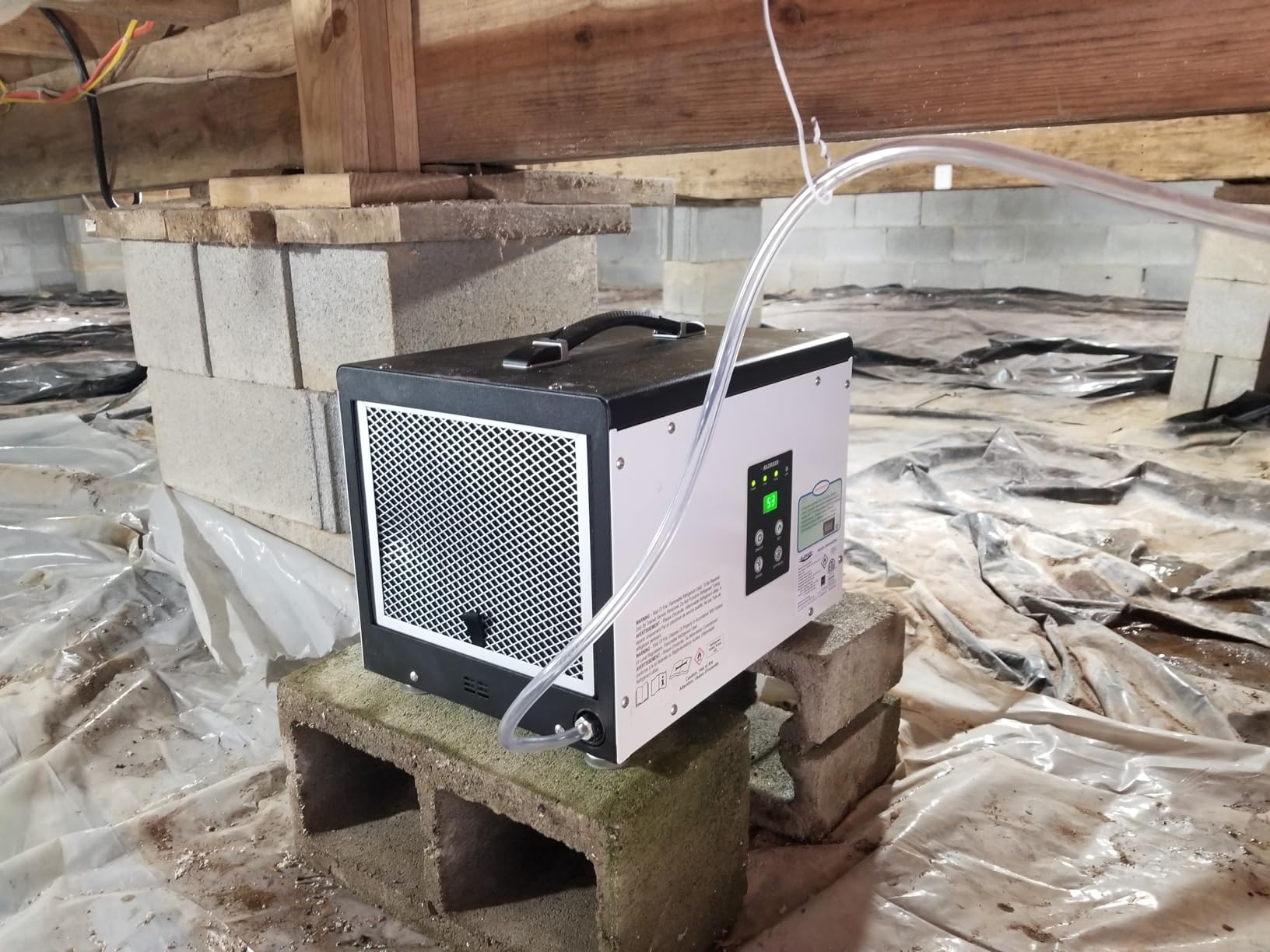
This is the small-garage answer, and its defining feature is a pump lift of 19.6 ft, more than any other machine here. The built-in condensate pump pushes water up to 19.6 ft, with a 19.6 ft hose included, and gravity drainage is supported as well. That means you can set the machine on the slab and send the water to a drain, a sump or a floor outlet wherever one happens to be.
Capacity is 70 pints per day at saturation and 35 pints per day at AHAM, for up to about 1,000 sq. ft. That is a real limitation in a humid climate or on an unsealed slab, but for a one-car garage, a storage bay or a small workshop in a moderate region, it is proportional to the load.
The body is compact at 15.2 by 11.2 by 11.4 inches, quiet under 50 dB, with automatic defrost, auto restart, a MERV-1 filter rated to trap up to 95 percent of particulates and an alloy steel shell. The 6 year limited warranty matches the Sentinel HD55S.
Where it fits the garage workflow well is a small space with no convenient floor drain, a storage unit or a half-car workshop. Owners consistently credit the pump for making an awkward drainage layout workable.
Is the Sentinel HD35P Right for a One-Car Garage?
Yes, with one condition. In a one-car garage of roughly 200 to 300 sq. ft. in a moderate climate, 70 pints of saturation capacity is more than adequate, and the pump removes the need to fight the drainage layout.
It also makes sense for a garage that is only a small part of a larger moisture problem, such as a cabinet or a closet inside a larger space where a compact machine with a pump hose is more practical than a full-size cabinet.
Where the Sentinel HD35P Falls Short
Its 4.0 rating is the lowest in this group, with 16 percent of reviews at one star, a larger share than any other machine we looked at. Those reviews cluster around durability and support rather than day-to-day performance, but it is a signal worth taking seriously.
Capacity and coverage are the least in the lineup. If your garage is humid year round, has an unsealed slab, or holds a vehicle you care about, this machine will run continuously and still hold the humidity line with less margin than you would like.
10. Vellgoo 140 Pint 6000 Sq Ft Dehumidifier – Best High-Capacity Starter
Dehumidifier for Basement, Home and Garage, Max 140 Pint/Day 6,000 Sq.Ft
140 pints per day
6,000 sq. ft. rated
1.65 gallon tank
ENERGY STAR Most Efficient
Pros
- High stated capacity for the class
- Very quiet for a large compressor
- 1.65 gallon tank plus included drain hose
- Casters and front handle
- Auto defrost and memory restart
Cons
- No built-in pump so long runs need an adapter
- Adds heat to the space
- Thin long-term review history at 123 reviews
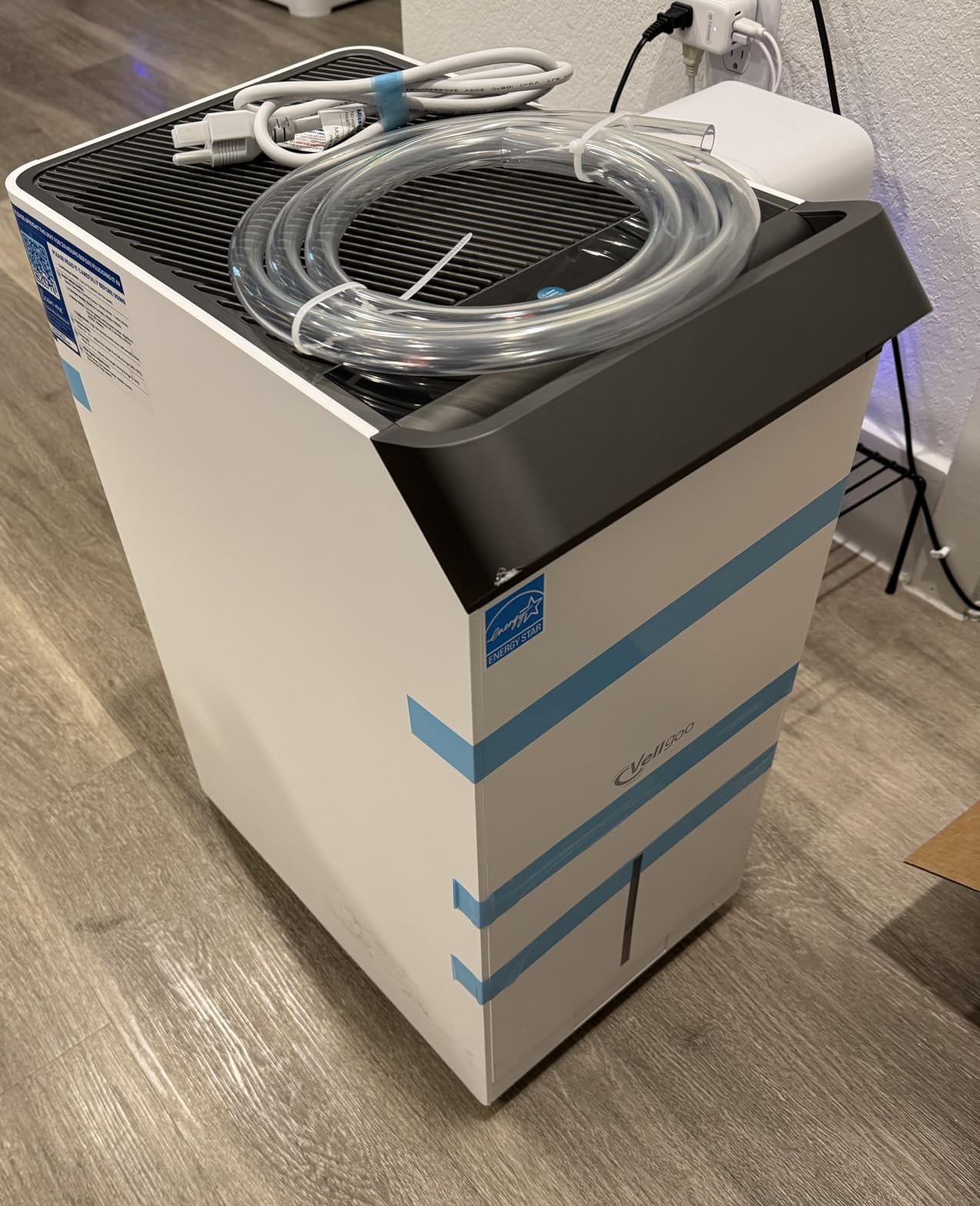
The Vellgoo DryTank Pro is the pick when you want commercial-class throughput in a residential-formatted machine. It is rated at 140 pints per day at 95F and 95 percent RH for up to 6,000 sq. ft., carries ENERGY STAR Most Efficient certification, and includes a 6.56 ft drain hose that fits a 3/4 inch garden hose.
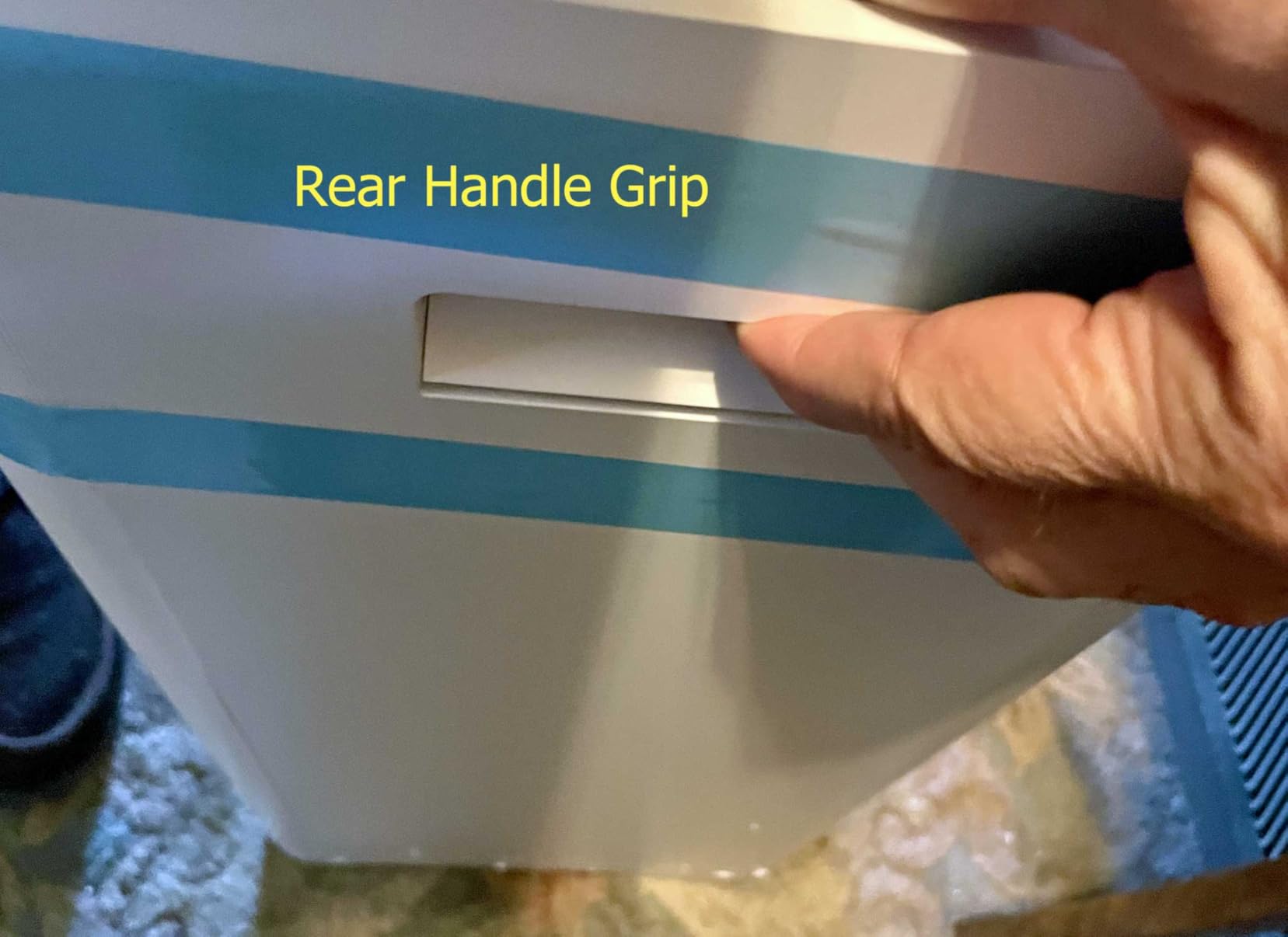
Feature-wise it covers the bases. A 1.65 gallon tank with a full-tank alert and auto shutoff, Continuous, Comfort, Sleep and Custom modes, a 24-hour timer, auto defrost, auto restart with memory function, a washable filter, built-in wheels, side handles, a child lock, an LED display and a soft-touch panel.
Owners highlight how quiet it is for something pulling this much water, and one reported turbo mode result dropped a space from 68 percent to 44 percent RH in under two hours. At 17.69 by 11.75 by 24.41 inches it is a vertical cabinet, so check ceiling and door clearance before ordering.
There is no built-in pump here. Water leaves by gravity through the drain port or the tank, so a low outlet or a hose run to a floor drain is required. That single limitation is what separates it from the pump-equipped commercial machines above.
When Is the Vellgoo 140 Pint the Right Buy?
A 600 to 1,000 sq. ft. workshop, a garage you are converting to a gym or office, or any space where you want high throughput and a modest price without moving to a metal commercial cabinet. The 6,000 sq. ft. rating gives real headroom for a damp slab.
Sleep and custom modes plus a 24-hour timer make it workable in a space you also use, and the casters and side handles mean one person can move it between a workshop and a storage bay.
Where the Vellgoo 140 Pint Falls Short
The lack of a pump is the real constraint. Long drainage runs need a garden hose adapter and a path to a drain, and in a garage with no low outlet you are back to hauling buckets unless you add a separate pump.
Like every compressor dehumidifier, it adds heat to the space as a byproduct of the refrigeration cycle, which some owners notice in a small room. And with 123 reviews, long-term data is thin. Warranty is one year, extendable to two with registration.
How to Size a Garage Dehumidifier Without Guessing
Three specifications decide a garage purchase, and everything else is preference. First, an automatic defrost cycle driven by an anti-frost sensor. Second, pint capacity that matches the real moisture load. Third, a drainage method that does not involve a bucket.
Here is why the first one is non-negotiable. A compressor dehumidifier chills an evaporator coil below the dew point of the incoming air. Water condenses, runs down the coil and into a tank. When the coil drops below freezing, ice builds, extraction falls to nearly zero, and the compressor keeps working against an insulating layer until it overheats. An anti-frost sensor cuts compressor power and leaves the fan running until the coil clears.
A unit without that cycle, or rated to stop at 65F, is a seasonal appliance. A unit rated for low-temperature operation down to the mid-30s with automatic defrost is a year-round garage machine. In this roundup, the residential ENERGY STAR models are the seasonal options, and the crawl-space and commercial models are the year-round ones.
Read the two capacity numbers whenever they appear. Saturation capacity is measured at extreme conditions and flatters the machine. The AHAM figure, tested at 80F and 60 percent RH, is closer to what a damp garage produces. The Moiswell Defender M145 shows the gap most clearly: 155 pints peak, 70 pints at AHAM.
Square footage is a weak input on its own because it says nothing about the slab, the ventilation or the vehicle load. Use it as a loose ceiling and let the AHAM figure set the working capacity. A two-car garage at 400 to 500 sq. ft. with an unsealed slab and a car parked inside all winter is a heavier load than the same square footage with a sealed slab and no vehicle.
On efficiency, the ENERGY STAR Integrated Energy Factor measures liters of water removed per kilowatt-hour, and the minimum rises with capacity: 1.70 L/kWh up to 25 pints, 2.01 for 25 to 50 pints, and 3.30 for 50 pints and above. Every ENERGY STAR certified machine in this list clears its tier, and the Most Efficient label marks the top of it.
Finally, check the tank math honestly. A 1.13 to 1.45 gallon reservoir holds 9 to 12 pints. In an active garage on a humid day, extraction outruns that quickly, the float switch shuts the compressor down, and humidity climbs back while you are at work. Continuous drainage is not a convenience feature, it is what makes unattended operation possible.
Placement, Drainage and Electricity: Setting It Up Right
Start with position. Set the machine centrally, or near the middle of the dampest area, with clearance on the intake and outlet sides. Pushing it against a wall or into an unventilated corner starves airflow and quietly costs you extraction, and it is the most common placement mistake we see.
Next, choose drainage based on your floor. If you have a floor drain below the unit’s outlet height, gravity drainage through the included hose is the simplest and most reliable setup, and long-term owners in the forums consistently prefer a plumbed gravity line over a tank. If the drain is uphill, at the far end of the garage, or absent entirely, buy the pump-equipped version. ALORAIR lifts 19.6 ft, the Aiusevo 16.4 ft, Yaufey 16.4 ft, and the Waykar 150 Pint 9.84 ft.
Run the hose in a way that keeps it from kinking, secure it so a full hose cannot pull, and check it monthly. Condensate lines that get blocked or kink are a leading cause of a tank that fills unexpectedly.
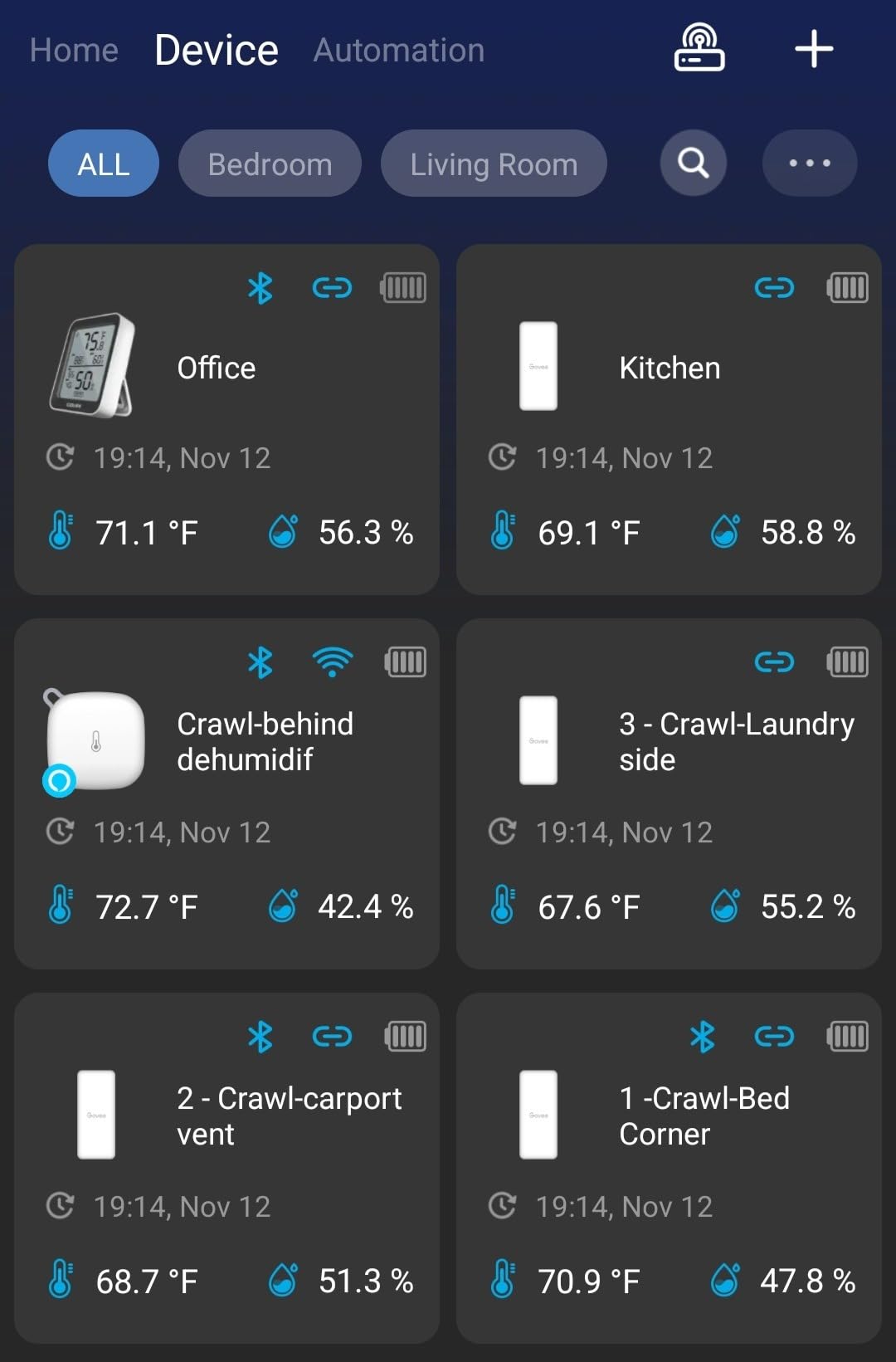
Set the target humidity where it protects what you own. The EPA range for stored goods is 30 to 50 percent relative humidity, and that is where mold stops and corrosion slows. Forum owners frequently run a setpoint of 60 percent, which is defensible for a garage you mostly drive through and wasteful in one that holds cardboard, paper or electronics. Pick 50 percent if you are protecting contents, 60 percent if you only want the musty smell gone.
Then measure with something independent. A wall hygrometer under 20 dollars tells you whether the machine’s own sensor is telling the truth, and several models here read a few percent high. If the two disagree, trust the wall unit and adjust the setpoint until they match.
On electricity, use a GFCI-protected receptacle, plug directly into a wall outlet, and do not run an extension cord. Garage floors are damp and the NFPA guidance on garage receptacles is not decorative. Keep the machine clear of gasoline cans, fuel containers, paint thinners and lawnmower fuel systems, and if the garage is attached to a living space, use a dedicated exhaust fan rather than assuming the dehumidifier clears fumes.
Be clear about what a dehumidifier cannot do. It does not remove carbon monoxide, benzene or volatile organic compounds, and it is not a ventilation system. If you run an engine or a combustion heater in the garage, you need mechanical exhaust and a working carbon monoxide detector. Humidity control and air quality are two separate problems.
Running Cost, Alternatives and Common Mistakes
Running cost is where wattage matters. The machines here draw between 270 and 860 watts, and the residential picks cluster at 270 to 331 watts while the commercial units run 500 to 860. Multiply watts by hours, divide by 1000, and that is your kilowatt-hours per day.
At 8 hours a day, a 280 watt machine uses about 2.2 kWh a day and roughly 67 kWh a month. A 520 watt machine running 16 hours a day uses about 8.3 kWh a day and roughly 250 kWh a month. That is the trade a pump-equipped commercial machine asks you to make, and whether it is worth it depends entirely on whether it reaches your target humidity in four hours a day instead of running all night.
Duty cycle varies far more than most buyers expect. Forum owners report a 60 percent setpoint machine running only 3 to 4 hours a day through winter in a moderate-climate garage, while others run 22 hours. That swing is driven by climate and slab condition, not by machine quality, which is why oversizing to chase a coverage number often wastes electricity without improving results.
Before buying, consider whether a dehumidifier is the right tool. A mini-split with dry mode can move a lot of moisture and may be cheaper to run, and owners in humid climates report pairing an 18k BTU mini-split with a 120 PPD gravity-drain machine and running both. If your garage is attached and already conditioned, a dedicated dehumidifier is usually simpler.
Sealing the slab and adding a vapor barrier reduces the load before the machine ever turns on, and that sequencing question comes up constantly in owner forums. Do the cheap work first, then size the machine to the load that remains. Our basement dehumidifier guide covers masonry sealing in more detail, and our whole-house dehumidifier guide covers the systems above this category.
On ventilation, be careful. Powered crawl-space or garage ventilation can pull damp outdoor air into a space and make the problem worse rather than fixing it. Air circulation inside the garage is different and helpful, so a plain fan across the space often works alongside a dehumidifier where an exhaust fan alone does not.
The common mistakes we see repeat: sizing by square footage alone, ignoring the tank and planning to empty it daily, running a standard seasonal unit in an unheated winter garage, setting the target humidity without checking it against a real hygrometer, pushing the unit against a wall, and letting the washable filter clog until extraction drops. Fix those six and most ownership problems disappear.
Two garage-adjacent reads are worth your time if the space is being set up rather than just protected. Our garage lighting guide covers the lighting side of a working bay, and our mechanic creeper guide covers the low working positions that come with the same kind of space.
Frequently Asked Questions
Is it a good idea to put a dehumidifier in a garage?
Yes, if your garage regularly reads above roughly 60 percent relative humidity. Sustained humidity at that level causes surface rust on tools and vehicle undercarriages, mold on cardboard and lumber, and condensation on cold metal. A unit with automatic defrost and continuous drainage is what makes it worth running year round rather than seasonally.
What size dehumidifier do I need for a garage?
For a two-car garage of 400 to 500 sq. ft. in a moderate climate, a 50 to 80 pint per day machine is the working range. One-car garages need less, and workshops above 1,000 sq. ft. or damp unsealed slabs need 130 to 155 pints. Judge capacity by the AHAM figure at 80F and 60 percent RH rather than the saturation claim on the box.
What type of dehumidifier is best for an unheated garage?
A compressor dehumidifier rated for low-temperature operation, with an automatic defrost cycle driven by an anti-frost sensor, and continuous drainage. In practice that means a crawl-space or commercial class machine rather than a residential ENERGY STAR unit, several of which list a 65F operating floor. Desiccant units work without power but are sized for closets and small enclosures, not whole garages.
Is it okay to run a dehumidifier 24 hours a day?
Yes, and in an active garage that is the normal mode of operation. Run it continuously with continuous drainage and a humidistat set between 50 and 60 percent RH, and it will cycle the compressor on and off by itself. The failure mode is not the run time, it is a full tank shutting the compressor down while you are away.
Will a normal dehumidifier work in an unheated garage during winter?
Only if it has an automatic defrost cycle and a low-temperature rating. Without defrost, the evaporator coil ices over, extraction falls to nearly zero and the compressor can be damaged. Check the operating temperature on the spec sheet, because several popular residential models list a 65F floor and will not perform in a winter garage below that.
How long does a garage dehumidifier need to run per day?
It depends far more on your slab and climate than on the machine. Owner reports range from 3 to 4 hours a day through winter in a moderate climate with a sealed slab, to 20 hours or more in a humid region with an unsealed slab and a wet vehicle parked inside. Undersizing pushes this number higher without holding the target humidity.
Is a 50 pint dehumidifier enough for a 2 car garage?
In a moderate climate with a sealed slab and decent ventilation, yes for 400 to 500 sq. ft. In a humid region, with an unsealed slab, or with a vehicle parked inside through winter, a 50 pint machine runs continuously and may never hold the setpoint. In that case step up to 70 to 80 pints rather than buying a bigger space.
How often do I need to empty a dehumidifier tank?
With a 1.1 to 1.45 gallon reservoir, expect to empty it daily or more in an active humid garage, which is the reason we treat continuous drainage as a requirement rather than a convenience. Tanks of that size hold 9 to 12 pints, and a 100 pint per day machine fills one in well under an hour of full extraction.
Can I just run a fan instead of buying a dehumidifier?
A fan moves air but removes no moisture, so it cannot lower relative humidity on its own. A fan does help by circulating air across a dehumidifier and breaking up stagnant pockets. Be careful with exhaust ventilation, which can draw damp outdoor air into the garage and make the moisture problem worse.
Do dehumidifiers use a lot of electricity?
The residential units in this roundup draw 270 to 331 watts, which is about 2.2 to 2.6 kWh per day at 8 hours. Commercial machines draw 500 to 860 watts, so a 520 watt machine running 16 hours a day uses roughly 250 kWh a month. Duty cycle matters more than the label, so check your real hours before choosing a bigger machine.
Final Verdict
The best dehumidifiers for garages in 2026 come down to three honest requirements: automatic defrost, enough AHAM-rated capacity for your slab, and continuous drainage. If you want one recommendation, take the Waykar 80 Pint 5000 Sq Ft for an attached or insulated garage, the Waykar 150 Pint Commercial with pump for a space that runs while you are away, the ALORAIR Sentinel HD55S if cold temperatures and a six year warranty matter most, and the Moiswell Defender M145 when headroom for a crawl space or overhead install is the problem to solve.
Measure your floor, read the AHAM number, check your lowest winter temperature, and buy the drainage method that matches your floor drain. Everything else on a spec sheet is a preference. If the garage is being rebuilt rather than just protected, our complete dehumidifier roundup covers the rest of the category.