
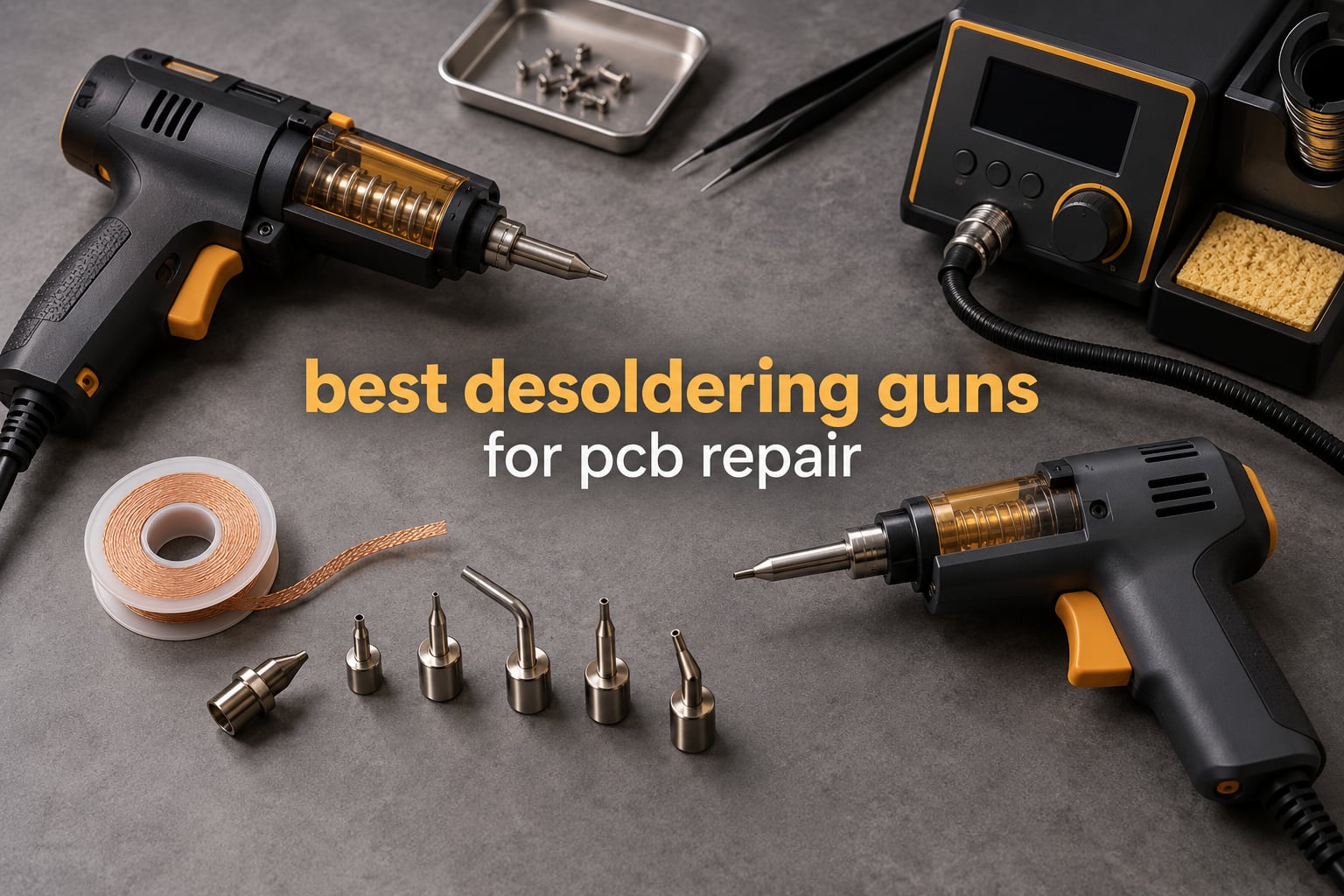
A desoldering gun is a soldering iron shape with a vacuum pump built into the handle. You heat the joint, trigger the pump, and the molten solder gets pulled down the nozzle into a collection chamber, leaving a clean through-hole. For most people buying the best desoldering guns for PCB repair, the Hakko FR-301 is the strongest all-round choice, and a manual pump is the honest answer if you only do this a few times a year.
We spent weeks putting twelve desoldering tools through through-hole removals on vintage audio boards, retro console mainboards and scrap donor PCBs. Some tools are all-in-one irons with a pump in the barrel, some are bench stations with a separate handpiece, and some are purely mechanical suckers that need an iron beside them. The three groups suit very different benches, which is why the roundup below is split into tiers rather than ranked as one flat list.
Two things came up in nearly every forum thread we read while researching this. The first is nozzle clogging, which is the single most common complaint about desoldering guns of any price. The second is people buying a tool they do not need: if you are removing one or two joints a year, a good manual pump and a spool of wick will serve you better than a powered gun. We have made that call-out explicit in the buying guide, and it is also where our [best controller drift repair kits](https://eatcreatesleep.net/best-controller-drift-repair-kits/) guide makes the same argument about replacement parts versus tools.
Table of Contents
Top 3 Picks for Best Desoldering Guns for PCB Repair in October

Hakko FR-301
- Four heat settings 350C to 500C
- Closed-loop sensor heating
- Quick-change nozzle system

Vampliers VT-001-SS
- Made in Japan aircraft-grade aluminum
- Self-cleaning shaft
- 350C silicone nozzle

YIHUA 929D-V
- Iron and pump in one 0.3 kg handle
- 1.0mm and 1.2mm nozzles
- Removable solder tube
All 12 Desoldering Guns Compared Side by Side in 2026
| Product | Specifications | Action |
|---|---|---|
| Hakko FR-301 Portable Desoldering Tool |
|
Check Latest Price |
| Vampliers VT-001-SS Solder Sucker |
|
Check Latest Price |
| YIHUA 929D-V Electric Desoldering Iron |
|
Check Latest Price |
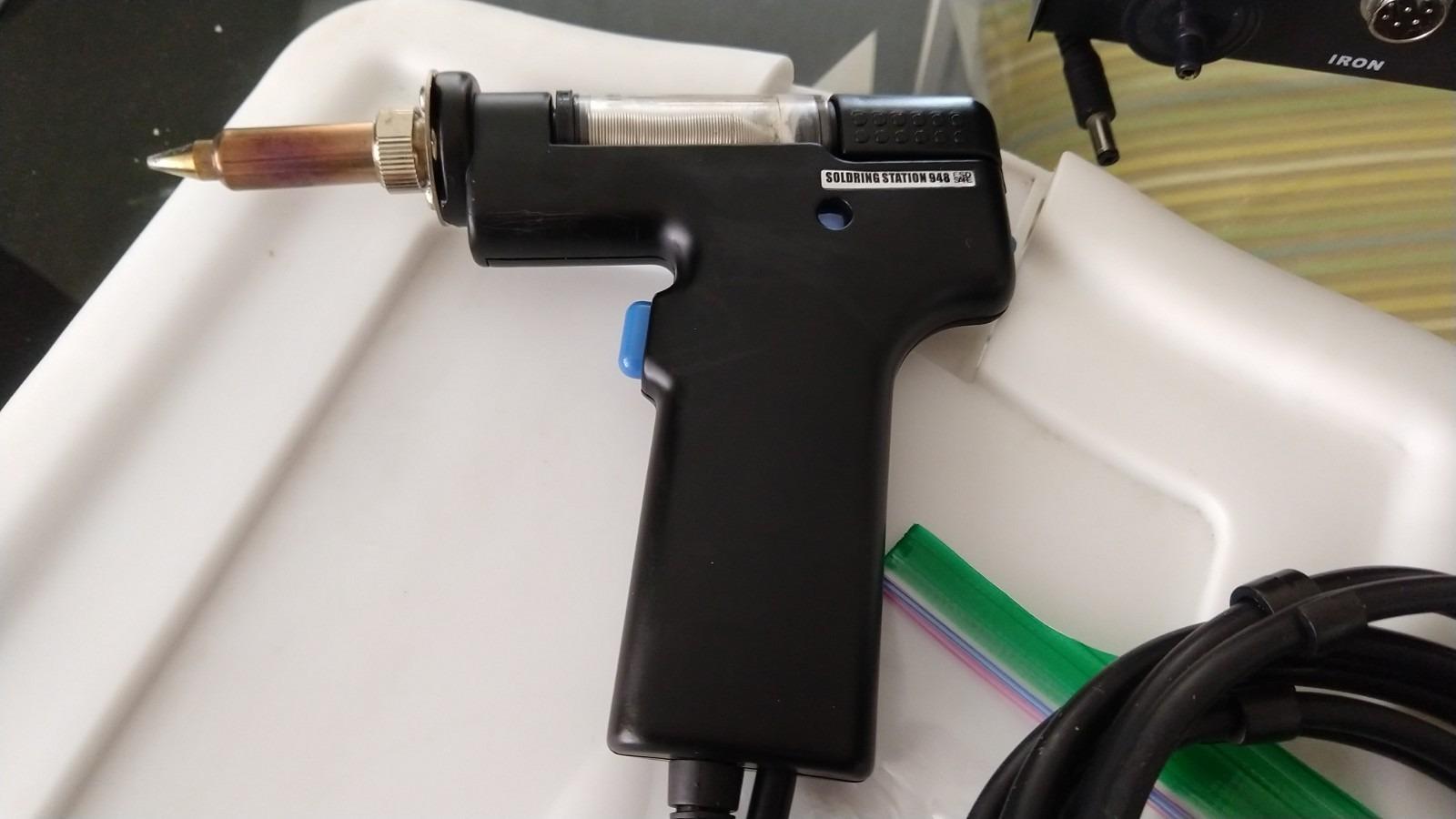
 YIHUA 948 Desoldering Station YIHUA 948 Desoldering Station |
|
Check Latest Price |
 Anesty ZD-915 Digital Station Anesty ZD-915 Digital Station |
|
Check Latest Price |
 VIRALLOY SS-786 Manual Pump VIRALLOY SS-786 Manual Pump |
|
Check Latest Price |
 Weller 7874B Manual Pump Weller 7874B Manual Pump |
|
Check Latest Price |
 K KERNOWO 929D-V Kit K KERNOWO 929D-V Kit |
|
Check Latest Price |
 WEP 929D-V Five Nozzle Kit WEP 929D-V Five Nozzle Kit |
|
Check Latest Price |
 EDSYN DS017 SOLDAPULLT EDSYN DS017 SOLDAPULLT |
|
Check Latest Price |
 HighTop Electric Desoldering Pump HighTop Electric Desoldering Pump |
|
Check Latest Price |
 VISLONE Electric Solder Sucker VISLONE Electric Solder Sucker |
|
Check Latest Price |
1. Hakko FR-301 Portable Desoldering Tool – Best Overall
Hakko FR301-03/P Portable Desoldering Tool with Precise Temperature Control °F /°C
140W ceramic
4 settings 350C-500C
1.1 lb
90-day warranty
Pros
- Fast heat-up and strong consistent suction
- Four temperature settings from 350C to 500C
- Closed-loop sensor holds tip temperature steady
- Quick-change nozzles work while hot
- Cleans up in minutes
Cons
- Carrying case has weak hinges and cheap plastic
- Metal stand gets pushed around by the stiff cord
- Replacement tips are costly and one size is included
- 90-day warranty is short for a tool at this level
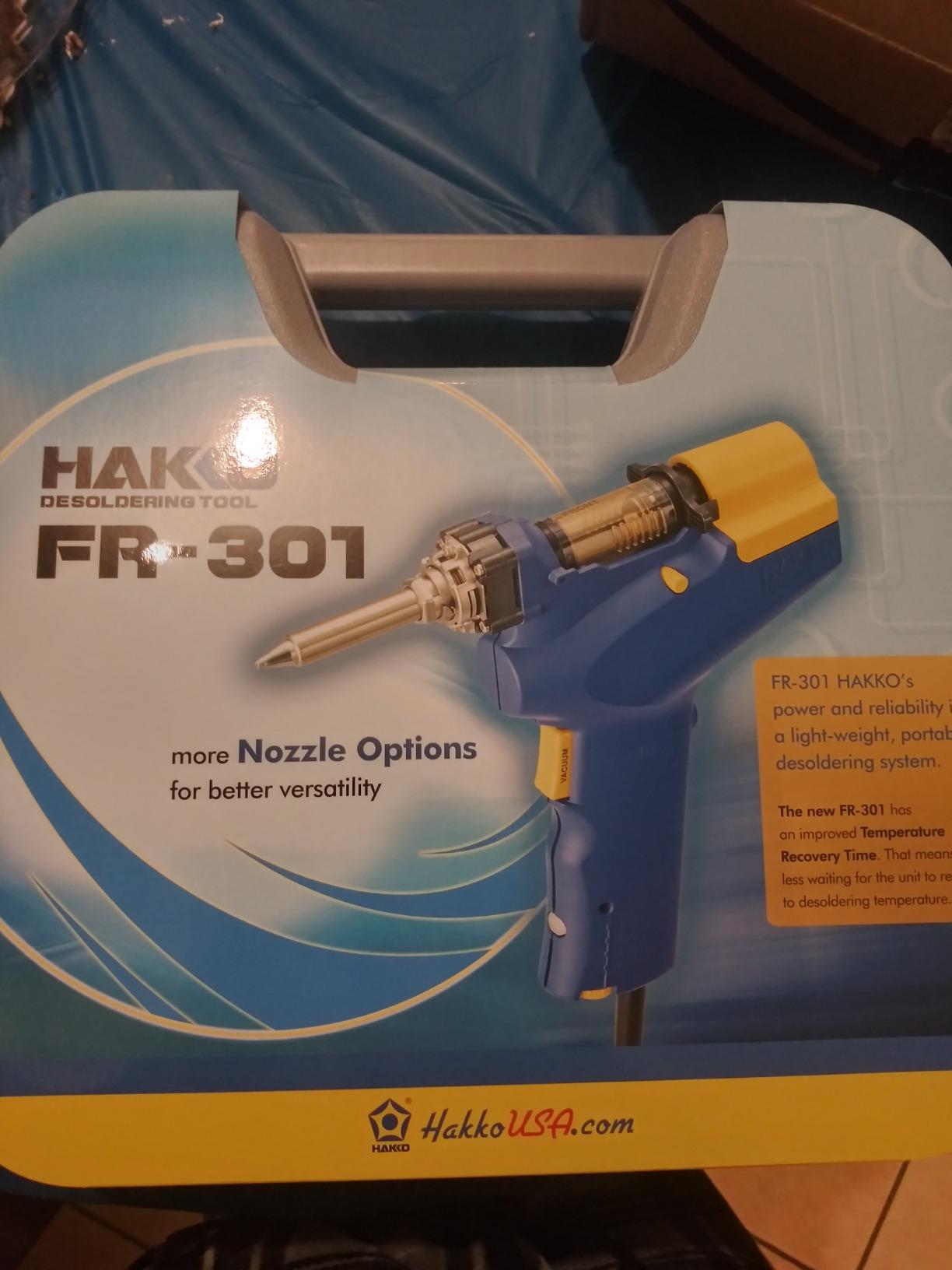
This is the gun that comes up first in almost every forum thread about desoldering, and after putting it through plated through-hole removals on a stack of donor boards it is easy to see why. Heat recovery is the standout: it comes back to temperature almost immediately after a joint goes cold, which matters far more than raw wattage when you are working your way down a row of pins.
The closed-loop sensor heating holds the nozzle at the selected temperature rather than letting it sag while you work, so you are not constantly feathering the trigger. Owners report two to three times faster removal than cheaper stations, and that matched our experience on a dense DIP footprint where a budget gun would still be lagging.
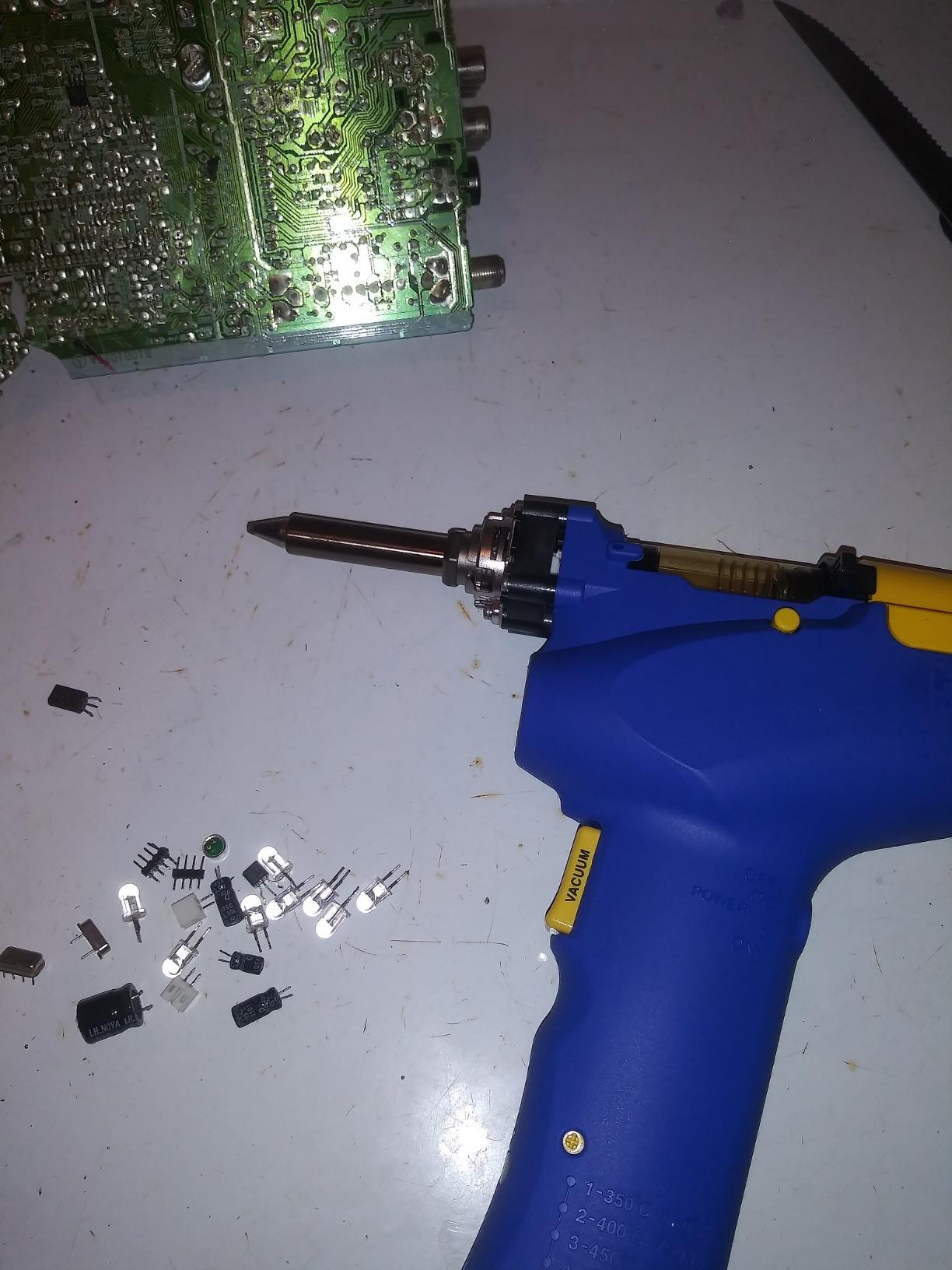
Four heat settings from 350C to 500C let you dial down for small signal boards and up for lead-free joints and big ground planes. The quick-change nozzle system swaps tips while the iron is still hot, and the solder collector has a locking latch so the spring stays compressed while you empty it.
Two things surprised me on a tool at this level. The included case is thin blow-molded plastic with weak hinges, and the metal stand is light enough that the stiff power cord shoves it around the bench. Neither affects the job, but both are things you notice on day one.
Why the Hakko FR-301 keeps its suction when cheaper guns do not
The chamber is designed to be opened and cleared quickly, and the latch means you are not fighting a spring while your hands are full. On every gun in this roundup, suction that fades mid-job is almost always a partially blocked nozzle or a saturated filter rather than a weak pump.
Because the nozzle changes while hot, you can move between bore sizes mid-job instead of waiting for cooldown. On multi-lead parts that is the difference between one clean pull and three reheats.
When the Hakko FR-301 is the wrong buy
It is not ESD safe, which matters if you are pulling parts off live boards in a repair shop environment. It also is not a small-parts tool, and the replacement tips are expensive with only one size in the box.
If you desolder twice a year, this is far more machine than you need. The single biggest reason to skip it is if you mostly work on surface-mount parts, where a hot air rework station is the correct instrument.
2. YIHUA 929D-V Electric Desoldering Iron – Best Value
YIHUA 929D-V Electric Desoldering Soldering Iron Solder Sucker Desoldering Pump with Shorter Charging Handle and Desoldering Nozzles 1.0mm 1.2mm for Through-Hole Desoldering
Iron and pump in one
0.3 kg
110V
1.0mm and 1.2mm nozzles
Pros
- Two tools in one body for single-hand work
- Shorter handle reduces grip repositioning
- Removable solder storage tube
- Two interchangeable nozzle sizes
- Heat deflector keeps heat off your hand
Cons
- Fixed temperature with no adjustment
- Needs regular cleaning with the included pin
- Nozzles only change once the iron is fully cool
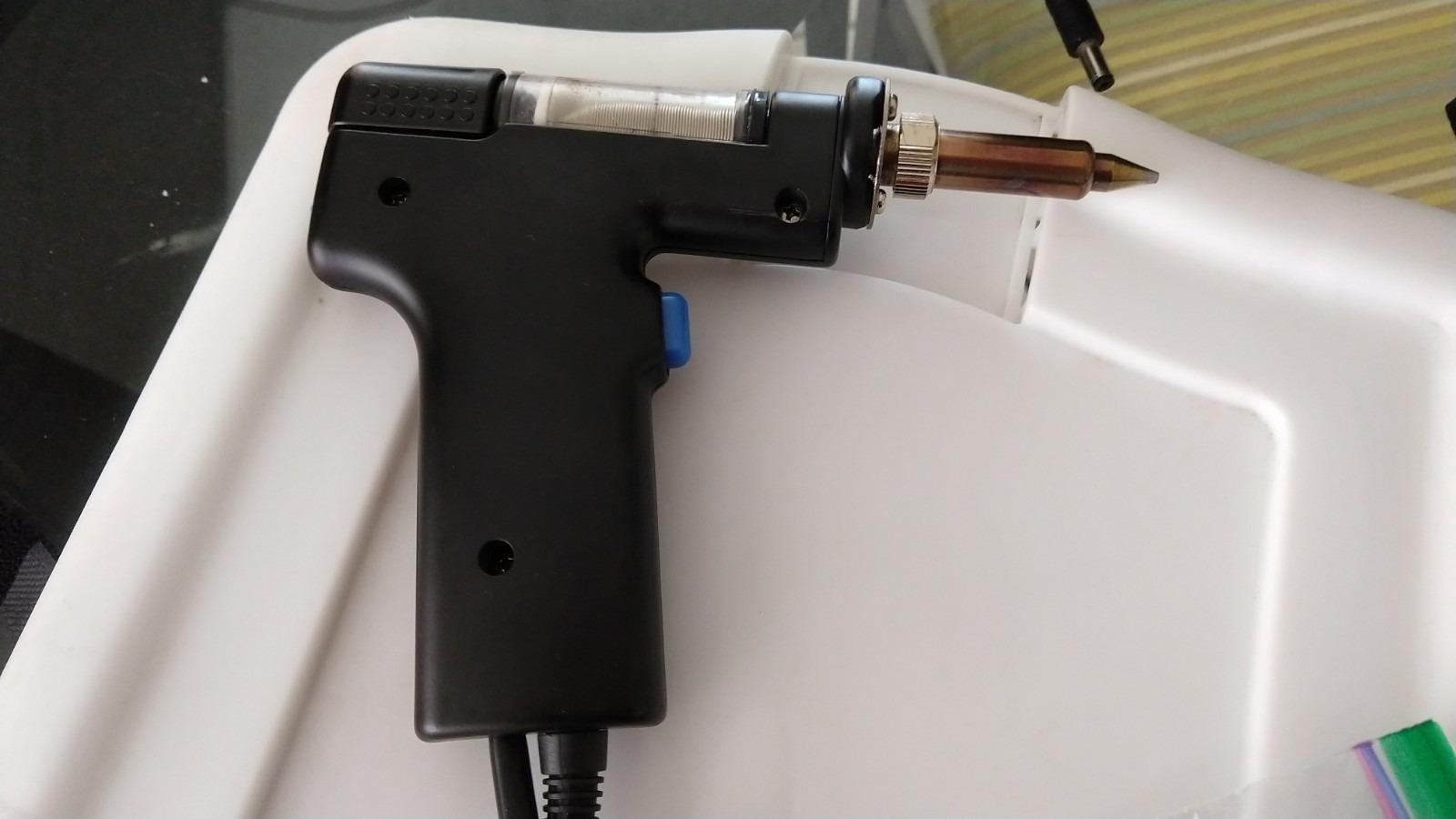
If you want one tool that does both jobs, this is the shape most people should start with. The heating element and the pump live in the same barrel, so there is no separate iron to pick up mid-task, and at 0.3 kg it is the lightest powered option we tested.
The trade is control. Temperature is fixed with no adjustment dial, and preheat takes roughly three to five minutes. On a small through-hole part that is fine, and on a large ground plane you will want a second iron adding heat, a rescue several forum users describe themselves.
Cleaning is straightforward because the scrap solder tube unscrews and empties, and the supplied pin clears the bore. That habit is not optional, though: this is the exact tool most often found with a clogged nozzle in owner complaints.
The shorter charging handle is a genuine improvement over the long-barrelled version of the same design. It reduces the wrist movement needed to keep the nozzle vertical on a board, which is what causes hand fatigue over a long session.
What a beginner actually gets here
You get a working solder sucker, a working iron, two nozzles, a stand, a sponge and a pin in one box. For a first electronics workbench that is genuinely everything you need to start pulling parts and harvesting components for reuse.
What you do not get is temperature control, which is why experienced users move up once they start working on lead-free solder or multilayer boards with large copper pours.
Who should skip it
Skip it if your work is mostly surface-mount or BGA. A hot air rework station handles those joints and this tool does not.
Also skip it if you expect to run long sessions, since the fixed temperature and small chamber mean more stops to clear and reheat.
3. YIHUA 948 Desoldering Station – Best for a Dedicated Bench
YIHUA 948 Standard Desoldering Station, 80W, with Auto Shutoff, Variable Precise Temperature (716°F ~ 896°F), ºC/°F display, Sleep Function and More.
80W station
716F to 896F
4.2 kg
LED display
Pros
- Station suction is far stronger than wick or a manual pump
- Single-handed 948G gun
- Nozzle temperature stabilised during extraction
- Filter tube can be cleaned or replaced
- Full accessory kit in the box
- Auto shutoff and sleep function
Cons
- Bulky 4.2 kg unit takes real bench space
- Needs periodic filter tube cleaning
This is the pick for anyone clearing a board with dozens of joints. The 948G handpiece holds a nozzle at a stabilised temperature while the station pumps, and on a long run of pins the consistency is what you notice rather than peak power.
Temperature runs from 716F to 896F with an LED readout in either unit. That control is what lets you drop the heat for a fragile pad and raise it for a lead-free joint, which the fixed-temperature handheld guns cannot do.
The accessory kit is unusually complete: four nozzles, cleaning pins, a gun holder, sponge, filter springs, ceramic filters and adsorption material. Having spare filter parts in the box matters more than it sounds, because a blocked filter reads as a weak pump.
At 4.2 kg this is a bench unit, not a portable one. If your workspace is a small shelf or you repair boards away from a desk, the footprint will push you toward a handheld gun instead.
When a station earns its extra bulk
It earns it when you are removing DIP integrated circuits, harvesting vintage components, or working through a board with more than a handful of joints. The uninterrupted single-hand workflow is where the time saving appears.
The filter tube can be cleaned for light use or replaced for daily use, so the running cost is predictable. Owners who treat that as part of the routine report the suction staying where it started.
When a station is overkill
Overkill for a hobbyist with a handful of donor boards and a fixed shelf. A handheld gun covers the same jobs and takes up a fraction of the space.
Also the wrong choice for surface-mount and BGA work, where you want airflow rather than a heated nozzle touching the joint.
4. Weller 7874B Manual Desoldering Pump – Best for ESD-Safe Work
Weller Manual ESD-Safe Desoldering Pump with Aluminum Body | 7874B
Hand powered
ESD-safe aluminum
0.08 kg
Use with a separate iron
Pros
- Aluminum body that holds up over decades
- Suction strong enough to skip wick on small jobs
- One-hand button operation is repeatable
- Rubber handle gives a secure grip
- No power or filter changes needed
Cons
- Jams more often than newer designs
- Needs real technique and dexterity
- Not ideal for limited hand mobility
This pump has been on benches for decades and the reviews reflect that, with owners describing units that have outlasted several cheaper successors. At 0.08 kg it is the lightest tool here and it needs no power, no filters and no consumables of any kind.
Being ESD safe is the reason to choose it over other manual pumps. If you work near powered boards or static-sensitive parts, a metal body that is properly grounded through your strap is worth more than any extra suction.
It pairs with a standard soldering iron, so you keep your existing tip temperature control. That makes it the most flexible tool in the roundup for mixed work.
Why experienced users still reach for it
For one or two joints, a pump beats a station on every axis. There is nothing to heat up, nothing to clean out but the tip, and no chance of the pump itself failing.
Reviewers commonly note the suction is strong enough to remove solder without wicking the joint first, which keeps the pad clean for the replacement part.
Where it frustrates people
It needs coordination. Positioning the nozzle on a hot joint and cocking the pump at the right moment is a skill, and a jam mid-pull means stopping to clear the tip before you can continue.
If you are removing large lead counts, this is the wrong tool and a powered gun will be far faster.
5. Anesty ZD-915 Digital Vacuum Station – Best for Lead-Free Solder
Anesty ZD-915 Pro Digital Vacuum Desoldering Station, Solder Removal Tool | Built-in Vacuum Pump, Desoldering Gun for Electronics Repair
80W digital
Up to 450C
PTC with tip sensor
110V
Pros
- Quick warm-up with strong vacuum
- Good value against professional stations
- Clear LCD with C and F selection
- Settings retained at power off
- Heavy base stays planted on the bench
- Removes DIP parts on the first attempt
Cons
- Unheated suction tube can clog if skipped
- Manual is thin
- Some buyers received a different brand label
The ZD-915 was designed with lead-free work in mind, and the PTC heating element with a tip-mounted sensor is the reason it holds temperature on joints that run hotter than traditional rosin-core solder needs.
A microprocessor-controlled handpiece and a built-in vacuum pump give single-hand operation on single and double-sided boards, with the digital display showing both units and recalling your last setting after a power cut.
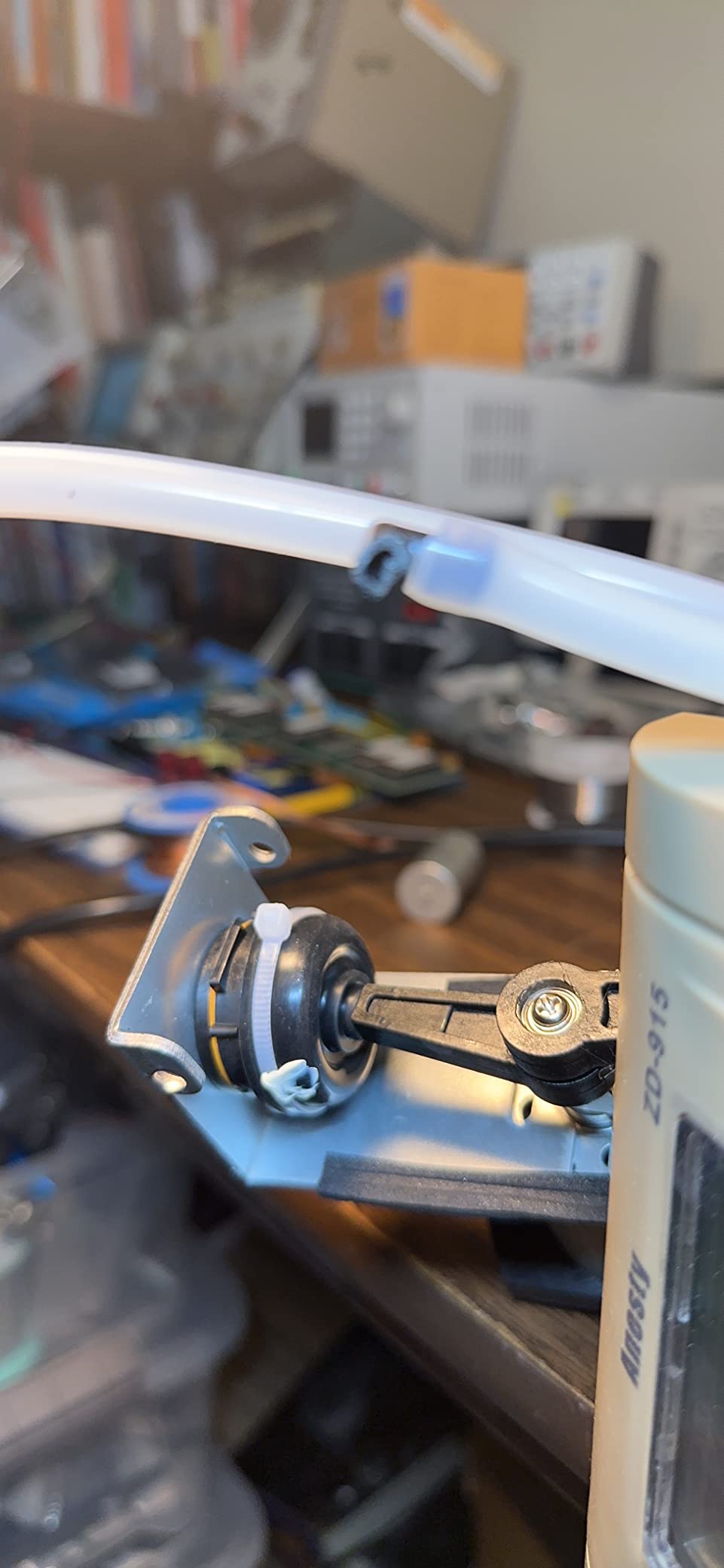
The glass sight tube on the front is a small detail that matters. You can see filter condition without taking the unit apart, so you know when suction drop is filter saturation rather than a nozzle problem.
Tips arrive pre-soldered, so you only need a few minutes of warm-up before the first job rather than a full tinning session.
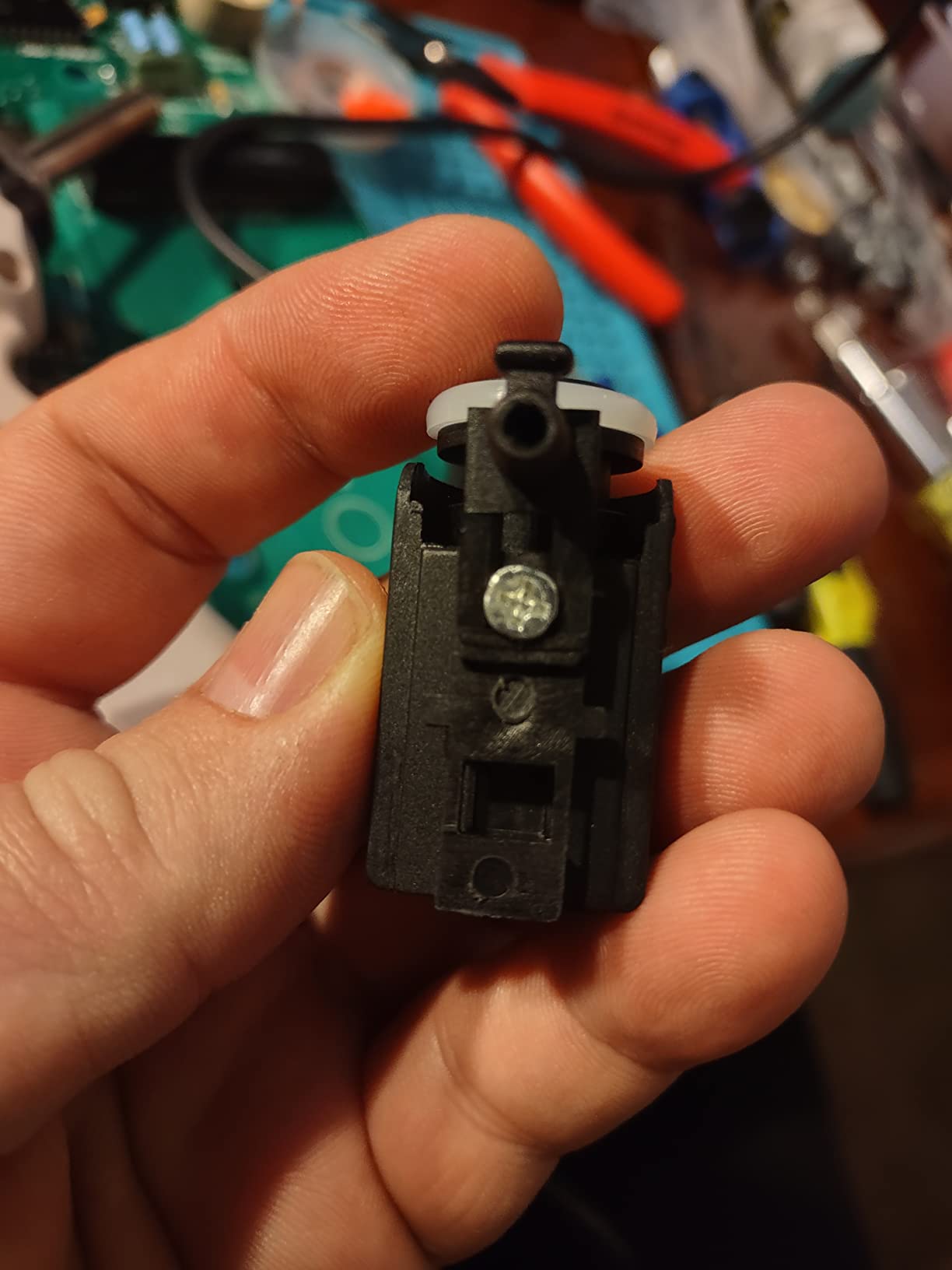
What the digital control actually buys you
On a multilayer board with a large ground plane, heat bleeds away from the joint faster than a small gun can replace it. Adjustable temperature is the fix, and owners specifically report first-attempt removal of DIP integrated circuits once the setting is dialled in.
The memory function means a job interrupted for a phone call does not mean re-setting the station when you come back.
What to watch out for
The section of suction tube that runs unheated will collect old solder if you skip cleaning, and that is the dominant owner complaint on this model. Clean it after every session and the vacuum stays where it started.
Buy from a seller who lists the actual brand on the listing, since a few buyers reported a different label on arrival.
6. VIRALLOY SS-786 Manual Pump – Best for Self-Cleaning
Solder Sucker Tool No Clog Silicone-Tip Manual Desoldering Pump Soldering Accessories for Solder Remover – Unrivaled Suction • No Power Needed • Ultra Low-Maintenance • Best-in-Class Desoldering Gun
Manual
CNC aluminum
350C silicone tip
6.52 inches
Pros
- Much stronger suction than cheap plastic pumps
- Self-cleans and ejects waste on every reset
- No batteries
- cords or filter changes
- CNC-machined aluminum with a solid feel
- Ships with eight spare silicone tubes
- Longer internal shaft reduces clogs
Cons
- Slick finish is hard to grip when greasy
- Short silicone tube is easy to lose
- Heavy use still needs cleaning back to the gasket
The defining feature is the reset. Every time you cock it, the shaft ejects the solder waste rather than storing it in a chamber, so there is no disassembly routine and nothing to clog deep inside the tool.
That design makes it a strong partner for a cordless iron such as the Pinecil V2. No pump housing, no filter, no lead, and the silicone tip tolerates direct contact at up to 350C.
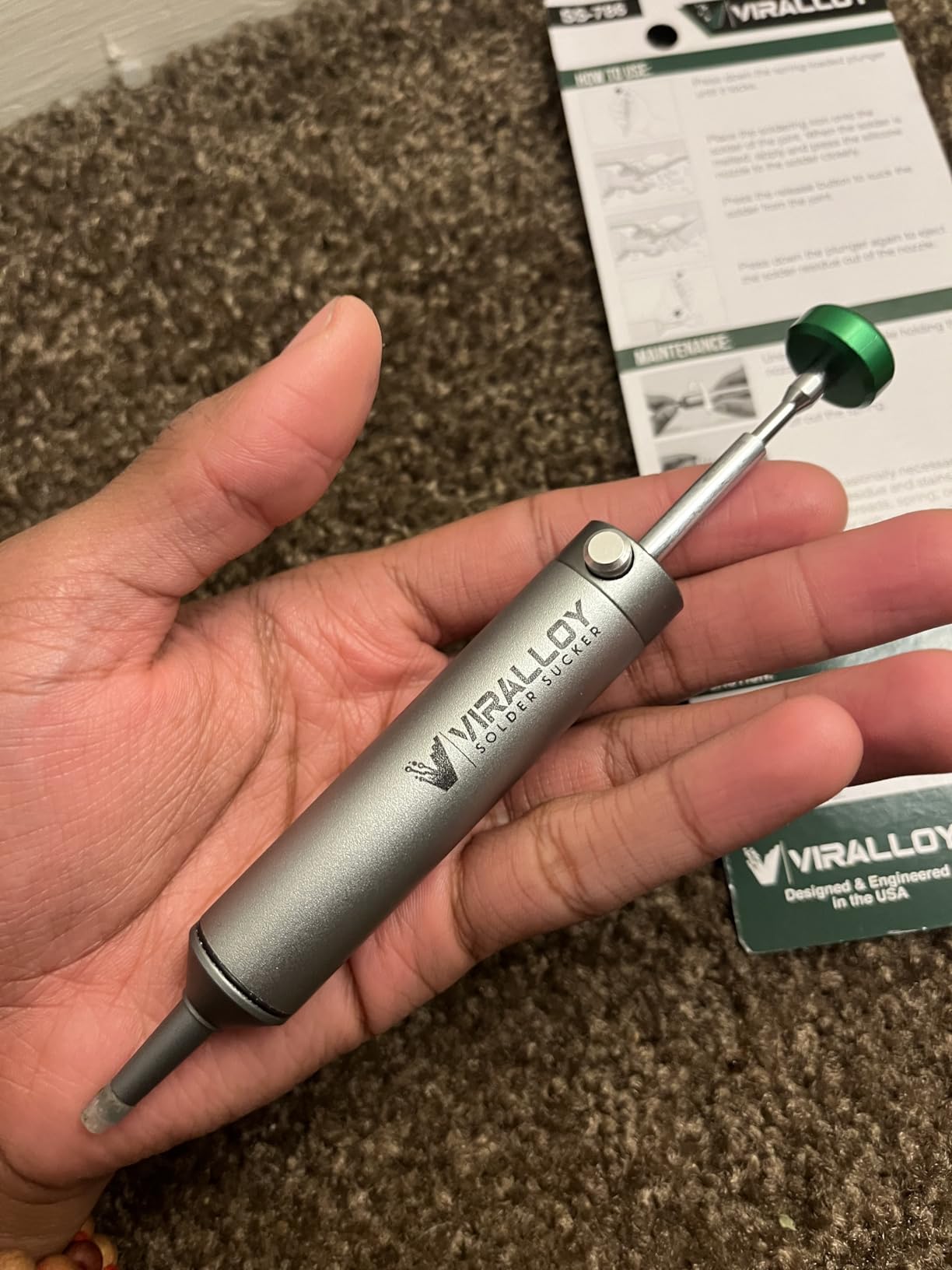
Suction is the strongest in the manual group here, clearing a joint in a single pull more often than not. The aluminium body is machined rather than cast, and owners consistently describe it as a clear step up from plastic pumps.
Eight spare silicone tubes are in the box, which matters more than it sounds because that tube is the consumable part and it is small enough to lose.
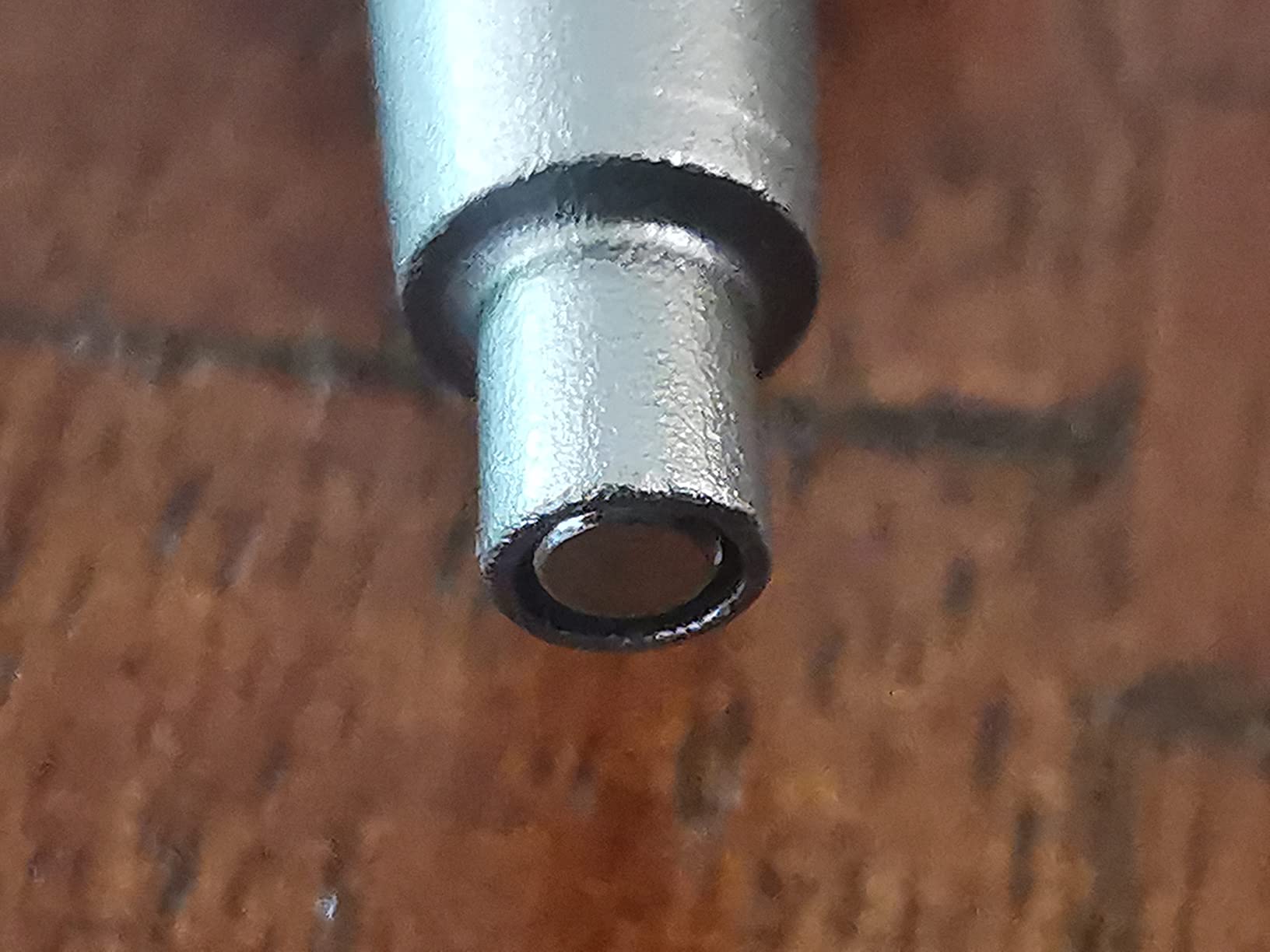
Why self-cleaning changes the maintenance habit
Most tools ask you to clean before or after every job. This one asks you to do almost nothing, which is why it ranks well with people who own several tools and use whichever is closest.
That also makes it the best manual option for a shared bench or a field kit, where disassembly is not practical.
Where it falls short
The finish is slick out of the box and can feel slippery with bare or greasy hands. It also feels undersized for large jobs and high lead counts compared with the longer-barrelled manual pumps.
For lead-free work, expect more frequent tube changes than with rosin-core solder.
7. Vampliers VT-001-SS Solder Sucker – Top Rated
VAMPLIERS Professional Grade Solder Sucker Made in Japan Desoldering Pump
Made in Japan
Aircraft-grade aluminum
2.1 ounces
4-year warranty
Pros
- Very powerful suction that usually clears a hole in one shot
- Silicone nozzle resists burning and gives close pad contact
- Made in Japan from heavy-duty aluminum
- Self-cleaning shaft works without opening the tool
- Compact one-handed pistol grip
- Spare 3mm and 4mm silicone tubes included
Cons
- Spring is stiff and can need two hands to re-cock
- Spits solder back out on reload more than cheap pumps
- Lead-free solder clogs more often
This is the highest rated manual tool we tested and the one we would pack for a repair visit. At 2.1 ounces and 6 inches long it disappears into a tool roll, and the build quality is obvious the moment you pick it up.
The silicone nozzle is rated for direct iron contact at up to 350C, so you can melt the joint and press the tip straight onto the pad. That close contact is what makes the suction transfer the solder rather than just pulling air around it.
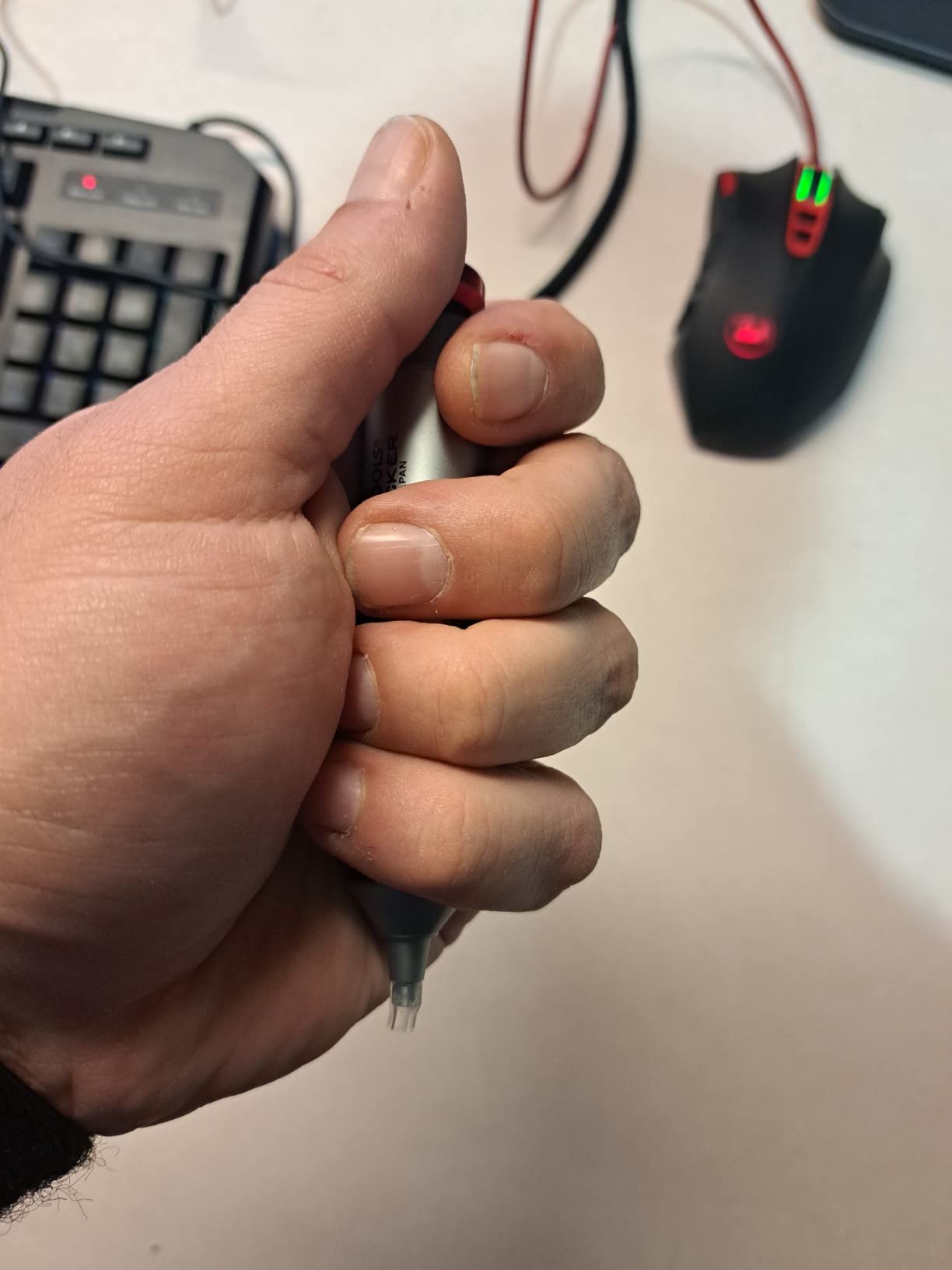
A built-in self-cleaning shaft keeps it working over long sessions without opening the body, and the spare silicone tubes can be cut to length to suit how you hold it.
The warranty is four years, extendable to five with registration, which is the longest coverage in this roundup and a fair signal of how the manufacturer expects the tool to last.
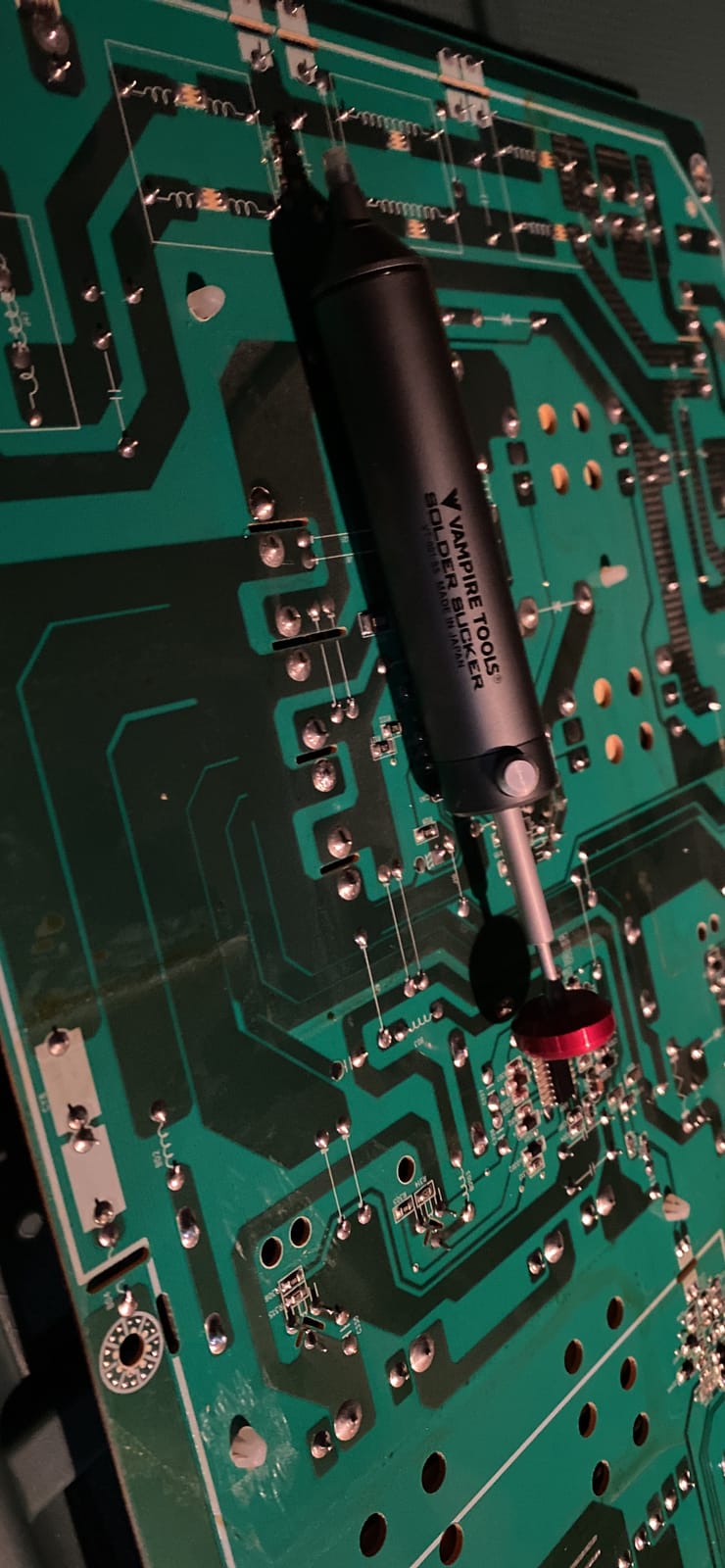
Why it suits portable and field repair
There is nothing to power, nothing to filter and no consumable beyond a tube that comes with spares in the box. That combination of low weight and low maintenance is rare.
Owners on repair forums repeatedly describe clearing a hole in one shot, which is the number one thing you want from a manual pump.
Where it will test your patience
The spring is stiff, particularly when the tool is new, and some users need two hands to re-cock it at first. It also spits solder back out on reload more readily than cheap plastic pumps, so point it away from your work.
On lead-free solder the nozzle needs more frequent attention than with rosin-core.
8. EDSYN DS017 SOLDAPULLT – Best for Long Reach
DS017 The Original EDSYN Deluxe Desoldering Solder Sucker SOLDAPULLT Made in USA
Made in California USA
13 inches long
3.5 ounces
Bayonet barrel
Pros
- Exceptionally strong suction from a large chamber
- Cleans larger through-hole parts on the first attempt
- Light at 3.5 ounces yet steady when fired
- Bayonet barrel makes cleaning fast
- Self-cleansing shaft ejects solder on every cock
- Internal replacement parts available
Cons
- Longer and wider than typical aluminum pumps
- Large chamber takes force to compress at first
- Small jump when fired needs bracing
- Only a 3-month warranty
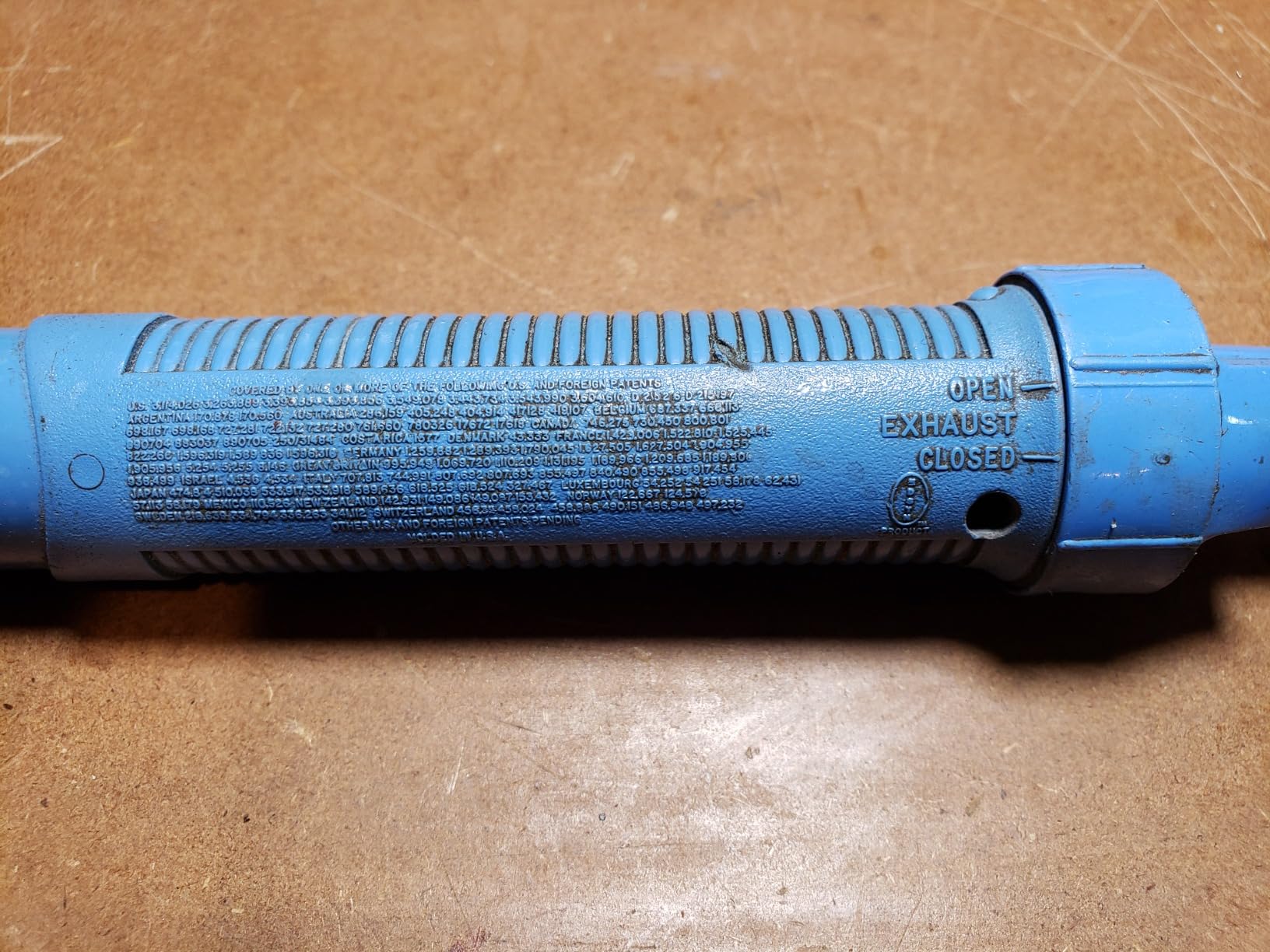
At 13 inches and 90 grams this is the longest tool in the roundup, and that length is the point. On a tall electrolytic capacitor or a component deep inside a chassis, the extra reach is the difference between reaching the joint and not.
Suction is the strongest of the manual pumps we tested. Owners report cleaning larger through-hole components almost without fail on the first attempt, which is exactly where shorter pumps fall short.
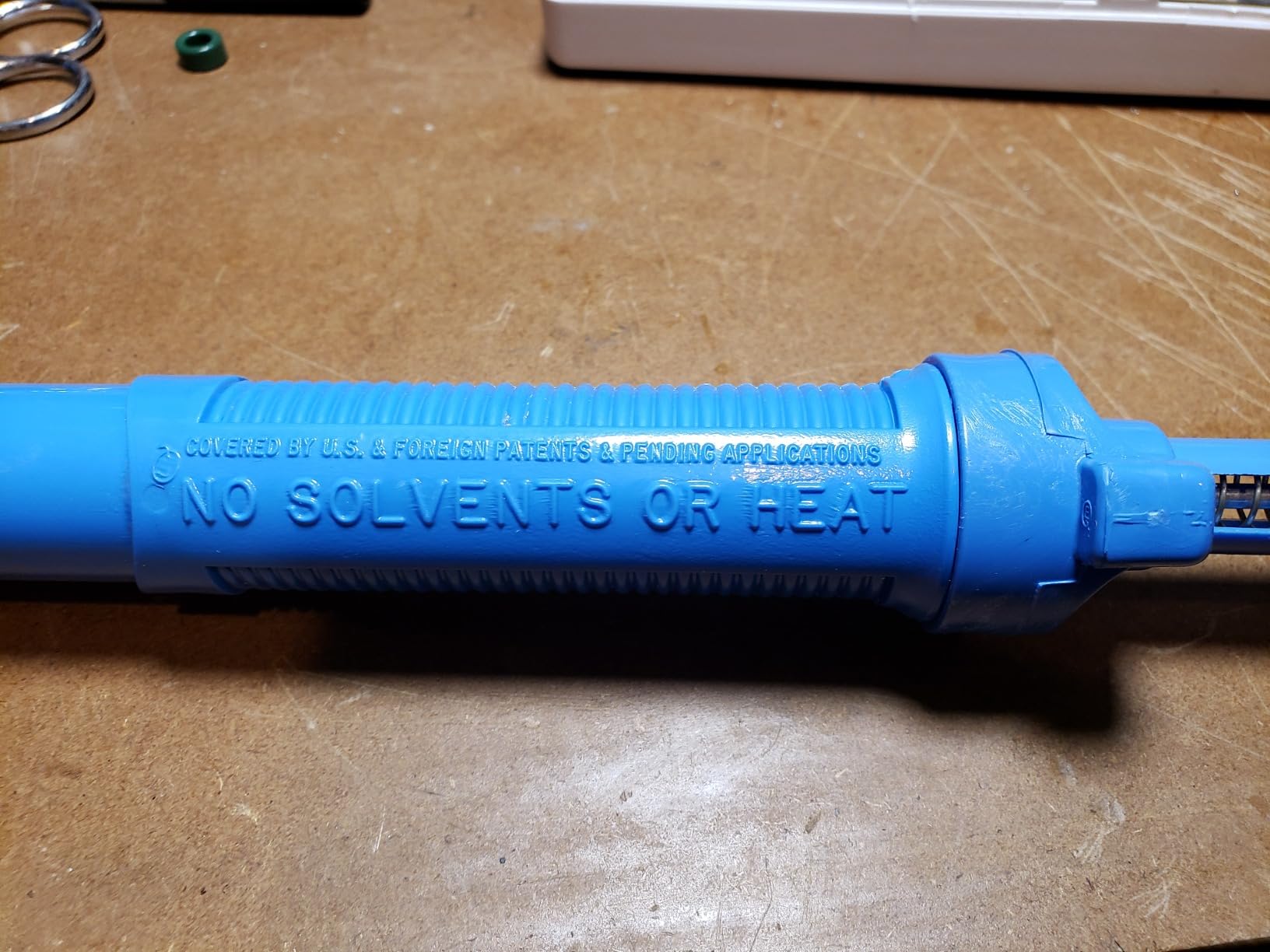
The bayonet-twist barrel comes apart for routine cleaning in seconds, and the self-cleansing shaft ejects solder from the tip on every cock so it does not accumulate in the nozzle.
It is made in California from heat and corrosion resistant materials, and replacement internals are available from the manufacturer, which is rare in this category.
Why reach beats portability here
Where a short pump forces you to angle the iron awkwardly to reach a joint, this one lets you approach straight on. That protects the surrounding parts and improves your view of what you are doing.
The grip works for both left and right handed users, and the weight is low enough that holding it steady at arm length is not tiring.
Where it is awkward
Thirteen inches will not fit in a small tool roll, and the wide barrel will not sit in a crowded bench drawer. The chamber also takes real force to compress the first few times you use it.
Plan to brace the tool against the board or a component lead, because it moves slightly when fired.
9. K KERNOWO 929D-V – Best Complete Kit
K KERNOWO 929D-V Electric Desoldering Soldering Iron Sucker – Desoldering Pump Tool with 1.0mm & 1.2mm Nozzles, Desoldering Gun with Wick & Cleaning Pin for Through-Hole Solder Removal
30W 2-in-1
450C rating
7.62 inches
110-127V
Pros
- One-handed heating and suction
- Heat deflector reduces hand fatigue
- Removable waste tube and cleaning pin
- Kit includes wick
- sponge
- pin
- two nozzles and a solder tip
- Handles lead-free solder well
Cons
- No temperature control at all
- Soft supplied tips wear out and lose suction
- Plastic body cracked after a light drop
- Smoke on first use from the mica coating
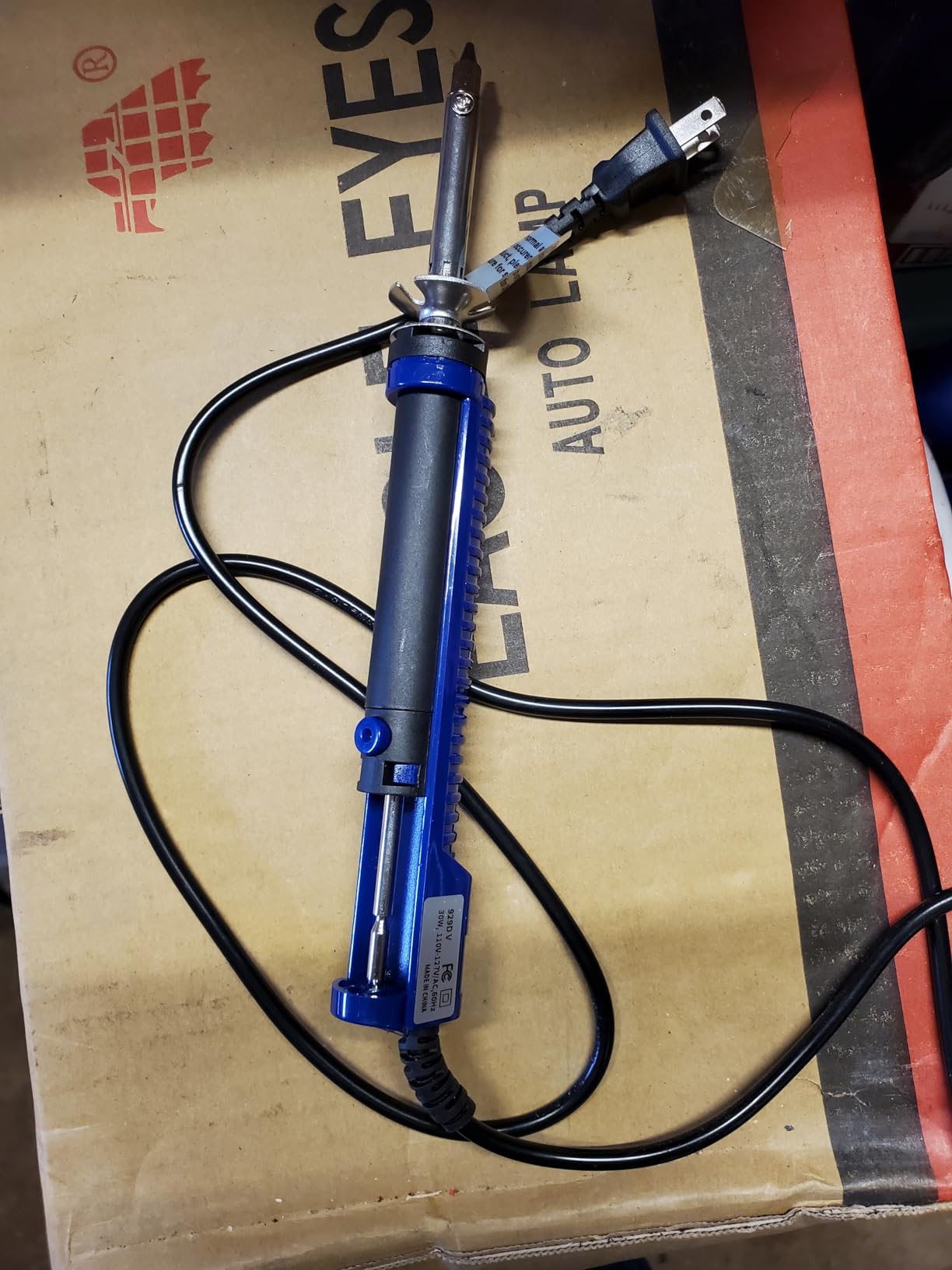
This is the most complete budget box in the roundup. Along with the iron-pump combination and two nozzles, you get a spool of wick, a sponge, a cleaning pin and a solder tip, so you can start work without buying anything else.
At 7.62 inches it is compact, the ceramic element reaches a 450C rating, and it warms up in about three minutes. Owners single out its performance on lead-free solder, where wicking alone tends to struggle.
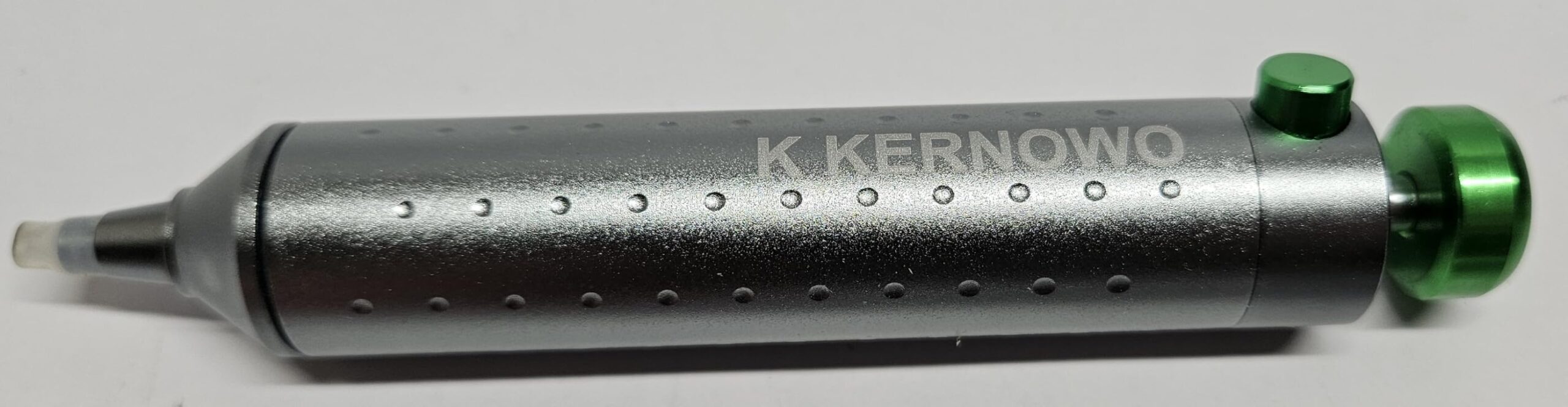
Two caveats you should know before buying. There is no temperature control whatsoever, so you are managing heat purely by touch and dwell time, and a light touch matters more here than on an adjustable gun.
The supplied tips are soft and wear out relatively quickly, at which point suction starts to drop. Budget for replacements rather than assuming the included tip lasts.
Why the kit contents matter more than the tool
Including wick, sponge, pin and a spare solder tip removes the small friction points that make a first project stall. It also means you have a fallback tool for the one joint where a gun is overkill.
The heat deflector between the tip and your hand is a real comfort feature over a long session, and the short handle keeps the wrist in a natural position.
Who should skip it
Skip it if you drop tools. A plastic body is not forgiving, and one owner reported cracking after a light fall onto a hard surface.
Expect some white fumes during the first 20 minutes of use from the mica heating coating, and ventilate the bench while that happens.
10. WEP 929D-V Five Nozzle Kit – Best Nozzle Range
WEP 929D-V 2 IN 1 Desoldering Iron Electric Solder Sucker with 5 Nozzles 0.8/1.0/1.2/1.5mm Soldering Tool Kit with Built-in Desoldering Pump, Iron Stand, Sponge, Cleaning Pin Solder Remover
30W 2-in-1
Five nozzles 0.8mm to 1.5mm
3 minute preheat
110-127V
Pros
- Five nozzles covering four through-hole sizes
- Single-hand soldering and desoldering
- Heat deflector allows continuous work
- Removable solder tube plus cleaning pin
- Stand
- sponge and pin included
- One year of USA technical support
Cons
- Nozzles are consumable and wear out
- Fixed temperature with no adjustment
- Basic spring-loaded stand
Five nozzles is the reason to pick this kit over the otherwise similar budget guns. Most competitors include two, and the 0.8mm bore here is the size you actually want for fine-pitch through-hole work rather than a single fixed compromise.
The workflow is the familiar one: heat and suck in a single hand, with a heat deflector that keeps the barrel end away from your grip so you can work continuously without cooking your fingers.
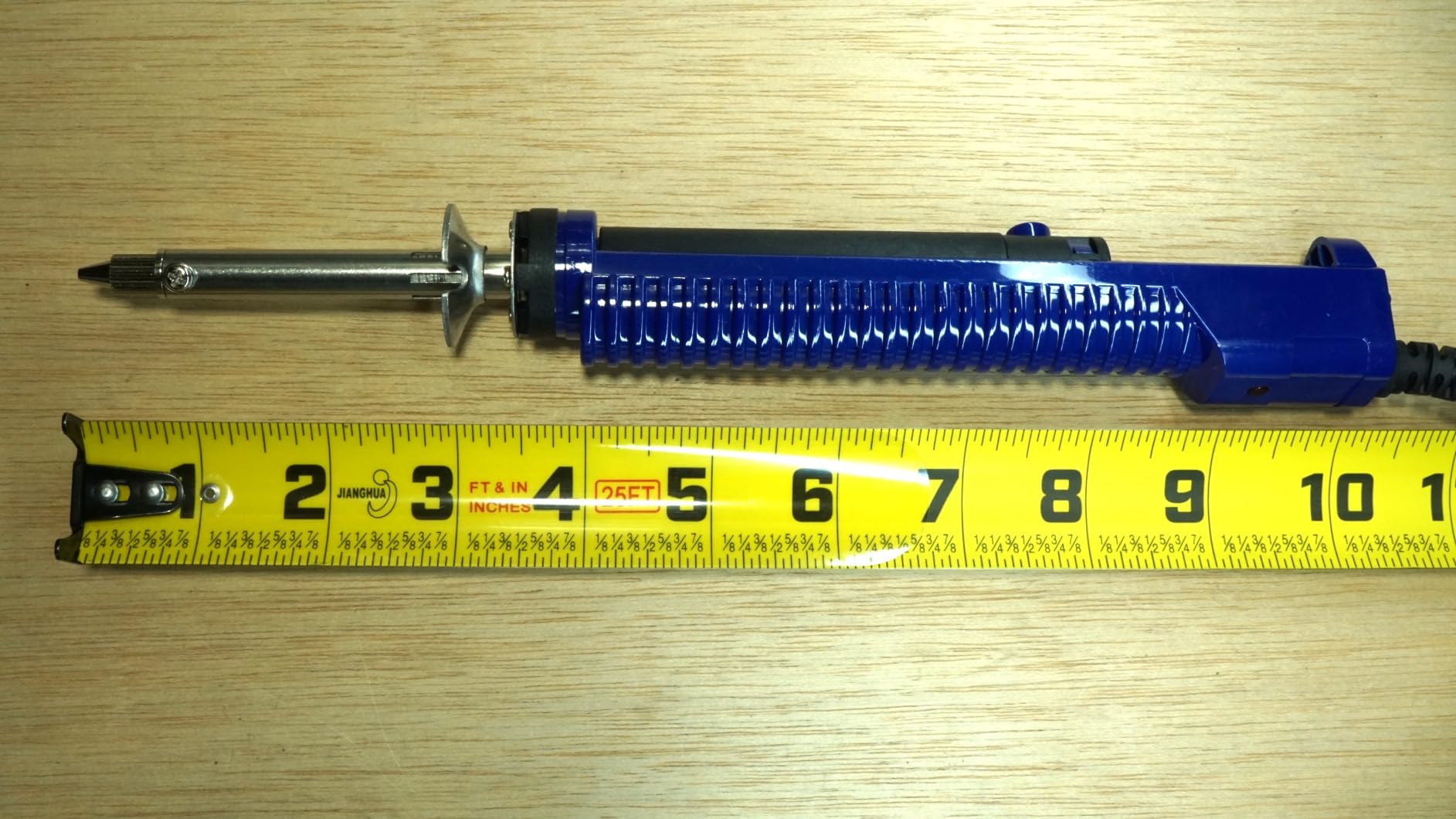
The removable scrap solder storage tube empties without tools, and the cleaning pin keeps the bore open. Preheat takes about three minutes, and the tool is rated for 110-127V with a USA plug.
Nozzles are consumables, and you should only change them once the iron is fully cool. Buying a spare set early is worth it because the small bore sizes wear first.
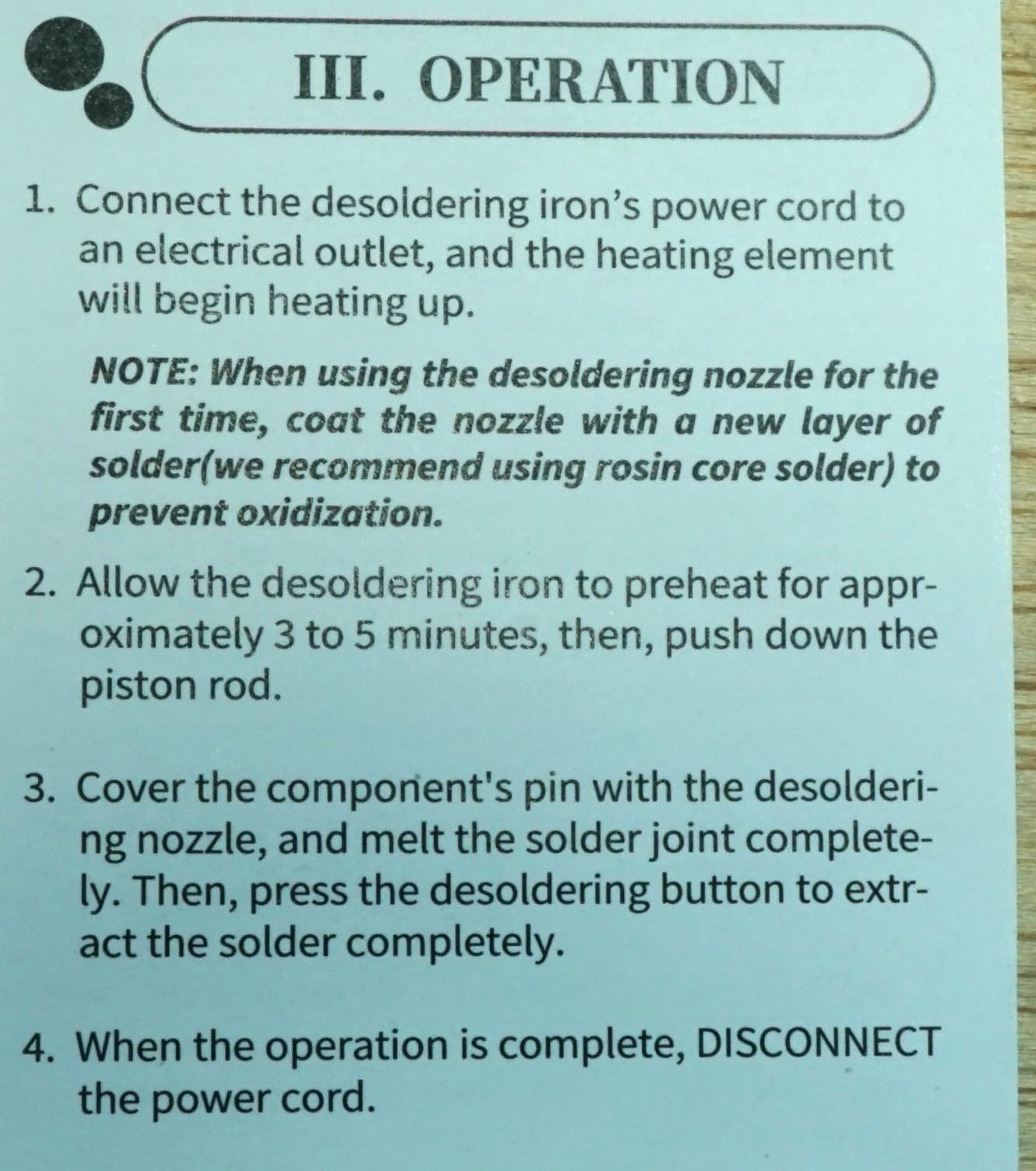
How to match a nozzle to your joints
Pick a bore that the solder column can actually flow into. Too wide and the pump pulls air around the joint instead of the solder, too narrow and the solder never enters the nozzle.
As a working rule, the bore should be slightly wider than the component lead it passes through. That is why a kit with 0.8mm and 1.5mm covers more ground than one with two middling sizes.
Where it falls short
Temperature is fixed, so it cannot be dialled down for heat-sensitive parts or up for stubborn lead-free work. The stand is a basic spring type and gets pushed around by the cord.
For anything beyond through-hole joints, you want a hot air rework station rather than more nozzles.
11. HighTop Electric Desoldering Pump – Best for Big Joints
HighTop Automatic Desoldering Pump Vacuum Solder Sucker Tool Portable AC110V 30W Electric Desoldering Gun Repair Solder Removal Tool Solder Sucker Iron Tin for DIY with 3 Soldering Suction Tips
30W
400C ceiling
11 inches
Three nozzles to 2.5mm
Pros
- Strong suction with a hollow tip design
- Pulls solder quickly from large joints
- Three nozzle sizes including 2.5mm
- Stand-alone and portable with a carry bag
- Good value against full stations
Cons
- Not fully automatic
- needs a separate heating tool
- Fixed power with no temperature adjustment
- 400C ceiling limits high-melt solder
The 2.5mm nozzle is what separates this one. Large connectors and heavy leads need a bore big enough to take the solder column, and this is the only budget electric pump in the roundup that includes one.
Suction is genuinely strong for the class, pulling solder from big joints quickly and leaving clean pads behind. Owners using it on thick-film parts and large components report consistent results.
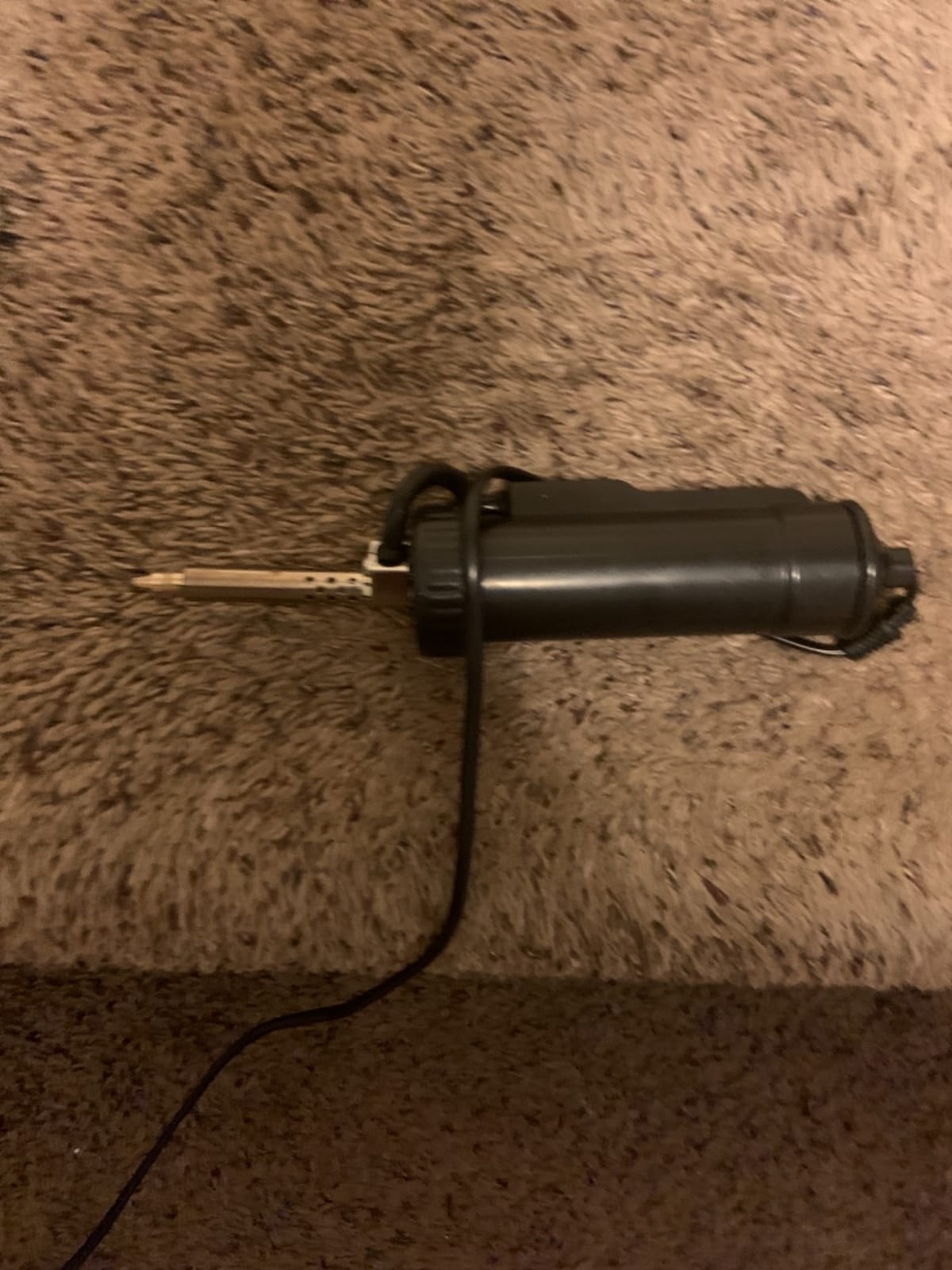
Be clear about what it is though. This is a suction device with a heating element, not a combined iron, so you heat the joint with your own soldering iron and press the hot nozzle on before triggering the side button.
That two-tool workflow is slower than a true 2-in-1, and the 400C ceiling is low if you work with high-melt solder.
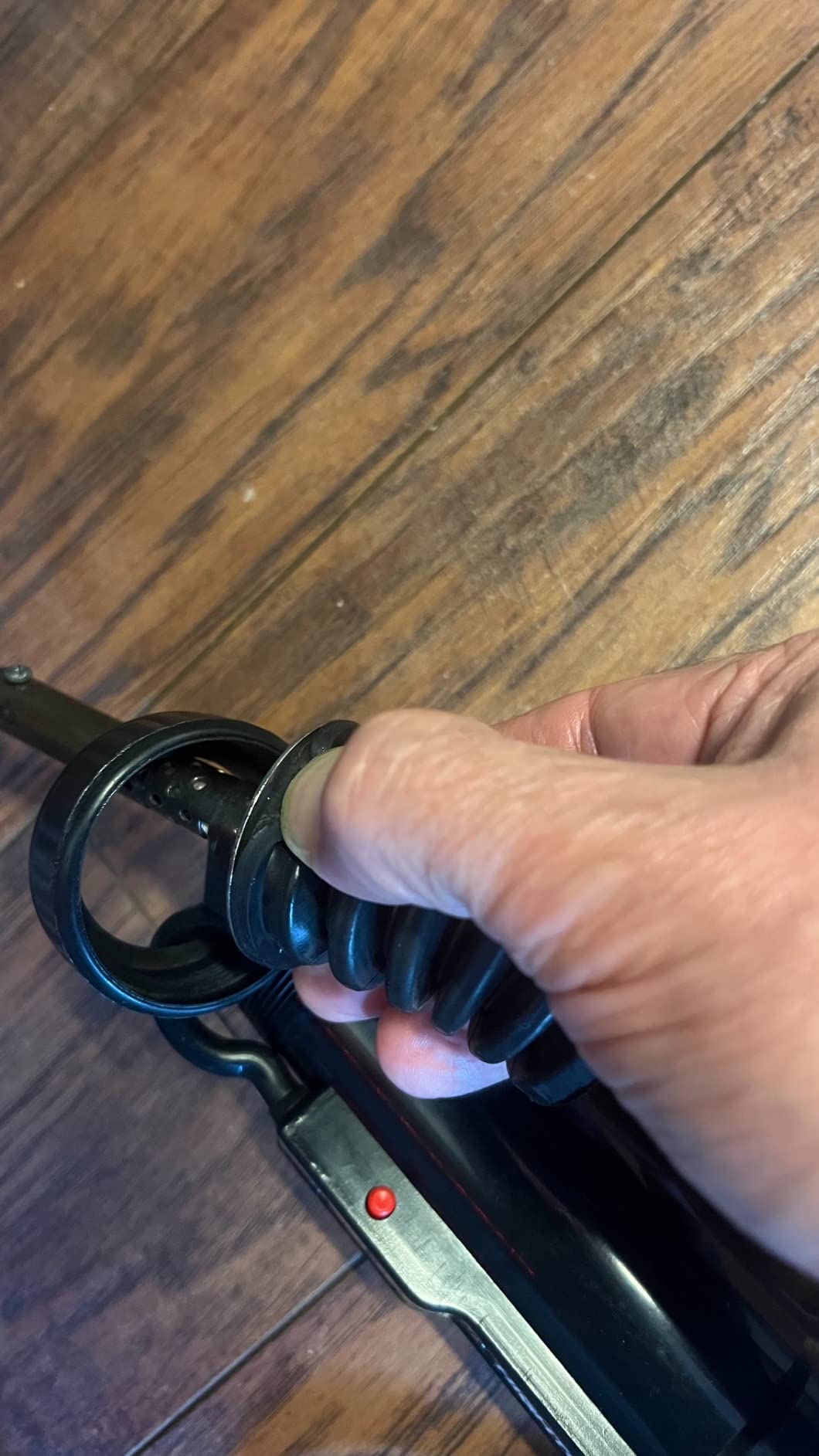
When a separate heating tool is not a problem
If you already own a good temperature-controlled iron, this arrangement is arguably better. You keep full control of tip temperature and use the pump only for extraction, which is what it is good at.
It also means the tool stays useful if you ever want to run it alongside a cordless iron.
Where the compromise shows
Warm-up takes about five minutes, and because suction triggers from a side button rather than the iron trigger, you are coordinating two hands on one tool.
If you want one-hand operation with no temperature ceiling, choose a 2-in-1 handheld or a station instead.
12. VISLONE Electric Solder Sucker – Smallest Bench Footprint
Solder Sucker, Automatic Desoldering Pump Vacuum, Portable Electric Solder Tin Sucker, Vacuum Soldering Remove Pump Desoldering Machine, AC110V 30W with 3 Soldering Suction Tips
30W mica heating
1 foot long
Metal alloy tip
110V
Pros
- Large volume and strong suction for solder removal
- Metal alloy tip resists oxidation
- Stainless steel cover with a built-in element
- Portable and usable independently for long periods
- Suited to thick-film parts and large components
Cons
- Basic mica element with limited documentation
- Only one suction nozzle in the box
- Steel rod is the only cleaning tool supplied
This is the most compact powered option here at about a foot long, and it suits a small bench or a drawer you reach for occasionally. Suction volume is high for a 30W tool and it pulls solder from large components without complaint.
The metal alloy tip resists oxidation, which matters because an oxidised tip loses heat transfer and you end up pushing a cold nozzle against a hot joint. The stainless cover carries the heating element inside it.
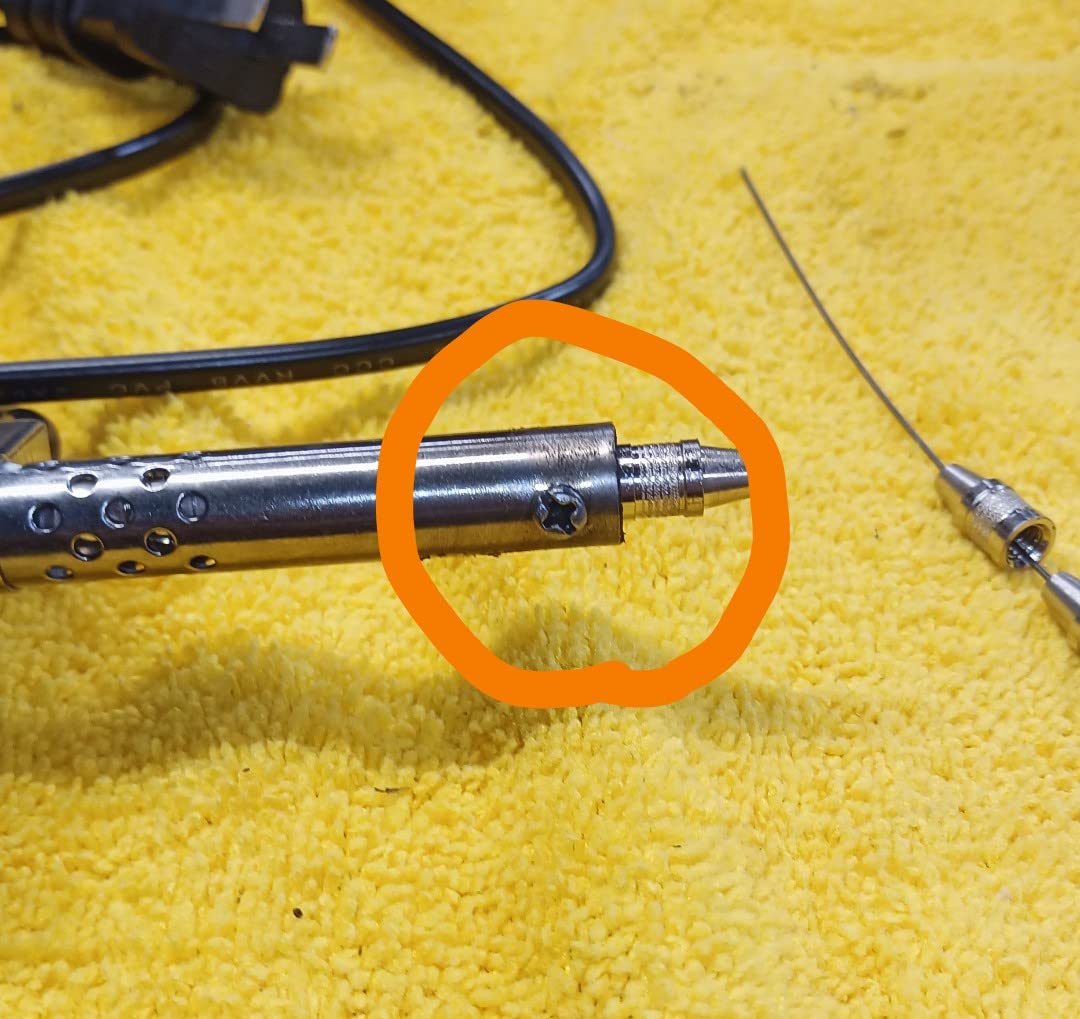
It can be used independently once powered rather than needing a station, so it behaves much like the other handheld guns in shape even though the documentation is thin.
What you get in the box is minimal: the tool, a steel drilling rod for clearing the bore, and a single suction nozzle. If your work needs more than one bore size, budget for a separate nozzle set.
When one nozzle is enough
If your work is a consistent type of joint, one well-sized bore is all you need. The steel rod keeps it clear, and the strong suction means you rarely need to try twice.
It is also a reasonable second tool to keep away from a main bench, for a garage or workshop where space is tight.
Where it disappoints
Documentation is minimal, so you are working from the physical tool rather than a manual, and the mica element is a step below the ceramic heaters elsewhere in this list.
With a single included nozzle it is the least flexible of the twelve. Choose the five-nozzle kit instead if bore variety matters to your work.
Desoldering Gun vs Wick vs Pump vs Hot Air: Which Tool for Which Job
A desoldering gun is the right tool for through-hole joints, and for anything else you want a different instrument. Matching the tool to the job is the single fastest way to stop damaging boards.
For a single joint, use desoldering wick. Braided wick with flux draws solder out of the hole without any direct heat on the pad, so the risk of lifting a trace is close to zero. It is slow on big joints and it leaves residue that needs cleaning, but for one or two pins it is hard to beat.
For occasional work in general, a manual solder sucker is the honest answer. Both the Weller 7874B and the Vampliers clear a heated joint in one pull, and neither needs power, filters or cleaning beyond a tip. If you desolder a handful of joints a year, this is where your money should go instead of a powered gun.
For surface-mount and BGA work, use a hot air rework station. Airflow lifts components without a nozzle pressing down on the pad, which is why it is the standard for phone and laptop board microsoldering. It needs more care, a steady hand and usually a third hand to hold the nozzle.
A desoldering gun cannot do BGA rework. Its nozzle is sized for a through-hole lead, and pressing it onto a fine-pitch array will either not seal or will tear the pads.
One naming note before you shop around further, because the search results mix categories badly. An electric desoldering gun shares nothing with the pneumatic [pellet guns](https://eatcreatesleep.net/best-pellet-guns/) or [airsoft guns](https://eatcreatesleep.net/best-airsoft-guns/) we test, and neither is a substitute for a solder sucker. If you want the full field-service kit rather than a bench tool, our [nail gun](https://eatcreatesleep.net/best-nail-guns/) roundup covers the other side of the workshop.
What Actually Matters When You Buy a Desoldering Gun in 2026
Suction consistency beats peak suction. A pump that starts strong and fades after ten joints is worse than one that holds steady, so look for a tool where cleaning the nozzle and chamber is fast and obvious.
Heat recovery is the second criterion. Wattage on the box tells you little; what matters is how quickly the tip returns to temperature after absorbing heat into a large ground plane, because that is what decides whether the joint comes out or needs a second heat.
Nozzle and chamber maintenance decides whether you keep the tool. Tools with a removable solder tube, a supplied cleaning pin and a quick-release nozzle system get used. Tools that need a full strip-down after every job get abandoned on the shelf.
Temperature control matters as soon as you leave single-layer hobby boards. Four or more settings, or a digital dial, is the difference between confident work on a fragile pad and a scorched one.
Ergonomics are easy to overlook. Weight, handle length and whether the heat deflector sits between the tip and your grip decide how long you can work before your hand complains, and handle fatigue is what makes people drop a component into the board.
Mains voltage is a return risk. Every electric gun and station here is rated for 110-127V with a USA plug, and a unit specified for 220V will not perform correctly on a 110V circuit.
Finally, check that spare nozzles, tips and filters exist for the model. A tool with no consumable supply is a tool that stops working the day its tip wears out, and that has ended more bench purchases than any other factor.
How to Use a Desoldering Gun Without Lifting a Pad
Most lifted pads are caused by technique, not by the tool. Work through these steps in order and the majority of them disappear.
Choose a nozzle bore slightly wider than the component lead so the solder column can flow into the nozzle.
Set the temperature for the solder in front of you, starting lower for heat-sensitive boards and rising for lead-free.
Apply fresh flux to the joint. Flux is what lowers the melting point, and a dry joint is a joint that needs more heat than most people are willing to give it.
Heat the pin and the pad together, not just the pin. A cold pad is the usual reason a joint refuses to release.
Trigger the pump so suction is established before the solder flows, then keep the trigger pulled while you lift.
Pause for a moment once the joint is molten so the solder actually travels down the nozzle instead of sitting on the pad.
Cool before you pull the component. Grabbing a hot part twists the still-soft pad, which is the most common cause of trace damage.
If the part will not move, add heat or flux and try again. Never lever against the pad with the nozzle.
If you do lift a pad anyway, the repair is usually simpler than it looks. Scrape the mask back to clean copper, run a thin strand of tinned copper wire across the gap, solder it in place, then re-tin the pad for the next component.
How to Stop Nozzle Clogs and Keep the Suction Strong
Suction fades because the bore is blocked, and every tool in this roundup needs the bore cleared after use. The cleaning pin takes seconds on the handheld guns and a short rod on the manual pumps, and the habit is what separates a tool that still works in year two from one that has been retired.
Work through a fixed routine rather than cleaning when you notice a problem. Heat the nozzle, run the pin through the bore while it is still soft, then clear the unheated section of the suction path, which is where the ZD-915 and the handheld guns both collect old solder.
Empty the collection chamber on the station models as well. The YIHUA 948 and the ZD-915 both use a filter tube that can be cleaned or replaced, and the sight tube on the ZD-915 lets you check condition without opening anything.
If a nozzle clogs mid-job, do not force the pin against a hard blockage. Let the element cool a little, then push the pin through while the solder is soft, and finish the joint with wick before you return to the gun.
Voltage, Grey Imports and Copies: What to Check Before You Order
Confirm the voltage on the listing before you buy. Every electric tool here is specified for 110-127V with a US standard plug, and importing a 220V unit is the most common reason a desoldering gun performs badly out of the box.
For branded Japanese tools, buy from a seller who states the importer and the warranty route. A genuine unit with a named US distributor and a stated warranty period is very different from a grey import with none, and counterfeit copies of popular models are widely discussed in repair forums.
For unbranded kits, check that the listing names the actual brand rather than only a model number, and confirm the box contents list matches what arrives. One station in this roundup drew reviews from buyers who received a different brand label than expected.
Check consumable availability too. A model with no replacement nozzles or filters is not a cheaper tool, it is a tool that ends.
Frequently Asked Questions
What is the best desoldering gun?
The Hakko FR-301 is the strongest all-round desoldering gun for PCB repair, with four temperature settings from 350C to 500C, closed-loop sensor heating and consistent suction. If you only desolder occasionally, a manual pump such as the Vampliers VT-001-SS or the Weller 7874B is the smarter buy, and for a bench that clears many joints the YIHUA 948 station is the better long-term tool.
Is a desoldering gun worth it?
A desoldering gun earns its place once you remove more than a handful of through-hole joints. Below that, a manual solder sucker plus desoldering wick costs far less, needs no maintenance and gives the same clean result on a single joint. Powered guns only make sense for volume work or multi-lead parts.
Why does my desoldering gun keep clogging?
Old solder solidifies inside the bore and in the unheated section of the suction path, so the pump pulls air instead of solder. Clear the bore with the supplied pin while the nozzle is still warm, clean the unheated tube section after every session, empty the collection chamber, and replace filters on a fixed schedule.
What is the best tool for removing solder?
It depends on the joint. Use desoldering wick for a single joint since it applies no direct heat to the pad, a manual solder sucker for occasional through-hole work, a desoldering gun for volume through-hole removal, and a hot air rework station for surface-mount and BGA parts.
Which desoldering pump is considered the best quality?
Among manual pumps, the Vampliers VT-001-SS is built in Japan from aircraft-grade aluminum with a self-cleaning shaft and a four-year warranty, while the EDSYN DS017 offers the strongest suction and the longest reach. The Weller 7874B is the pick when you need an ESD-safe metal body.
Will a desoldering gun lift pads or damage traces?
It can, but technique prevents it. Heat the pin and pad together, apply flux, establish suction before the solder flows, and always let the component cool before pulling it. Lifting a pad usually comes from twisting a hot part or levering against it with the nozzle.
What nozzle size should I use for through-hole joints?
Pick a bore slightly wider than the component lead so the solder column can flow into the nozzle. Too wide and the pump pulls air around the joint instead of the solder, too narrow and the solder never enters. Kits with five sizes cover more work than kits with two.
Do I need 110V or 220V for a desoldering gun?
In the USA you need 110-127V, which is what every model in this roundup is rated for. A 220V unit will not reach temperature properly on a 110V circuit. Always confirm the voltage and plug type on the listing before ordering, and check that the seller names a warranty route for your region.
The Best Desoldering Gun for PCB Repair in 2026
The Hakko FR-301 takes the title in 2026 for one reason: nothing else in this roundup combines four temperature settings, closed-loop heating and quick hot nozzle changes at the same level of consistency. It is the tool we would put on a bench that sees real through-hole work every week.
Pick the YIHUA 929D-V if you want one tool that irons and sucks, you are building a first electronics bench, and you can live with fixed temperature. Pick the YIHUA 948 if you clear dozens of joints at a time and have room for a 4.2 kg station on the bench.
Pick the Vampliers VT-001-SS if you desolder a few times a year or work away from a desk, and the Weller 7874B if static safety on live boards is part of the job. Whatever you choose, clear the nozzle before you put it down, because that single habit is what keeps suction where it started.