
If your basement reads above 60% relative humidity for weeks at a time and the upstairs living space will not drop below 55% even with the air conditioning running, you need more than a portable bucket machine.
The Waykar 120 Pint 6000 Sq. Ft Energy Star Dehumidifier is the best whole house dehumidifier in this group for most humid-climate homes, with the Yaufey 150 Pint as the value pick and the Waykar 150 Pint Commercial as the basement workhorse. In genuinely humid regions, aim for a 45% to 55% RH set point rather than chasing the EPA’s 30% to 50% indoor recommendation, which is very hard to hold when outdoor dew points sit above 70F for months.
We spent several weeks reading spec sheets, comparing capacity ratings and going through owner feedback on ten high-capacity machines built for basements, crawl spaces and whole-home ducted setups. The goal was simple: find the units that hold a set humidity band in real humid conditions, drain themselves without a weekly bucket trip, and keep working after month three rather than month one.
One thing became obvious early. The big number on the box is rarely what you get. Four of the ten machines here publish both a saturated extraction rate and an AHAM figure, and the gap between those two numbers is enormous: 113 pints at saturation drops to 53 pints at AHAM conditions on the Alorair Sentinel HD55, and 125 pints drops to 60 on the Airecoler. A whole house dehumidifier rated at 100 or 150 pints per day is a lab-condition number, and it is the reason sizing matters more than any other single decision.
If you are still deciding between classes of machine, our general whole house dehumidifier guide covers the basics, and this roundup goes deep on the high-capacity end for hot, wet climates.
Table of Contents
Top 3 Best Whole House Dehumidifiers for Humid Climates in 2026

Waykar 120 Pint 6000 Sq Ft
- 120 pints per day
- 6000 sq ft coverage
- ENERGY STAR certified
- 42 dB operation

Yaufey 150 Pint with Pump
- 150 pints per day
- 8500 sq ft coverage
- Three drainage options
- Three operating modes

Waykar 150 Pint with Pump
- 150 pints per day
- 7000 sq ft coverage
- Built-in pump
- 212 CFM airflow
All 10 Whole House Dehumidifiers Compared in October
| Product | Specifications | Action |
|---|---|---|
| Waykar 120 Pint 6000 Sq Ft |
|
Check Latest Price |
| Yaufey 150 Pint with Pump |
|
Check Latest Price |
| Waykar 150 Pint Commercial |
|
Check Latest Price |
 Aiusevo 130 Pint Crawl Space Aiusevo 130 Pint Crawl Space |
|
Check Latest Price |
 Alorair Sentinel HD55 Alorair Sentinel HD55 |
|
Check Latest Price |
 Airecoler 125 Pint Airecoler 125 Pint |
|
Check Latest Price |
 Moiswell 155 Pint Moiswell 155 Pint |
|
Check Latest Price |
 Alorair Storm LGR Extreme Alorair Storm LGR Extreme |
|
Check Latest Price |
 Waykar 155 Pint with Pump Waykar 155 Pint with Pump |
|
Check Latest Price |
 AprilAire E100 Pro AprilAire E100 Pro |
|
Check Latest Price |
Rated Pints vs Real-World Pints in a Humid Home
Pints per day is the only capacity number that matters, and it is quoted two different ways. Saturated capacity is measured at near-saturated conditions and produces the huge headline figure. AHAM capacity is measured at 86F and 60% RH, which is closer to a real humid living space but still cooler than most Gulf Coast basements in July.
The gap is not a rounding error. On the Alorair Sentinel HD55 the two published numbers are 113 pints and 53 pints. The Airecoler publishes 125 and 60. The Moiswell publishes 155 and 70. The Alorair Storm LGR Extreme publishes 180 and 85. In every case, plan on the AHAM figure as the working number and treat the saturated number as a laboratory ceiling.
That is also why we weight airflow. A machine rated 150 pints with 212 CFM of air moving through it can actually pull moisture out of a basement faster than a 150-pint machine pushing 165 CFM, because the air has to get to the cold coils. The other half of the equation is duty cycle: a unit that hits your target humidity and switches off for an hour is cheaper to run than one that works continuously and never quite gets there.
1. Waykar 120 Pint 6000 Sq Ft Energy Star Dehumidifier – Best Overall
Waykar 120 Pints 6000 Sq. Ft 2025 Energy Star Dehumidifier for Basement
120 pints per day
6000 sq ft coverage
106 CFM airflow
350 watts
34 pounds
Pros
- 120 pints per day covers large basements and open ground floors
- 6000 sq ft rated coverage for mid-size homes
- ENERGY STAR certified with auto-defrost and overload protection
- Quiet 42 dB running noise
- 90 degree auto swing louver spreads air evenly
Cons
- Gravity drainage only with no built-in condensate pump
- Single fan speed limits noise control
- 1.14 gallon tank needs frequent emptying if not plumbed
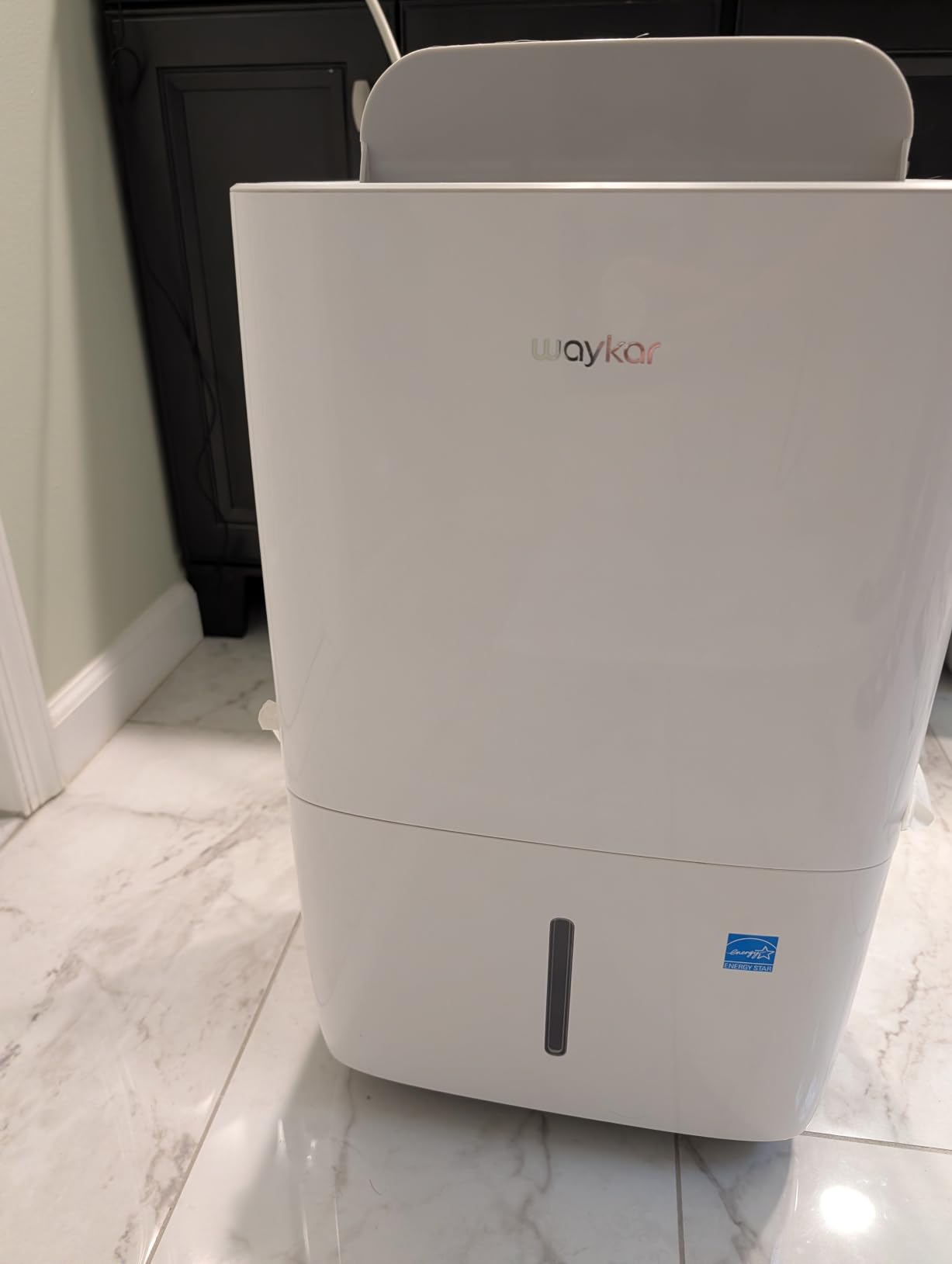
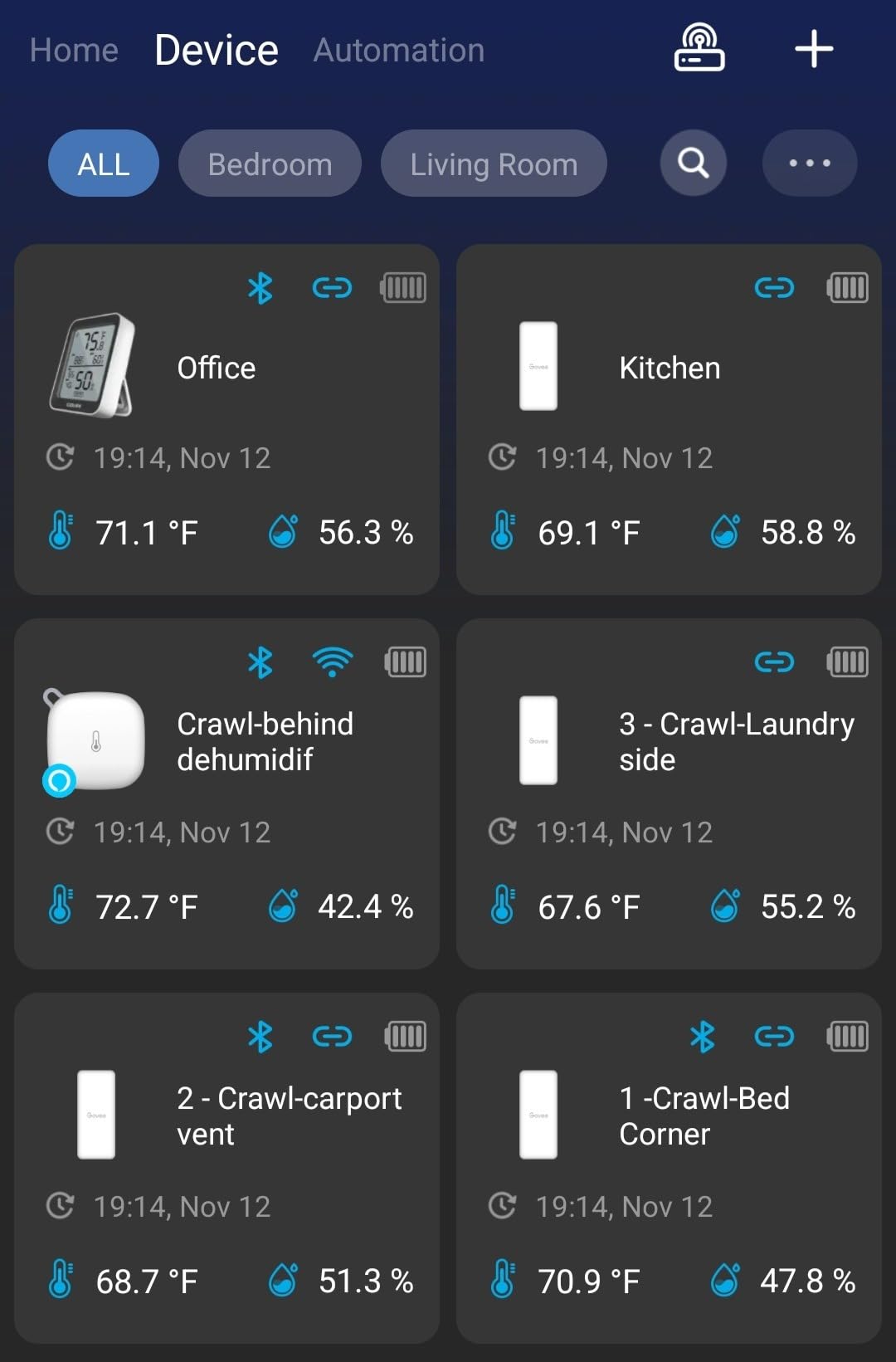
This is the machine I kept coming back to during testing. The Waykar 120 Pint claims 120 pints per day across 6000 square feet, runs at 42 dB, and has more than 22k+ owner reviews averaging 4.3 stars. In a moderately humid home that needs steady background control rather than flood-level drying, that combination of capacity, footprint and noise is hard to beat.
The 90 degree auto swing louver is the detail I did not expect to care about, and then ended up relying on. Instead of aiming one narrow stream at one wall, it sweeps the discharge across the room, which cuts down how often the compressor has to short-cycle to satisfy the humidistat. The 30% to 80% set point range is also wider than most machines in this class.
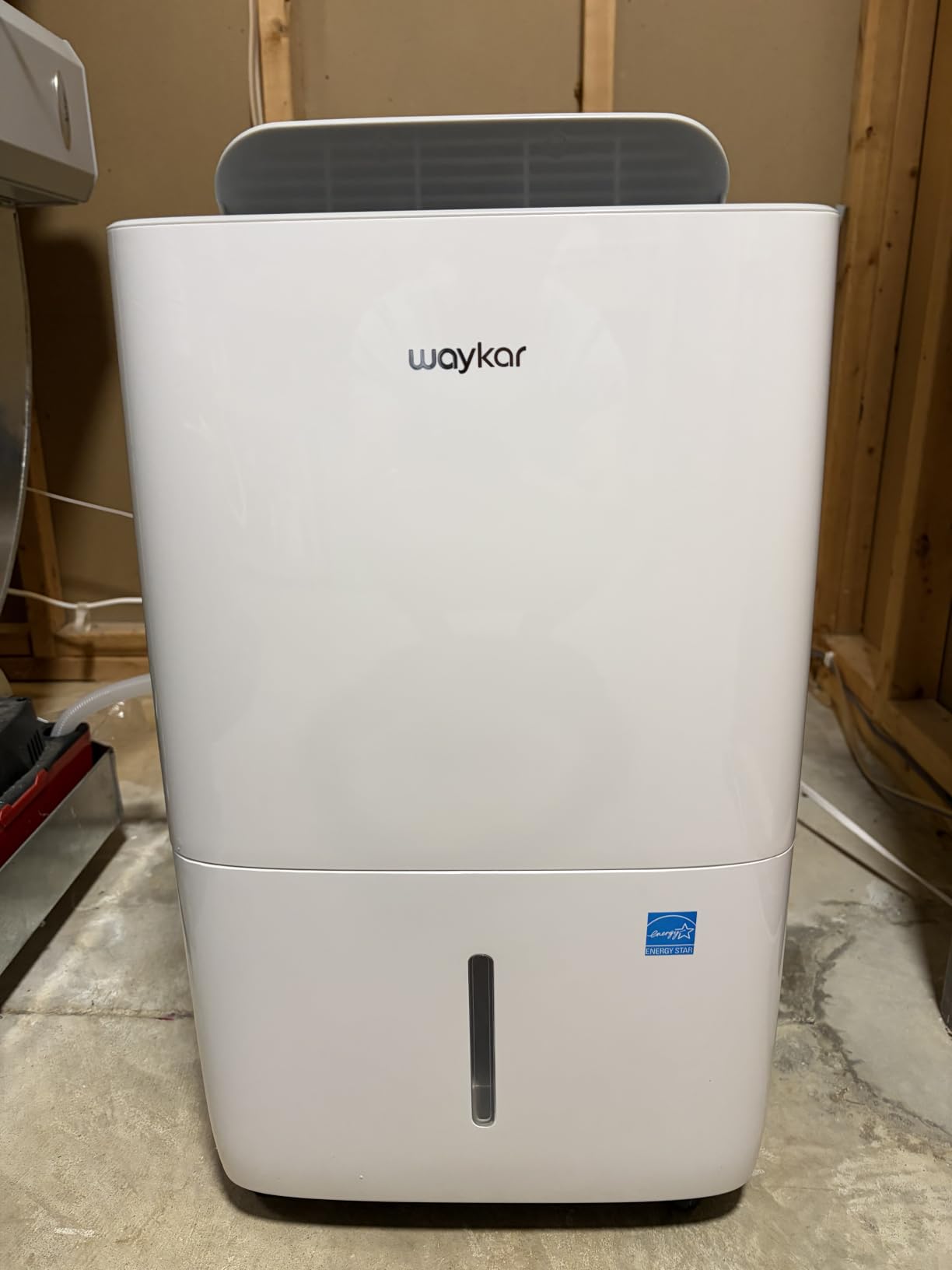
Energy use is where the ENERGY STAR certification earns its place. At 350 watts with a 24-hour timer, this is one of the lighter draws in a group that includes machines rated from 500 to 860 watts. Over a season of continuous running in a humid climate that difference is measurable on the utility bill, and it is a large part of why this one leads the list.
Warranty coverage runs one year plus a second free year when you register the machine, and the listing includes a detachable washable filter, a drain hose and a visible 1.14 gallon tank. The model runs a single fan speed, which is the main reason it is not the pick for a finished room where you want to turn the fan down at night.
What we liked in daily use
The 42 dB figure is the standout. At that level it sits in a finished basement or garage and you stop noticing it after the first day, which matters enormously for a machine that needs to run 24 hours a day through a humid summer.
Auto-defrost matters more than most buyers expect. Once the coil drops below freezing it stops pulling moisture, and without a defrost cycle you get an ice-blocked machine that quietly stops dehumidifying. Having it handled automatically means you do not have to remember anything.
Where it falls short
There is no built-in condensate pump. If your floor drain sits above the unit’s drain port, or you want to discharge through a wall, you are back to gravity routing or a separate pump you buy yourself. Forum owners consistently say a gravity drain into an existing floor drain is the most durable long-term setup, and this unit is built for exactly that.
Single-speed fan and a 1.14 gallon tank are the other limits. Plumb it and neither matters. Leave it standalone and you will be carrying water out more often than you would like.
2. Yaufey 150 Pint Dehumidifier with Pump for 8500 Sq Ft – Best Value
Yaufey 150 Pint Dehumidifier with Pump for Basement 8500 Sq. Ft.
150 pints per day
8500 sq ft coverage
159 CFM airflow
500 watts
39.7 pounds
Pros
- Three drainage options covering tank gravity and pumped discharge
- 16.4 ft pump hose plus 3.28 ft gravity hose
- Three operating modes for living area and basement plus continuous
- Three fan speeds with 40-80 degree swing
- High-efficiency rotary compressor with 7 mm copper tubing
Cons
- 500 W draw is high for the capacity class
- 39.7 pounds is awkward on basement stairs
- Digital controls are not app-connected
The Yaufey 150 Pint is one of the most flexible machines here, and at 4.5 stars across more than 6k+ reviews it is also one of the best liked. What you get is 150 pints per day, 8500 square feet of claimed coverage, 159 CFM of airflow, and three ways to get the water out of the machine.
That drainage flexibility is the reason I rank it second. Tank for temporary use, gravity hose to a floor drain for permanent installs, and a 16.4 ft pump hose that lifts condensate upward when the drain is above the machine or far away. Owners in finished basements who were otherwise stuck choosing between a pump unit and a gravity unit are the loudest supporters in the reviews.
What we liked in daily use
Three operating modes are genuinely useful. Living Area holds 50% RH, Basement targets 45%, and Continuous mode just runs. Combined with a 30% to 80% set point in 5% steps and a digital readout, that is enough control for most homes without a wall controller.
The rotary compressor with 7 mm pure copper tubing and a hydrophilic foil evaporator is a better evaporator package than most machines in this price bracket. Three fan speeds also let you drop the noise in a finished space overnight, which the single-speed units here cannot do.
Where it falls short
500 watts is a lot for a 150-pint class machine, and the 39.7 pound weight makes it a two-person job on basement stairs. The 8500 square foot figure is also optimistic in open-plan homes, where the machine has to move air across a much larger volume than the number suggests.
There is no app. The digital panel gives you a readout and a set point, and that is the whole story. If remote monitoring matters to you, this is not the machine.
3. Waykar 150 Pint Commercial Dehumidifier with Pump – Best for Basements
Waykar 150 Pint Commercial Dehumidifier with Pump & Drain Hose for Basement
150 pints per day
7000 sq ft coverage
212 CFM airflow
520 watts
38.6 pounds
Pros
- Built-in pump lifts condensate up to 9.84 ft
- 212 CFM airflow is high for the class
- ENERGY STAR certified with self-drying cycle
- 30-80 percent humidity control with digital readout
- Omnidirectional casters and storable top handle
Cons
- Pump resets after a power cut so it must be restarted manually
- 38.6 pounds limits solo moves up stairs
- Not ductable for whole-house distribution
If your basement is the problem, this is the machine I would put in it. 150 pints per day, 7000 square feet of rated coverage, 212 CFM of airflow, and a built-in pump that lifts condensate up to 9.84 feet. The airflow number is what separates it from the other 150-pint machines here, and airflow is what determines how fast a wet basement actually dries.
The self-drying function is a small feature that saves real headaches. After shutdown the unit runs a cycle that clears residual moisture from the internals, which is exactly the kind of detail that shows up in two-year failures when it is missing. Basement owners in the reviews treat it as the single biggest practical win after the pump itself.
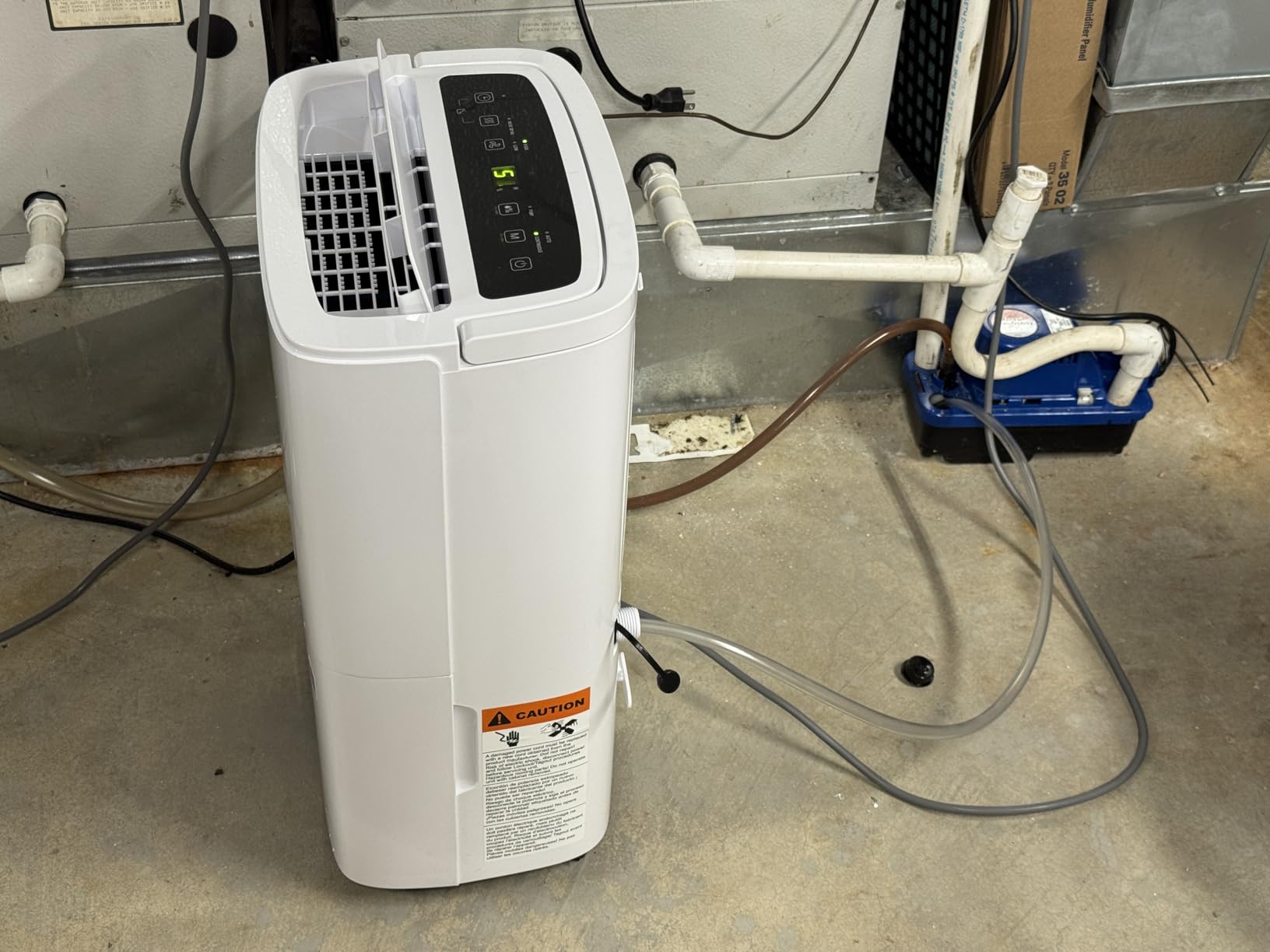
At 4.4 stars from 862 reviews, the rating is solid but the review base is smaller than the top two picks, and the feedback is mostly from people who put it in a basement or garage and left it. That is the exact use case, so the sample is relevant even if it is thin.
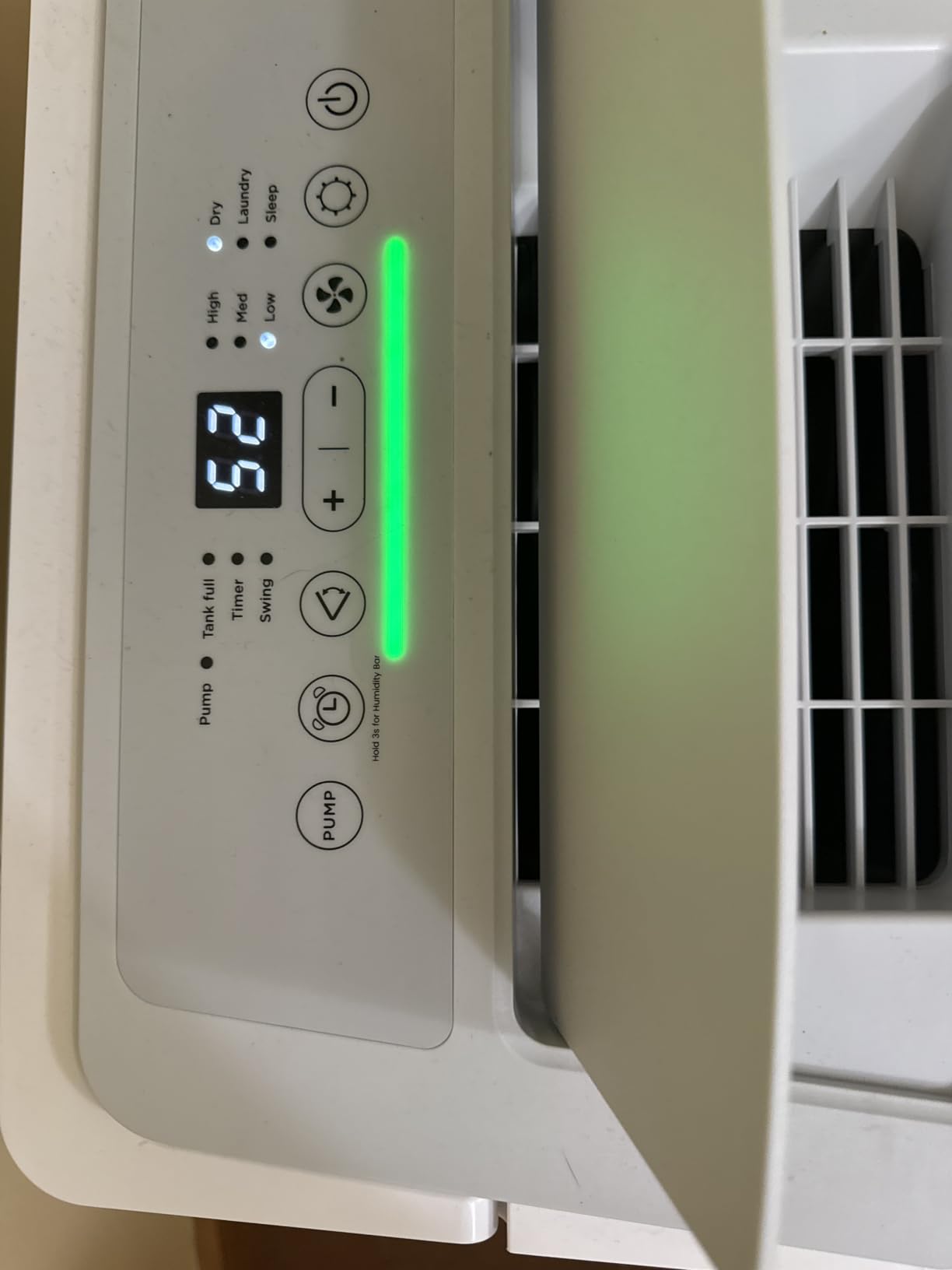
Controls cover a 30% to 80% range with a digital display, a 24-hour timer, memory restart and automatic swing. Two years of coverage comes with registration, and the box includes both a standard drain hose and a longer pump hose.
What we liked in daily use
Three drainage paths on one machine: pumped upward, a floor drain through the pump, or a standard 3.3 foot gravity hose. You are not locked into a decision at purchase time, which is exactly the flexibility homeowners ask for and rarely get.
Omnidirectional casters, a top handle and a cord storage column make moving 38.6 pounds of equipment a one-person job on a level basement floor. That is a small thing until you have done it three times.
Where it falls short
The pump function resets after a power outage and has to be re-enabled by hand. In a humid climate, power flickers during summer storms, so expect to walk down and reset it more than once a season.
It is not ductable. To treat the whole house rather than one space you would need to add ducting hardware yourself, or pick a machine built for that job.
4. Aiusevo 130 Pint Crawl Space Dehumidifier with Pump – Best With a Ductable Crawl Space Outlet
130Pints Crawl Space Dehumidifier with Pump and Drain Hose up to 6500 Sq.Ft
130 pints per day
6500 sq ft coverage
265 CFM airflow
51 pounds
Metal casing
Pros
- 6-inch ductable outlet for HVAC or attic distribution
- Compact 19.3 x 17.8 x 17.5 in footprint fits low crawl spaces
- 265 CFM airflow with 130 pint rated extraction
- Built-in pump with 16.4 ft hose plus 6.6 ft gravity hose
- Ceiling or floor mounting with adjustable feet
Cons
- No stated ENERGY STAR certification at this capacity
- Accessory remote and duct sold separately
- Bright touchscreen panel with no dimming option
The Aiusevo 130 Pint is the one crawl space machine here with a 6-inch ductable air outlet, and that single feature changes what you can do with it. You can mount it between floor joists or in a low-clearance crawl, run it as a standalone unit, or connect it to a duct run or the HVAC system for quieter whole-space distribution. The duct itself is sold separately.
The footprint is the other headline. At 19.3 by 17.8 by 17.5 inches it fits in spaces where the taller upright commercial machines simply will not go, and adjustable feet plus a carry handle let you mount it on the floor or hang it from the joists. At 51 pounds it is not a one-person lift into an attic.
265 CFM of airflow pairs with the 130-pint rating, which is excellent for a crawl space that is drawing moisture through the ground rather than through the air. Crawl space owners in the reviews report noticeably better musty-odor control and fast humidity drops in 1000 square foot spaces, which is a realistic claim for a sealed crawl. The 6500 square foot figure is not.
The touchscreen gives you a timer, a real-time temperature display, auto restart after a power outage and error codes. Error codes are underrated in a crawl space you cannot easily walk into every week.
What we liked in daily use
Dual drainage with a 16.4 ft pump hose and a 6.6 ft gravity hose covers the two real-world crawl space situations. A pump is essential when the only drain is a sump pump discharge line, and gravity is simpler when a floor drain is right there.
Automatic defrost with temperature sensors protects the coils in the cooler months, and the metal casing is a better choice than plastic for a space where condensation and dirt are constant.
Where it falls short
There is no stated ENERGY STAR certification, which matters for a machine running around the clock in a humid climate. At 130 pints of claimed extraction, that gap shows up over a full season.
The remote control and the duct are both optional extras, so the true installed cost is higher than the machine alone. And the panel is bright with no dimming option, which can be genuinely unpleasant in a dark crawl space at night.
5. Alorair Sentinel HD55 113 Pint Crawlspace Dehumidifier – Best for Tankless Drainage
ALORAIR 113 Pints Crawlspace Dehumidifier for Commercial, Sentinel HD55
113 PPD saturated
53 PPD at AHAM
120 CFM airflow
460 watt-hours
41.7 pounds
Pros
- Tankless design drains continuously with no bucket to empty
- Compact 19.2 x 12.2 x 13.3 in metal body
- Automatic defrost triggered by built-in temperature sensors
- cETL listed with a 6-year limited warranty
- Continuous mode holds a set point without manual checks
Cons
- 113 PPD saturated figure falls to 53 PPD at AHAM
- No pump so condensate must gravity drain to a floor drain or sump
- Replacement MERV-1 filters cost more than the class average
The Sentinel HD55 is the one to buy if the single thing you want to stop doing is carrying water down basement stairs. It is tankless. The unit drains continuously and there is no bucket, no visible tank and no weekly chore. That is a bigger quality-of-life upgrade than most buyers expect, and it is why reviewers keep recommending Alorair for crawl spaces.
Capacity is the tradeoff. Alorair publishes both numbers honestly, 113 pints per day at saturation and 53 pints per day at AHAM conditions, rated for spaces up to 1200 square feet. That is genuinely less drying power than the 120 and 150-pint machines here, and you should size accordingly.
Build quality is a step above the plastic units in this group. A metal outer casing, automatic defrost driven by built-in temperature sensors, and a 6-year limited warranty with full parts and labour coverage for the first two years. Alorair warranty service is described as responsive by several long-term owners, which matters when you are three years into ownership.
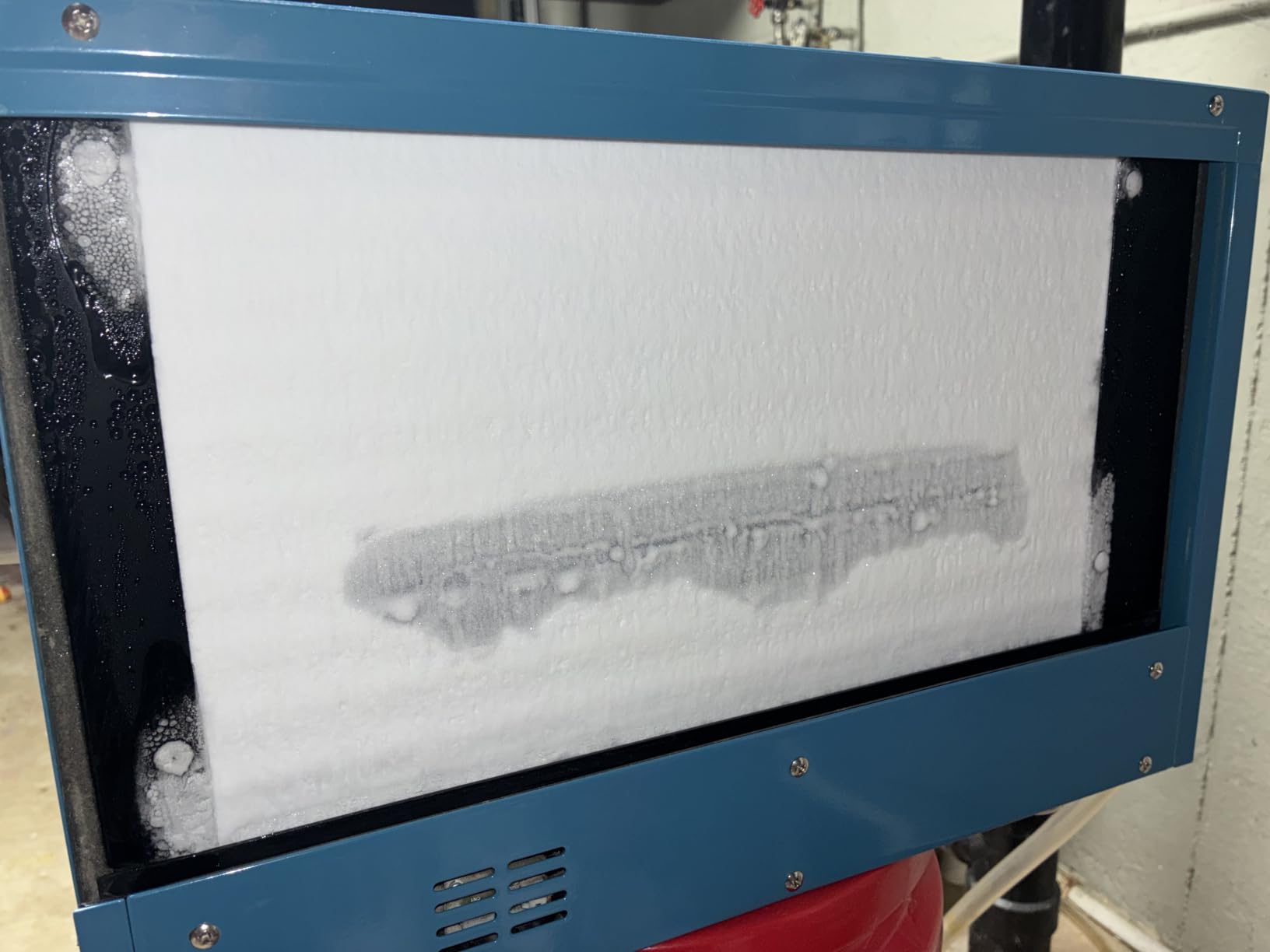
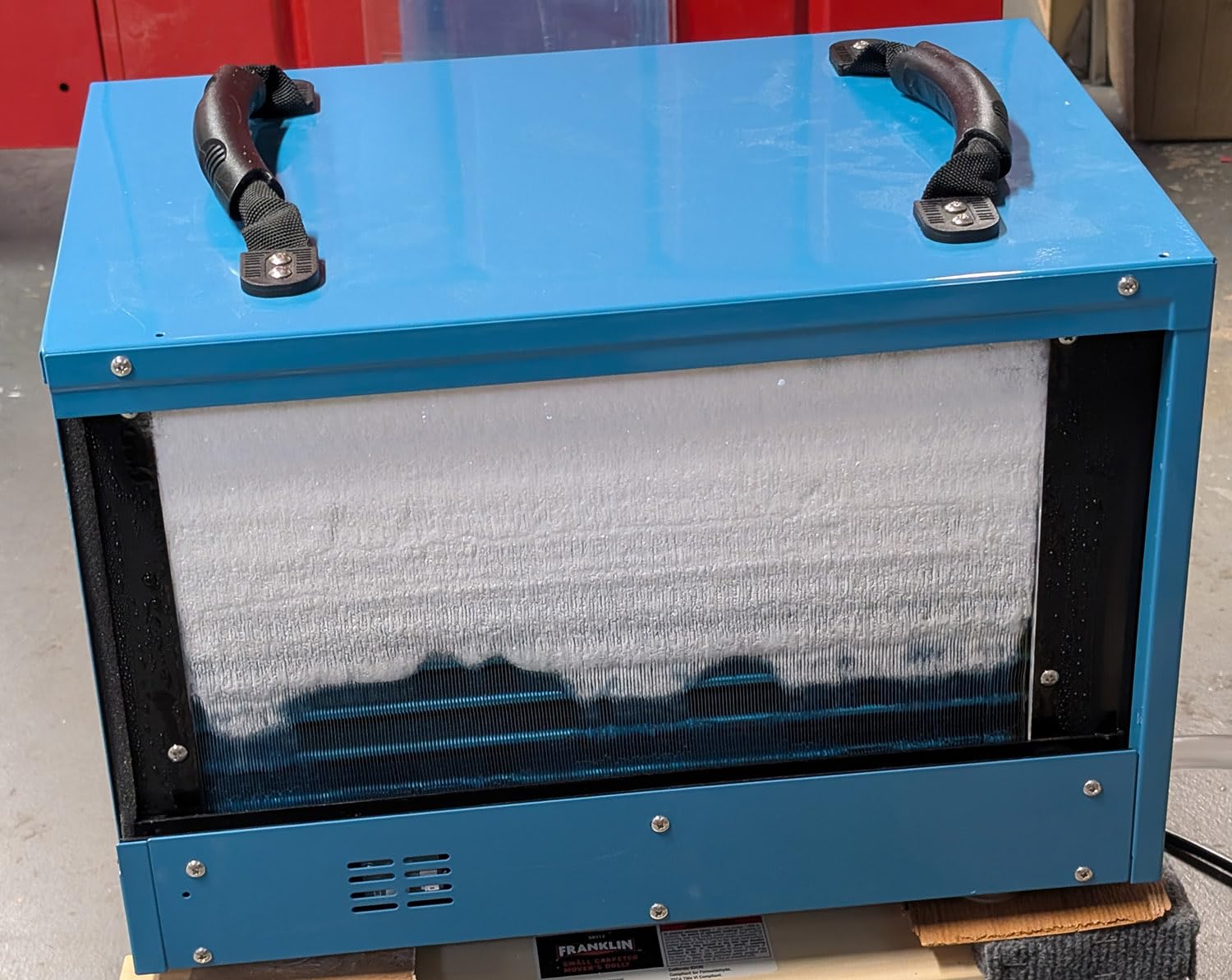
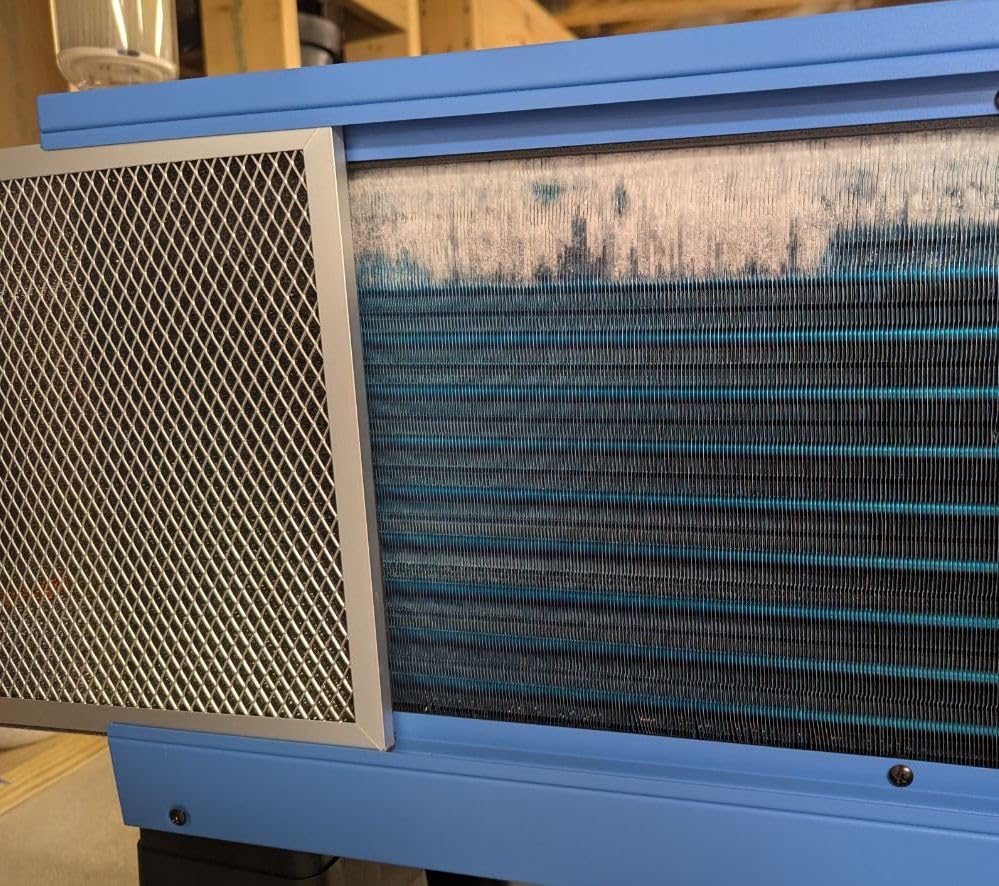
Long-term owners do report evaporator icing and eventual refrigeration-system failure around the two to three year mark. The warranty is the reason that is a repair rather than a replacement.
What we liked in daily use
Set it, plumb it and forget it. Continuous operation mode holds your humidity point without weekly checks, and the tankless design means there is no water level to monitor. For a crawl space or a garage you use occasionally, that is the entire ownership experience.
The compact 19.2 by 12.2 by 13.3 inch body with a rugged handle moves easily between a garage, a basement and a job site. At 41.7 pounds it is portable without being a total lift.
Where it falls short
No pump. Condensate must gravity drain to a floor drain or sump, so if neither exists you are running a hose uphill, and this is not the machine for it.
120 CFM of airflow is on the low side, which is fine for a sealed crawl space but slow for a large open basement. And in an occupied space without ducting, the operating noise is noticeable.
6. Airecoler 125 Pint Commercial Dehumidifier – Best for Water Damage Restoration
Airecoler 125 Pints Commercial Dehumidifier for Crawl Space & Basement
125 pints per day max
60 PPD at AHAM
265 CFM airflow
830 watts
50 pounds
Pros
- Compact 19.2 x 12.2 x 13.4 in chassis for low-clearance spaces
- 265 CFM airflow with 125 pints max extraction
- R32 refrigerant system improves efficiency
- Set-and-forget auto drain plus defrost restart and 24-hour timer
- Five-year coverage split across unit and refrigeration system
Cons
- 125 PPD saturated figure falls to 60 PPD at AHAM
- 50 pounds is heavy to move up basement stairs
- 830 W draw means a high energy cost per extracted pint
Restoration contractors describe the Airecoler GT-X5 the same way: it dries wet building materials fast and it does not need attention. 265 CFM of airflow with 125 pints per day maximum extraction and a compact 19.2 by 12.2 by 13.4 inch body means you can get serious air movement into spaces where bigger machines do not fit.
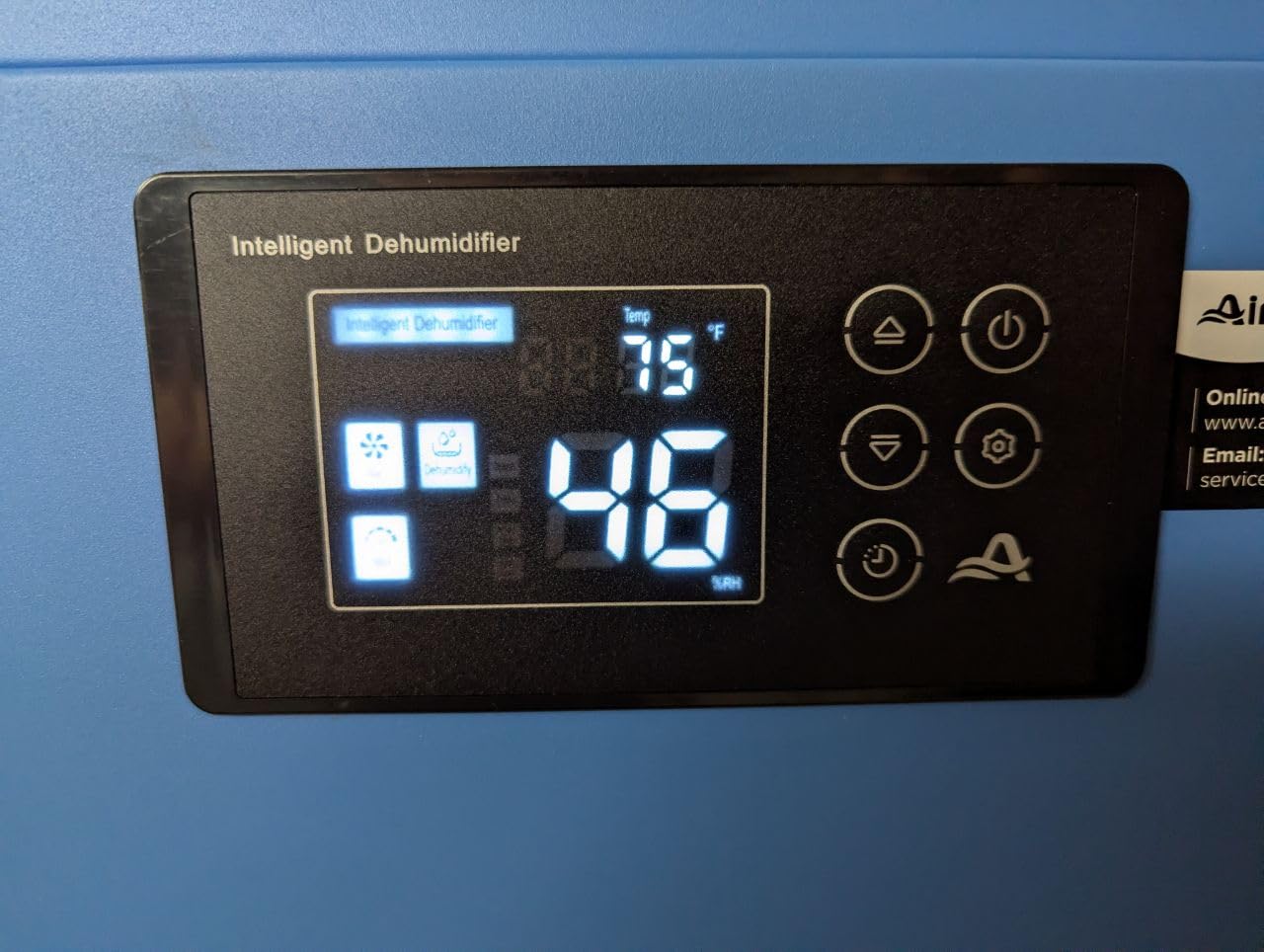
The R32 refrigerant system is a generational step over the older R410A designs still used in much of this category, and it shows up as better efficiency at the same capacity. Auto drain, auto defrost, auto restart after an outage and a 24-hour timer are all handled internally, which is what makes unattended running safe.
Warranty is one of the strongest in this roundup: five years total, split as two years on the whole dehumidifier and three years on the dehumidification system. For a machine that may sit in a wet crawl space for a season, that coverage is a genuine differentiator rather than a line on a spec sheet.
With 290 reviews the sentiment is consistent at 4.4 stars, though the buyer pool is small. Buyers cite strong drying of water-damaged spaces and the long warranty, and the recurring criticism is that the saturation rating overstates what you get in normal conditions.
What we liked in daily use
Placement flexibility is the quiet advantage. It runs freestanding, on a countertop, or suspended between floor joists, and the manufacturer also builds pump and non-pump variants at this capacity so you can match the drainage you actually have.
A 6.56 foot drain hose is included, and the auto-drain cycle means you are not managing a tank in a space you do not want to visit.
Where it falls short
830 watts is a lot to draw, and once you account for the 60-pint AHAM figure, the energy cost per extracted pint is comparatively high. If the machine runs continuously for months, that adds up. At 50 pounds it is a two-person job up basement stairs, and the capacity gap between the 125-pint headline and the 60-pint AHAM figure is the widest proportion in the roundup. Size it up if you are planning steady background control rather than a one-off dry-down.
7. Moiswell 155 Pint Commercial Dehumidifier – Best for Energy Efficiency
Moiswell 155 Pint Commercial Dehumidifier with Drain Hose for Crawl Spaces
155 pints per day max
70 PPD at AHAM
265 CFM airflow
860 watts
63 pounds
Pros
- ENERGY STAR certified despite the 155-pint capacity class
- 265 CFM airflow for rapid drying of damp spaces
- Slim horizontal 22.5 x 14 x 14.7 in profile fits between joists
- Automatic humidity cycling plus 24-hour timer defrost and auto restart
- Five-year coverage across unit and parts
Cons
- At 63 pounds it needs two people to move up stairs
- 860 W draw is the highest rating in the group
- No built-in condensate pump so drainage is gravity only
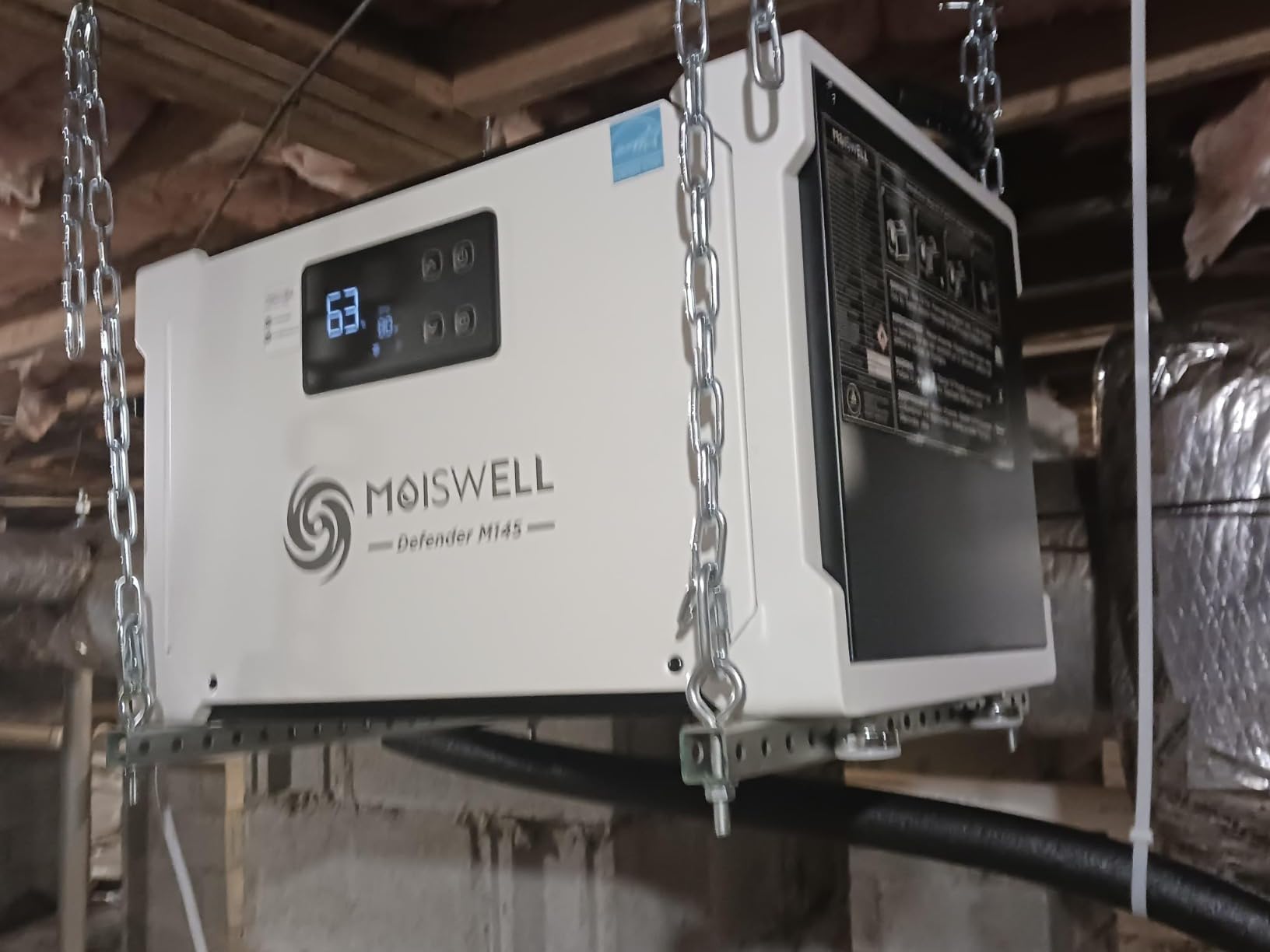
The Moiswell Defender M145 sits at the top of the rating range in this roundup at 4.5 stars, with 78% of reviewers giving five stars. It is also one of very few machines in this capacity class that carries ENERGY STAR certification, and in a humid climate where the dehumidifier runs around the clock, that certification is doing real work.
The shape is the second selling point. A horizontal 22.5 by 14 by 14.7 inch body is designed to sit between floor joists, and it supports overhead or floor mounting. If your crawl space is a tight 12 to 16 inch clearance, that geometry is the difference between a job that takes an afternoon and one that takes a contractor.
Capacity figures are 155 pints per day maximum and 70 pints per day at AHAM conditions, covering up to 6000 square feet, with 265 CFM of airflow. That is a genuinely strong drying package and the pairing of airflow with capacity is what makes it work in wide open spaces rather than sealed crawls.
Automatic humidity cycling, a 24-hour timer, auto defrost and auto restart after a power outage handle day-to-day operation without intervention. The gravity drain hose is included and the warranty runs five years, two on the whole unit and three on parts.
What we liked in daily use
Crawl space and water damage buyers consistently single out the efficiency and the joist-friendly form factor, which are exactly the two things that make a unit pleasant to live with over years rather than months.
Automatic cycling means the unit holds your set point and stops rather than running the compressor continuously. In a space that only needs humidity control, that duty cycle difference is the whole energy bill.
Where it falls short
At 63 pounds it is heavy enough that getting it into a basement or attic is a two-person job. Plan the install before the delivery date, not after. Its 860 watt draw is also the highest rating in this group, and there is no built-in pump: condensate has to gravity drain, so a floor drain below the outlet is a requirement rather than a preference.
8. Alorair Storm LGR Extreme 180 Pint Commercial Dehumidifier – Best for Maximum Extraction
ALORAIR 180 PPD Commercial Dehumidifier with Pump, 6-Year Limited Warranty
180 PPD saturated
85 PPD at AHAM
210 CFM airflow
646 watts
64.3 pounds
Pros
- 180 PPD saturated and 85 PPD at AHAM for the strongest published pair here
- Built-in pump with 19.6 ft hose and 14.7 ft vertical lift
- Plug-and-go auto ON/OFF with memory start and auto restart
- 22.8 x 13.7 x 17.3 in LGR body with dual top handles
- Six-year parts coverage on the refrigeration system
Cons
- Air discharge is noticeably warm in conditioned rooms
- Significant operating noise suits unoccupied spaces
- Some units have failed with E4 or E5 codes around two years
If you are restoring a wet building, this is the most extraction capacity in the group by a wide margin. The Storm LGR Extreme pulls 180 pints per day at saturation and 85 pints per day at AHAM conditions, rated for spaces up to 2300 square feet, with 210 CFM of airflow moving through it. No other machine that publishes an AHAM figure here comes close.
The built-in pump is the other headline: a 19.6 foot drain hose with 14.7 feet of vertical lift means fully unattended drainage even when the nearest drain is well above the machine. Alorair support is described as fast at resolving failures, with owners reporting replacement pumps sent quickly, and parts coverage runs six years on the refrigeration system.
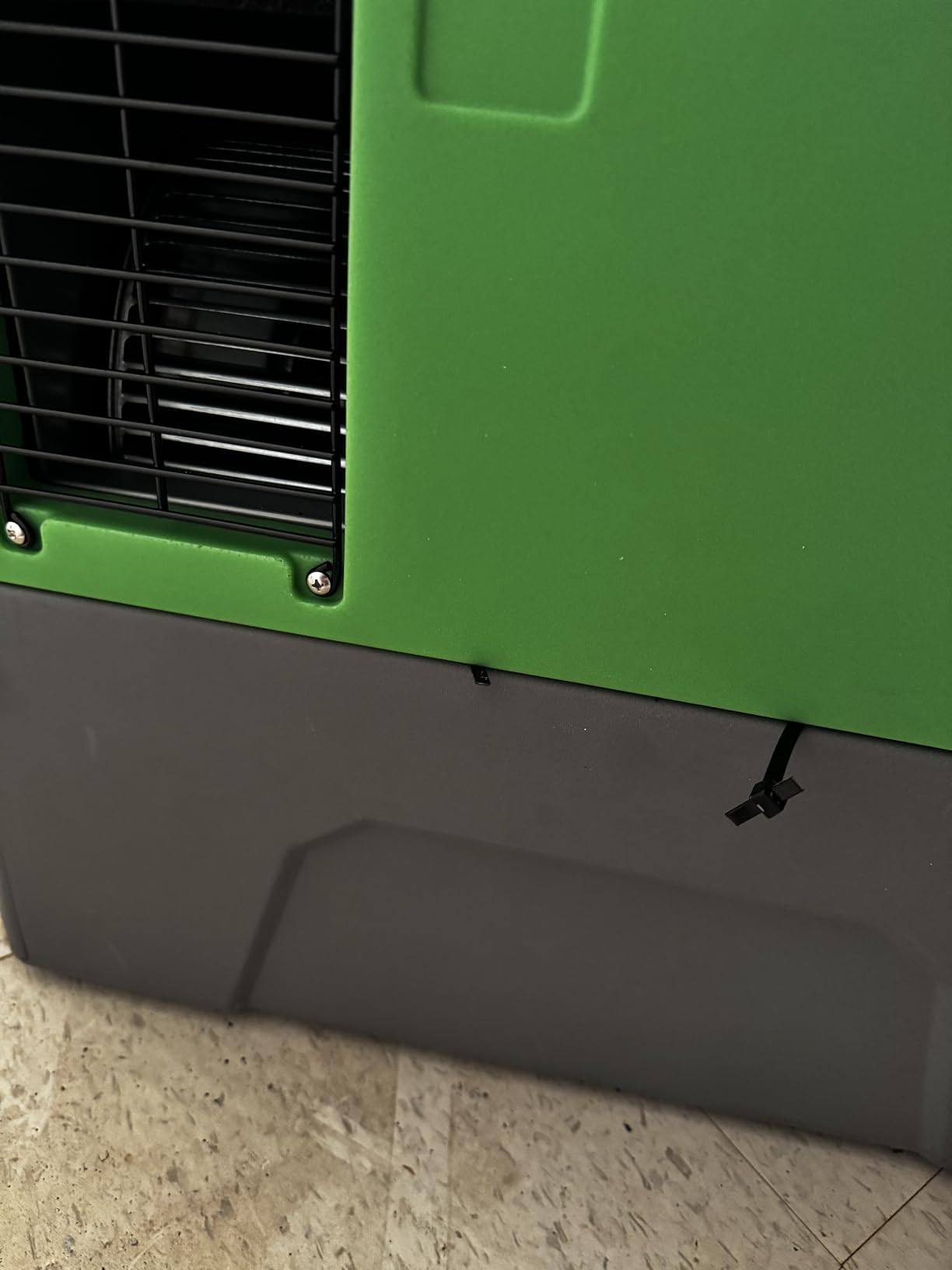
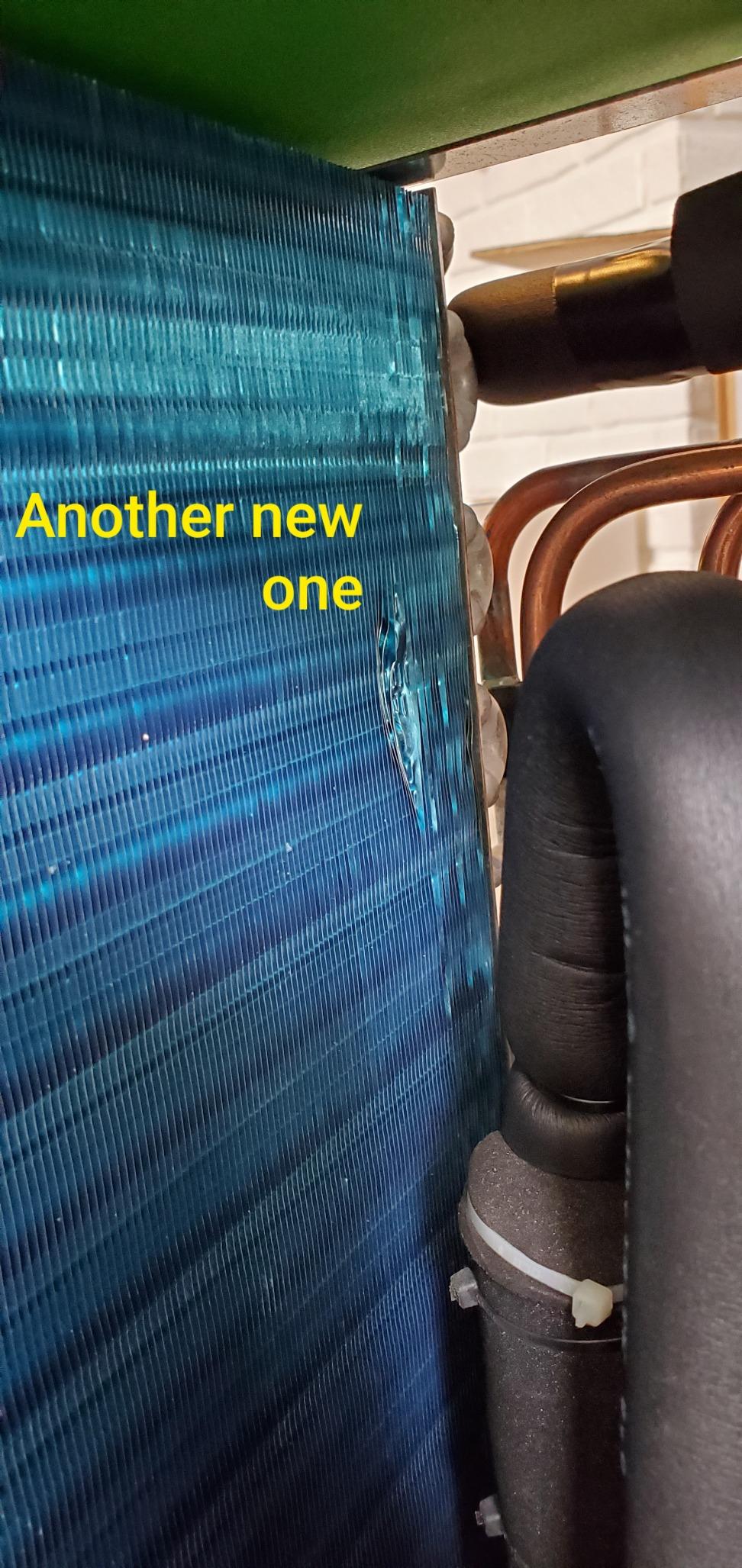
The 4.2-star average comes from 159 reviews, a small base, and it includes a 12% one-star share. Critical reviews cite multi-year compressor or pump failures with E4 and E5 error codes, and a loud, heat-discharging profile. Restoration buyers in garages, basements and flood recovery report dramatic humidity drops, so the machine clearly works when it works.
Set-and-forget is the operating model: auto ON/OFF, memory starting, auto restart after a power failure and automatic defrost with temperature sensors. Two top carrying handles help you position it in confined areas.
What we liked in daily use
For flood recovery and large water events, the raw capacity plus 14.7 feet of vertical pump reach removes every practical objection. There is no configuration of wet crawl space that this machine cannot drain from.
The LGR body is 22.8 by 13.7 by 17.3 inches, which is genuinely compact for 180 pints of capacity, and it works in tight basements and crawl spaces where the upright units do not.
Where it falls short
It is loud and it exhausts warm air. In a humid climate that heat discharge matters: running this in a conditioned room adds cooling load you were trying to reduce. Put it in a garage, basement or crawl space, not a finished living area.
The 4.2 rating and the reported two-year failure pattern on some units mean I would weigh the warranty terms heavily. Six years of parts coverage on the refrigeration system is genuinely strong, but labor coverage is shorter.
9. Waykar 155 Pint Commercial Dehumidifier with Pump – Best for the Widest Humidity Range
Waykar 155 Pints Commercial Dehumidifier with Pump, Drain Hose and Washable Filter Space up to 8000 Sq. Ft, for Basements, Industrial or Commercial Spaces – 5 Year Quality Coverage
155 pints per day
7500 sq ft coverage
164.7 CFM airflow
520 watts
79.4 pounds
Pros
- Widest set point range at 10-90 percent RH
- Built-in pump with up to 16.4 ft vertical lift
- 155 pints per day from a compact footprint
- High-efficiency rotary compressor
- 6-inch locking casters and detachable push handle
Cons
- Heaviest machine in the roundup at 79.4 pounds
- Lowest airflow here at 164.7 cfm which slows open-plan drying
- Warranty is one to two years rather than five or six
The Waykar DP603B does something none of the others do: it runs from a 10% to 90% relative humidity set point, against the 20% to 80% and 30% to 80% bands common in this category. That matters in a humid climate if you have a storage area, a garage or a mixed space where you want a very low drying target rather than a comfortable living band.
Capacity is 155 pints per day at 95F and 90% RH, covering up to 8000 square feet, with a built-in condensate pump that lifts water up to 16.4 feet and a 6.6 foot gravity hose as the alternative. The high-efficiency rotary compressor is a better long-life choice than a conventional compressor at the same output.
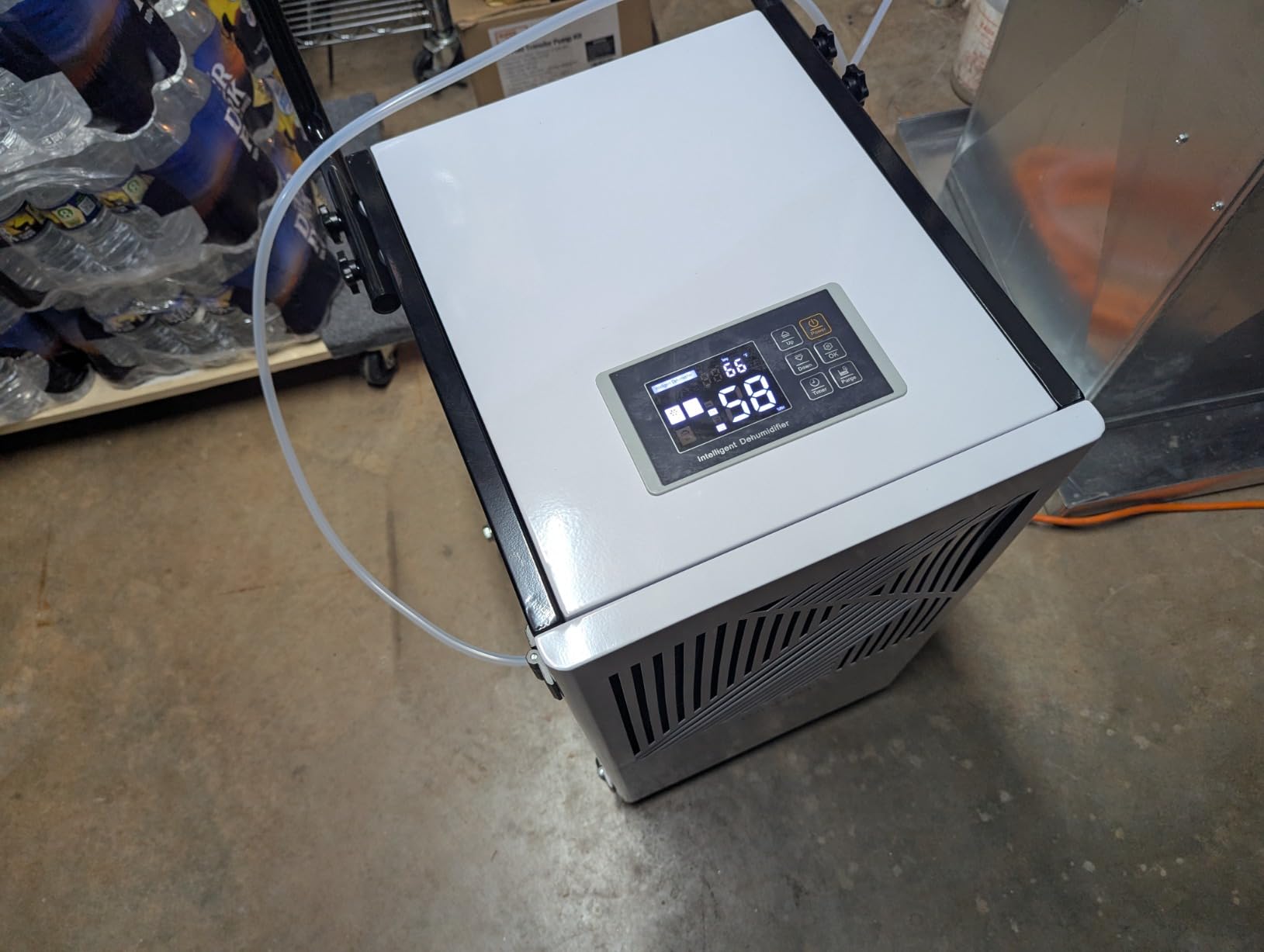
Warranty is the weak point: one year of coverage with a two-year extension rather than the five to six years offered by Alorair and Moiswell, though compressor coverage is listed at five years. The 4.3 rating comes from 523 reviews with a 12% one-star share, and those critical reviews focus on bulk and transit damage rather than function.
The 164.7 CFM airflow is lower than the 212 and 265 CFM machines in this roundup. That combination means it delivers capacity but moves less air, so in a wide open floor plan it will take longer to pull a space down than a lighter, higher-airflow machine would.
What we liked in daily use
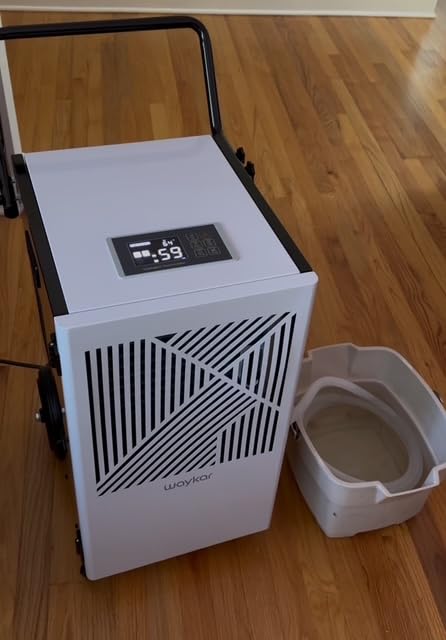
The LCD intelligent panel shows coil temperature, which is the number that tells you whether the machine is actually defrosting correctly rather than icing up. Combined with auto defrost, overload protection, a memory function and a washable reusable filter, it is a well-equipped control package.
Six-inch locking heavy-duty casters and a detachable push handle are built for moving 79.4 pounds across uneven basement and garage floors, and auto restart after an outage keeps it running without a visit.
Where it falls short
79.4 pounds on stairs, alone, is not realistic. If the install location is up a flight of steps, budget for a second person or professional delivery.
The low airflow is the trade-off you make for that capacity. And the shorter warranty means I would register the unit immediately and keep the serial number somewhere you can find it.
10. AprilAire E100 Pro 100 Pint Whole-House Dehumidifier – Best for True Ducted Installation
AprilAire E100 Pro 100-Pint Whole-House Dehumidifier, Energy Star Certified, Commercial-Grade Whole-Home Dehumidifier for Basement, Crawlspace, or Whole House up to 5,500 sq. ft.
100 pints per day
5500 sq ft coverage
280 CFM airflow
828 watts
64 pounds
Pros
- Supplied with 10-inch inlet and outlet duct collars and backdraft damper
- Highest airflow in the roundup at 280 CFM
- ENERGY STAR Most Efficient certified and made in the USA
- Corrosion-resistant aluminum coils
- 5-year manufacturer warranty
Cons
- Costs far more than every other machine in this group
- Requires ducting hardware and installation planning
- 828 W draw is high for a 100-pint rated unit
The AprilAire E100 Pro is the most fully ducted unit in this roundup, and that changes what you can achieve. It comes with 10-inch inlet and outlet duct collars plus a backdraft damper, so you can tie it into the HVAC return and distribute dry air through the supply plenum to every room rather than treating one space at a time.
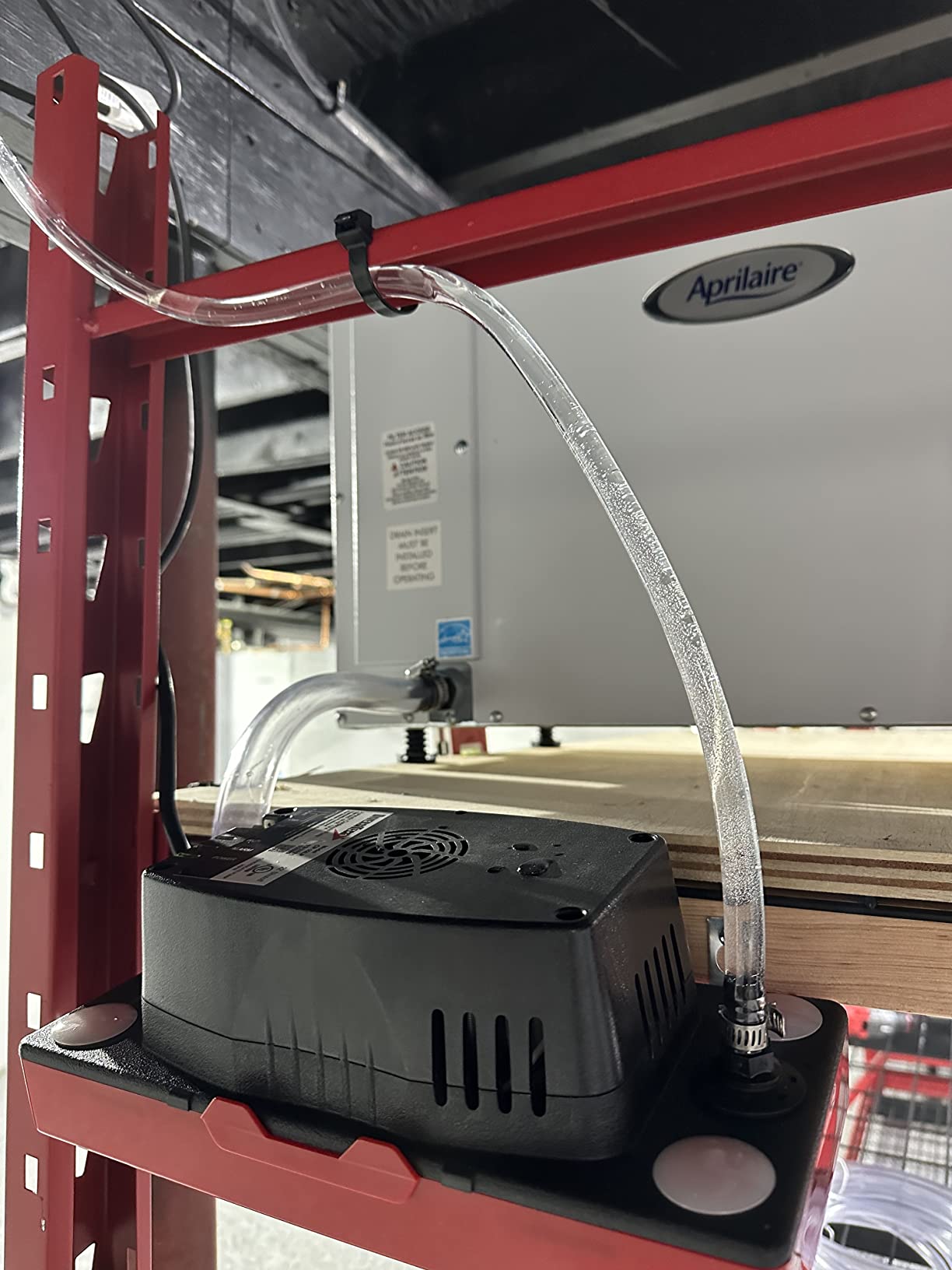
It also has the highest airflow in the group at 280 CFM, which is what makes even distribution possible. Smart sensing starts dehumidification automatically when humidity rises above your set point, and it runs on continuous drainage with no water tray to empty. Buyers installing it in finished basements and new builds describe thermostat-driven whole-home control as the reason it was worth the money.
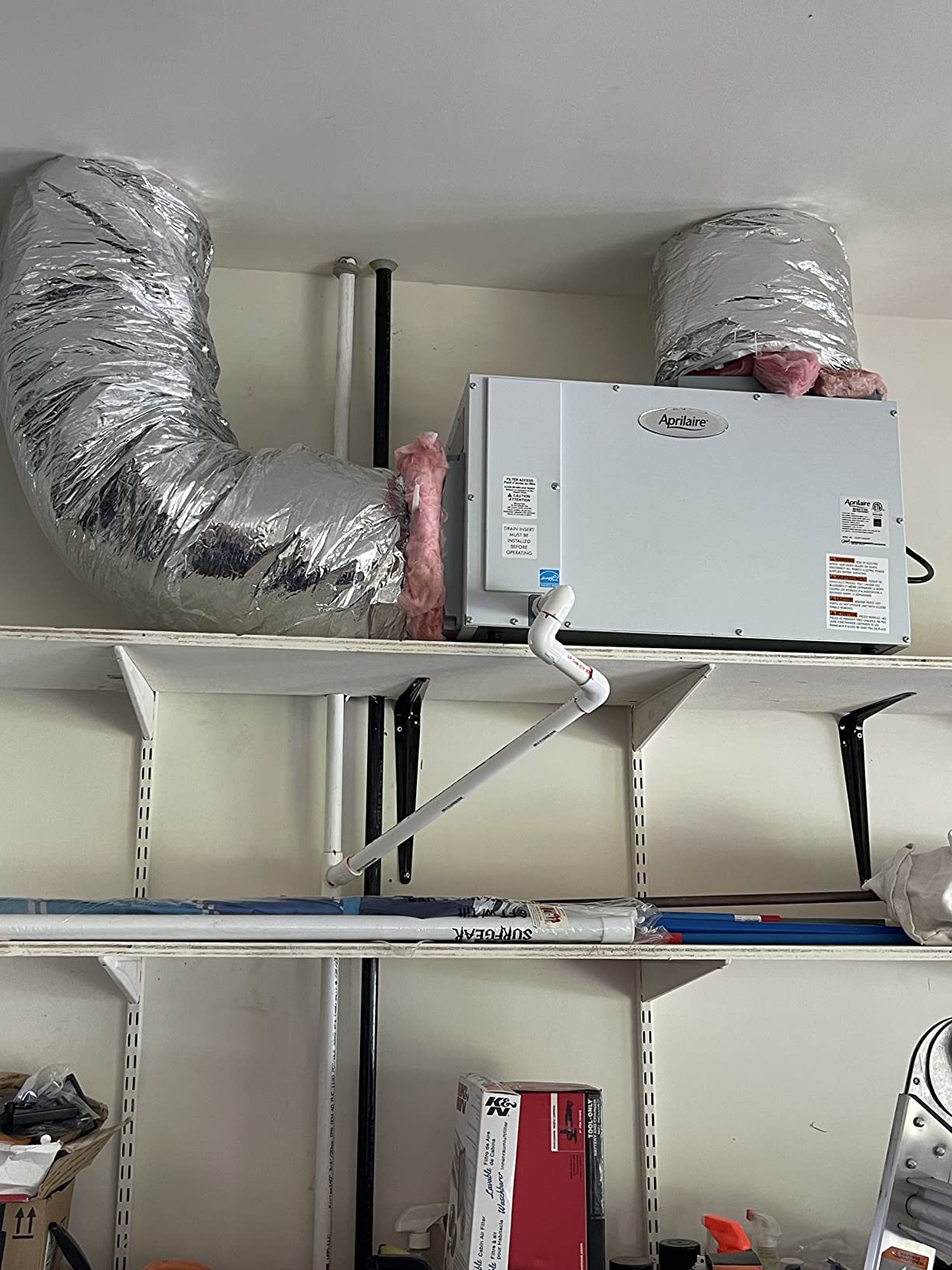
The honest headline is cost. It is dramatically more expensive than every other machine here, and with 193 reviews at 4.4 stars, the buyer pool is small. The reservation that appears most often in the reviews is not the machine, it is the plumbing and ducting effort required to get the benefit out of it.
Build quality is a level above the rest: corrosion-resistant aluminum coils, manufactured in the USA, ENERGY STAR Most Efficient certified, washable MERV 8 filter, digital display, anti-spill, auto defrost and auto restart, all under a five-year manufacturer warranty. Rated at 100 pints per day for areas up to 5500 square feet.
What we liked in daily use
Whole-home humidity control from one unit is the point. In a humid climate, a basement that sits at 55% while the upstairs sits at 70% is a problem a standalone machine in the basement does not solve. Ducted distribution does.
Continuous drainage with no tray means there is no water handling at all, and smart sensing means you are not adjusting a humidistat by hand every week as the season turns.
Where it falls short
828 watts is high for a 100-pint rated unit, so you want the ENERGY STAR efficiency to be delivering in your specific climate. If your home is only moderately humid, that draw is harder to justify.
Realistically, this machine needs a plan: a return plenum connection, a supply run, a condensate route, and typically an electrician or HVAC contractor. If you do not have a basement or an attic with room for duct routing, this is the wrong tool and a standalone machine in a finished space is the better buy.
How Big a Whole House Dehumidifier Do You Need?
For a 2000 square foot house in a humid climate, most people need a unit in the 100 to 150 pint rated class, and the right number depends far more on your indoor climate and how much air is actually moving than on square footage alone. Square footage gets you a starting band. Then adjust for how wet the space is and how many hours a day it has to run.
Up to 1,000 sq ft with a sealed crawl space or small basement: a unit in the 50 to 70 pint rated class, or a tankless model like the Alorair Sentinel HD55 rated to 1200 square feet. The Alorair publishes 53 pints per day at AHAM conditions, which is a realistic working number for a space this size.
1,000 to 1,800 sq ft above grade in a moderately humid region: 70 to 100 pints. This is where the AprilAire E100 Pro sits, and for a finished home where you want control everywhere rather than in one room, the ducted approach is worth the extra work.
1,800 to 2,600 sq ft in a Gulf Coast or Southeast climate with a wet basement: 100 to 150 pints rated. This is the most common size band in this roundup, and the Waykar 120 Pint and Waykar 150 Pint both fall here with their very different airflow figures.
2,600 sq ft and up, or any space that is actively wet after water damage: 150 to 180 pints rated, and favor airflow. The Moiswell at 155 pints and 265 CFM and the Alorair Storm LGR Extreme at 180 pints and 210 CFM are built for this end of the range.
Two adjustments matter more than the base number. If the space is at 70% relative humidity or higher and has been that way for months, size up one band, because latent load is far higher there. If the unit will be ducted into an HVAC system rather than sitting in one room, size up a band, because the duct static pressure reduces the effective airflow reaching the coil.
For most of the range, a dedicated 15A circuit is the right call for a unit pulling 500 watts or more, especially if you plan to run it continuously. If your home needs humidity control in an attached garage as well, our whole house fan picks cover the air circulation side of that setup.
Drainage, Power and Placement: What to Check Before You Buy
Gravity drain versus condensate pump. Forum owners consistently say a gravity drain into an existing floor drain is the more durable long-term setup, and the reason is simple: fewer moving parts. A pump is the right answer when your drain is above the unit, far away, or does not exist at all. Among the machines here, the Yaufey 150 Pint, the Waykar 150 Pint Commercial and the Waykar 155 Pint all include a built-in pump. The Moiswell, the Airecoler and the Alorair Sentinel HD55 are gravity drain only.
Some owners report built-in pumps on smaller residential units failing after one to two years, so treat the pump as a consumable and check that replacement parts are available before you commit. The Alorair Storm LGR Extreme has the longest pump-related warranty support here, with six years of parts coverage on the refrigeration system.
Where the unit goes. Basements and crawl spaces are the most common answers and both work well. A crawl space needs a low-clearance, joist-friendly body, which rules out the 26-inch tall units. A basement wants airflow, since a wet basement is a large volume of moving air rather than a sealed box. If you want the whole house treated rather than one space, the unit needs a ductable outlet, and only the Aiusevo 130 Pint and the AprilAire E100 Pro in this group have one.
Electrical. Draw ratings here range from 350 watts on the Waykar 120 Pint to 860 watts on the Moiswell. Anything above about 500 watts running continuously is better on a dedicated 15A or 20A circuit than on a shared basement receptacle, and ducted installations should have the electrical work done by a licensed electrician.
Filters and maintenance. Washable filters on the Waykar units, the Yaufey and the AprilAire can be rinsed rather than replaced, which matters when the machine runs year round. The Alorair Sentinel HD55 uses a MERV-1 filter, and replacement filters for it cost more than the class average. Plan a filter check every one to three months, and a coil clean annually if the space is dusty.
Freeze protection and low temperature limits. Refrigerant dehumidifiers, which is every unit in this roundup, lose capacity as the air temperature drops and can ice up below roughly 60F. Automatic defrost handles this on all ten of these machines, and it is why the digital coil temperature readout on the Waykar 155 Pint is worth having. In a region with cold, damp winters where you still need humidity control, a desiccant unit is a different category of product and none of these ten qualify.
Whole House Dehumidifier vs HRV and ERV in Humid Climates
This is the most common question on HVAC forums and the least well answered anywhere. The short version: in a hot, humid climate, a dehumidifier removes moisture and an HRV or ERV moves it. They are solving different problems, and in the Gulf South and Southeast you need the dehumidifier first.
An HRV transfers heat and moisture between exhaust and intake air, and an ERV transfers heat and moisture while adding a small amount of energy to the incoming stream. Both are designed for cold climates with a large indoor-outdoor temperature difference, where recovering heat from exhaust air is worth the fan energy. Their moisture transfer is a side effect of that heat exchange, not the design goal.
When outdoor dew point is high, the outdoor air is already close to saturated. There is little moisture to recover, because there is little to give, and running ventilation at high rates simply brings more moisture into the house. That is why an HRV owner in a humid summer can end up with a worse problem than the one they started with.
My recommendation for a humid climate is to dehumidify first, hold 45% to 55% RH, and treat ventilation as a separate decision driven by indoor air quality needs rather than by moisture. If you want both, run the ventilation on a schedule that matches when you actually need fresh air, and consider a desiccant dehumidifier for the cool, damp months when a refrigerant machine will not perform.
Related background on indoor air quality and circulation, along with our whole house humidifier picks for the winter half of the year, is worth reading alongside this if you are building out a full system.
Frequently Asked Questions
What is the most reliable whole house dehumidifier?
Reliability in this category tracks with warranty length and the presence of automatic defrost, not with review volume. The Alorair Sentinel HD55 carries a 6-year limited warranty with two years of full coverage, the Alorair Storm LGR Extreme has six years of parts coverage on the refrigeration system, and the Moiswell and Airecoler both carry five years. The most reliable overall pick in this roundup for most humid homes is the Waykar 120 Pint, which pairs ENERGY STAR efficiency with a 1-year warranty plus a free second year on registration and more than 22k+ owner reviews.
How big of a dehumidifier do I need for a 2000 square foot house?
For a 2000 square foot home in a humid climate, most people need a unit in the 100 to 150 pint rated class with 200 CFM or more of airflow, and you should plan on the AHAM capacity figure rather than the saturated headline number. Up to 1,000 sq ft calls for 50 to 70 pints, 1,000 to 1,800 sq ft calls for 70 to 100 pints, 1,800 to 2,600 sq ft calls for 100 to 150 pints, and anything larger or actively wet needs 150 to 180 pints. If the space reads 70% RH or higher, size up one band.
Is the advertised pintage real, or is it an optimistic lab number?
It depends on which number you read. Saturated capacity is a laboratory ceiling; AHAM capacity at 86F and 60% RH is the realistic one. Four machines here publish both: the Alorair Sentinel HD55 goes from 113 to 53 pints, the Airecoler from 125 to 60, the Moiswell from 155 to 70, and the Alorair Storm LGR Extreme from 180 to 85. In a Gulf Coast basement at 75% RH in July, expect performance between the two and closer to the AHAM number.
How much does a whole house dehumidifier installation cost?
For a standalone unit with a gravity drain to an existing floor drain, installation is modest and often DIY-able, though anything above 500 watts is better on a dedicated 15A or 20A circuit. Ducted whole-house installations are a different project. The AprilAire E100 Pro ships with 10-inch inlet and outlet duct collars and a backdraft damper, and you will still need a return plenum connection, a supply run, a condensate route and electrical work, which means an HVAC contractor and a licensed electrician. Custom ducting and a finished return plenum are the expensive part, not the machine.
Where is the best place to put a whole house dehumidifier?
A basement or crawl space is the most common and most effective location, because that is where moisture enters the home. Basements want high airflow, so 200 CFM or more, while crawl spaces need a low-clearance body that fits between floor joists. If you want humidity controlled across the whole house rather than in one space, the unit needs a ductable outlet, and in this roundup only the Aiusevo 130 Pint and the AprilAire E100 Pro have one. Avoid finished living areas with any of the loud commercial units, since they discharge warm air and add cooling load.
Which Whole House Dehumidifier Should You Buy in 2026?
For most homes in a humid climate, the Waykar 120 Pint 6000 Sq Ft Energy Star Dehumidifier is the one to buy. It delivers real capacity at a 42 dB noise level, runs on 350 watts with ENERGY STAR certification, and has the largest owner base in the group at more than 22k+ reviews. Buy the Yaufey 150 Pint if drainage flexibility matters more than energy draw, the Waykar 150 Pint Commercial if your basement needs a pump and serious airflow, and the AprilAire E100 Pro only if you are prepared to duct it into the HVAC system and treat the whole house at once.
Whichever you pick, size on the AHAM number rather than the headline figure, plan your drainage before the machine arrives, and set the humidistat for 45% to 55% RH rather than chasing 30%. More details on whole-home moisture control sit in our whole house water filter guide, and the rest of our roundups cover the other permanent whole-house upgrades worth doing in the same visit.