
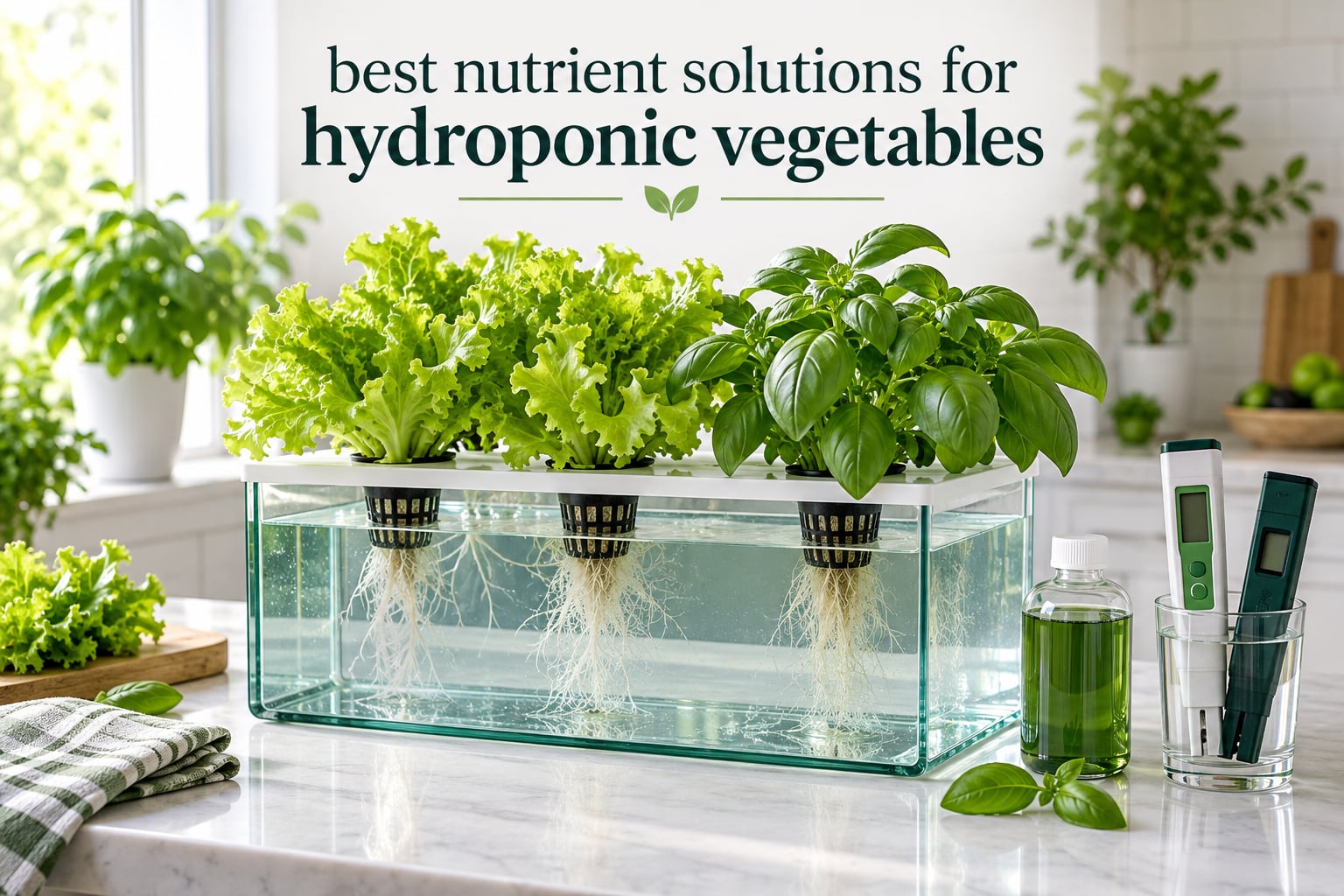
A hydroponic nutrient solution is a measured blend of water-soluble mineral salts dissolved in water that supplies every element a plant needs – nitrogen, phosphorus, potassium, calcium, magnesium, sulfur and trace elements – in a form roots can absorb immediately. In a soil-free system there is no soil to supply or buffer any of it, so the solution itself is the entire diet. That is why choosing among the best nutrient solutions for hydroponic vegetables matters more here than in any other growing method.
We compared ten lines across ratings, review counts, mix ratios and system compatibility, judging them on a full crop cycle rather than a single week. The pattern is consistent: one-part formulas for beginners and countertop towers, two-part lines for mixed crops, three-part systems once fruiting vegetables make stage control worth the extra measuring.
One framing note first. If you are weighing hydroponics against soil at all, our raised garden bed picks for vegetables are worth reading first, because the nutrient picture changes completely once soil is buffering your mistakes. A reservoir does not forgive.
Table of Contents
Top 3 Nutrient Solutions for Hydroponic Vegetables in October 2026

MasterBlend 4-18-38 Combo Kit
- Complete 3-part dry base
- 100% water soluble
- Packs in 1:1:0.5 ratio
- Professional 4-18-38 formula

FoxFarm Grow Big Hydroponic
- 3-2-6 vegetative NPK
- Built for hydroponic systems
- Includes earthworm castings
- 2-3 tsp per gallon

Advanced Nutrients 3-Part Bundle
- Grow Micro and Bloom together
- pH Perfect buffering
- 1:1:1 mix ratio
- 1 liter per component
All 10 Nutrient Solutions at a Glance in October 2026
Every line below is a complete food, not a single nutrient. The mix ratio column tells you how many components you are measuring, which decides whether dosing feels routine or fiddly.
| Product | Specifications | Action |
|---|---|---|
| MasterBlend 4-18-38 Combo Kit |
|
Check Latest Price |
| Advanced Nutrients 3-Part Bundle |
|
Check Latest Price |
| FoxFarm Grow Big Hydroponic |
|
Check Latest Price |
 Humboldts Secret Base A and B Humboldts Secret Base A and B |
|
Check Latest Price |
 TPS Nutrients Liquid Plant Food TPS Nutrients Liquid Plant Food |
|
Check Latest Price |
 General Hydroponics Flora Series General Hydroponics Flora Series |
|
Check Latest Price |
 Haligo A and B Nutrient Pack Haligo A and B Nutrient Pack |
|
Check Latest Price |
 Greenleaf Mega Crop Greenleaf Mega Crop |
|
Check Latest Price |
 VIVOSUN Base A and B Set VIVOSUN Base A and B Set |
|
Check Latest Price |
 HiThrive 4-3-6 Fertilizer HiThrive 4-3-6 Fertilizer |
|
Check Latest Price |
1. MasterBlend 4-18-38 Complete Combo Kit – the three-part dry base we trust most
MASTERBLEND 4-18-38 Complete Combo Kit Fertilizer Bulk (12.5 Pound Kit)
Powder
10 lb
5 liters
1:1:0.5 mix ratio
Three components included
Pros
- Complete three-part kit so no separate Cal-Mag purchase is needed
- 100% water soluble powder that mixes clean in recirculating systems
- Professional-grade 4-18-38 formula for fruiting and leafy vegetables
- Large bulk size covers many gallons of solution
Cons
- Dry powder requires weighing and mixing three components at every feed
- Bulk pack size is more than a small countertop setup needs
Three components ship in one kit: MasterBlend 4-18-38 base, calcium nitrate 15.5-0-0 and Epsom salt, pre-weighed into a 1:1:0.5 ratio. That ratio follows the classic 12g base, 12g calcium nitrate and 6g Epsom salt recipe.
Calcium and magnesium being inside the kit is the reason it leads our list. There is no separate Cal-Mag bottle to forget, which removes a common cause of blossom-end problems in a fruiting crop.
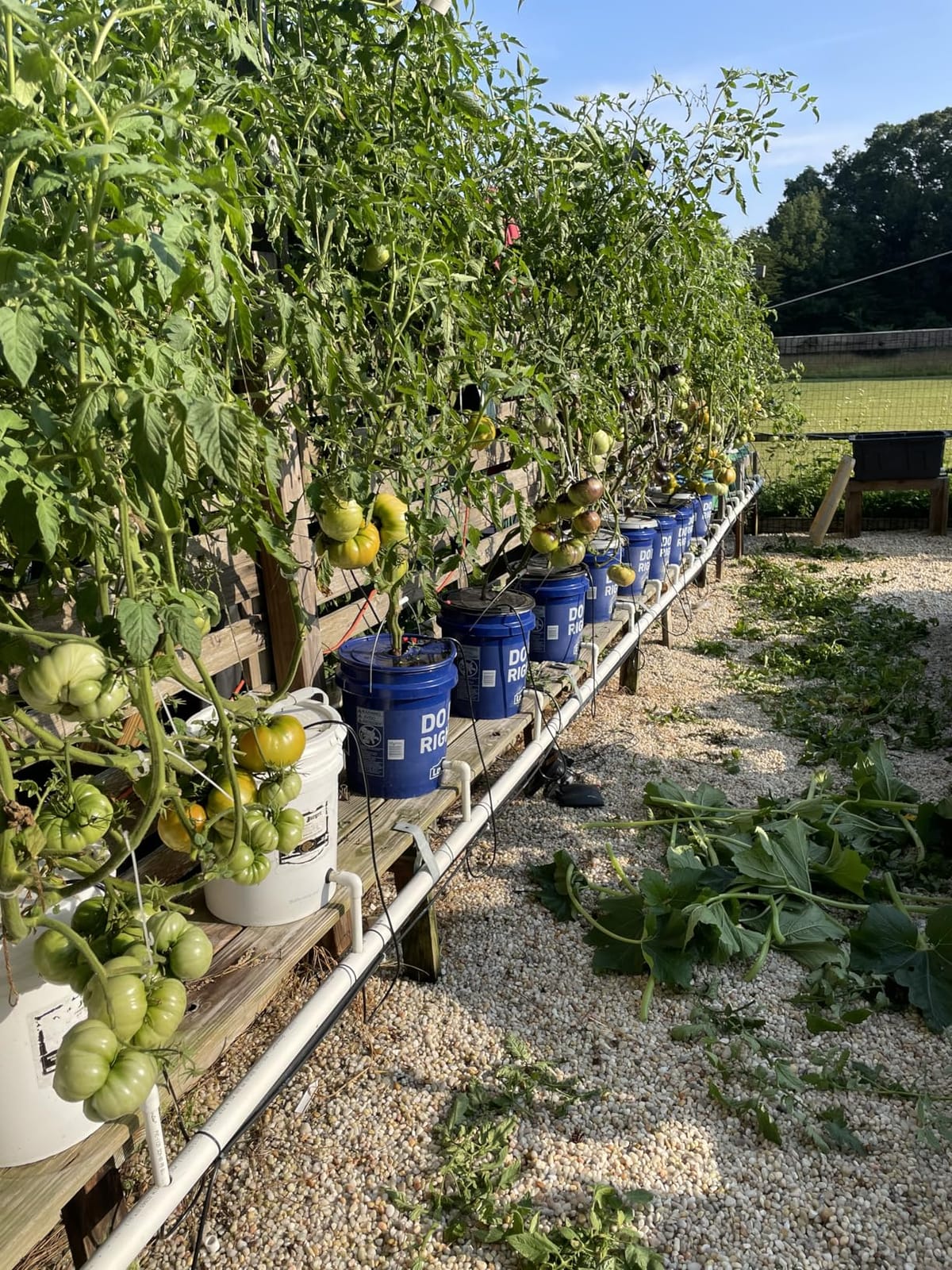
Roughly 84% of its ratings are five-star, across a large volume of feedback. Reviewers cite the professional pedigree and the clean dissolution, and dissolution matters more than it sounds – undissolved solids end up in pumps and channels.
The size ladder is also the widest here, from a 2.5 lb kit up through 5, 12.5, 25 and 62.5 lb, so you can scale up mid-season without changing formulas.
Who this suits
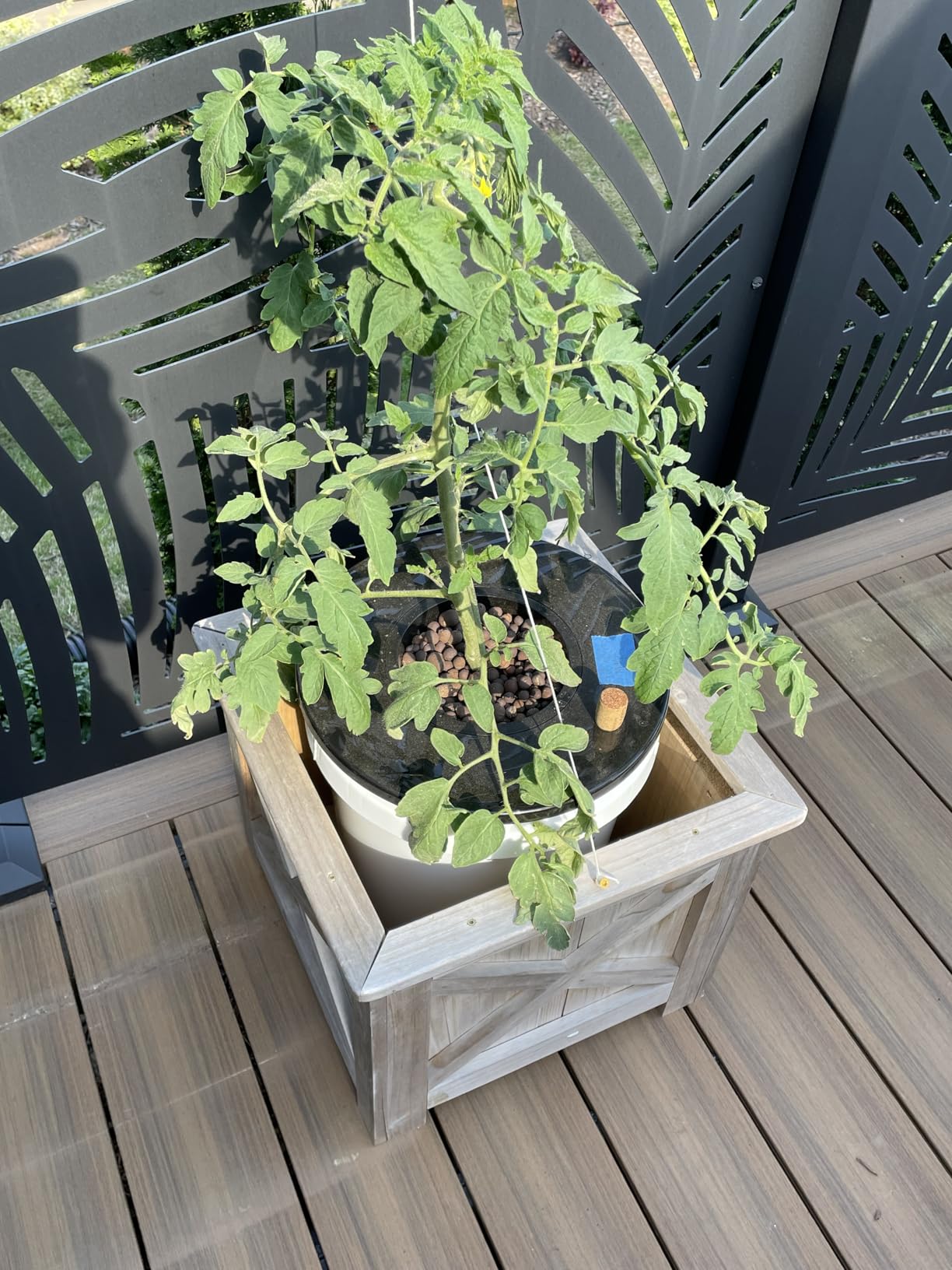
Growers running a fruiting vegetable long enough to notice the difference between a grow feed and a bloom feed. It also serves as a full vegetable base in a mixed system, since 4-18-38 is not locked to one crop.
Hydroponic growers describe dry salts in this format as the option where there is nothing to worry about once the scale is set up.
Where it falls short
Three separate scoops at every refill is real work, and it is why many first-timers pick a one-part formula instead. A gram scale is not optional here.
The 12.5 lb format also far exceeds what a two-pod tower consumes before it goes stale. Small system, small kit.
2. Advanced Nutrients Bloom, Micro and Grow – the three-part liquid with pH buffering
Advanced Nutrients Bloom, Micro & Grow, Pack of 3, 1 L Each
Liquid
1 liter each
3 components
1:1:1 mix ratio
2.8 lb total
Pros
- pH Perfect buffering holds reservoir pH stable between feeds
- Online nutrient calculator makes mixing proportions straightforward
- Concentrated enough that 1 L bottles last multiple grow cycles
- Well-established brand with responsive support
Cons
- Bundle listings occasionally arrive with only one component present
- Bottles need vigorous shaking before mixing to avoid sedimentation
Grow, Micro and Bloom in three one-liter bottles dosed 1:1:1, described by the manufacturer as built for high value crops. This set carries the largest review count in our group, with about 80% five-star ratings.
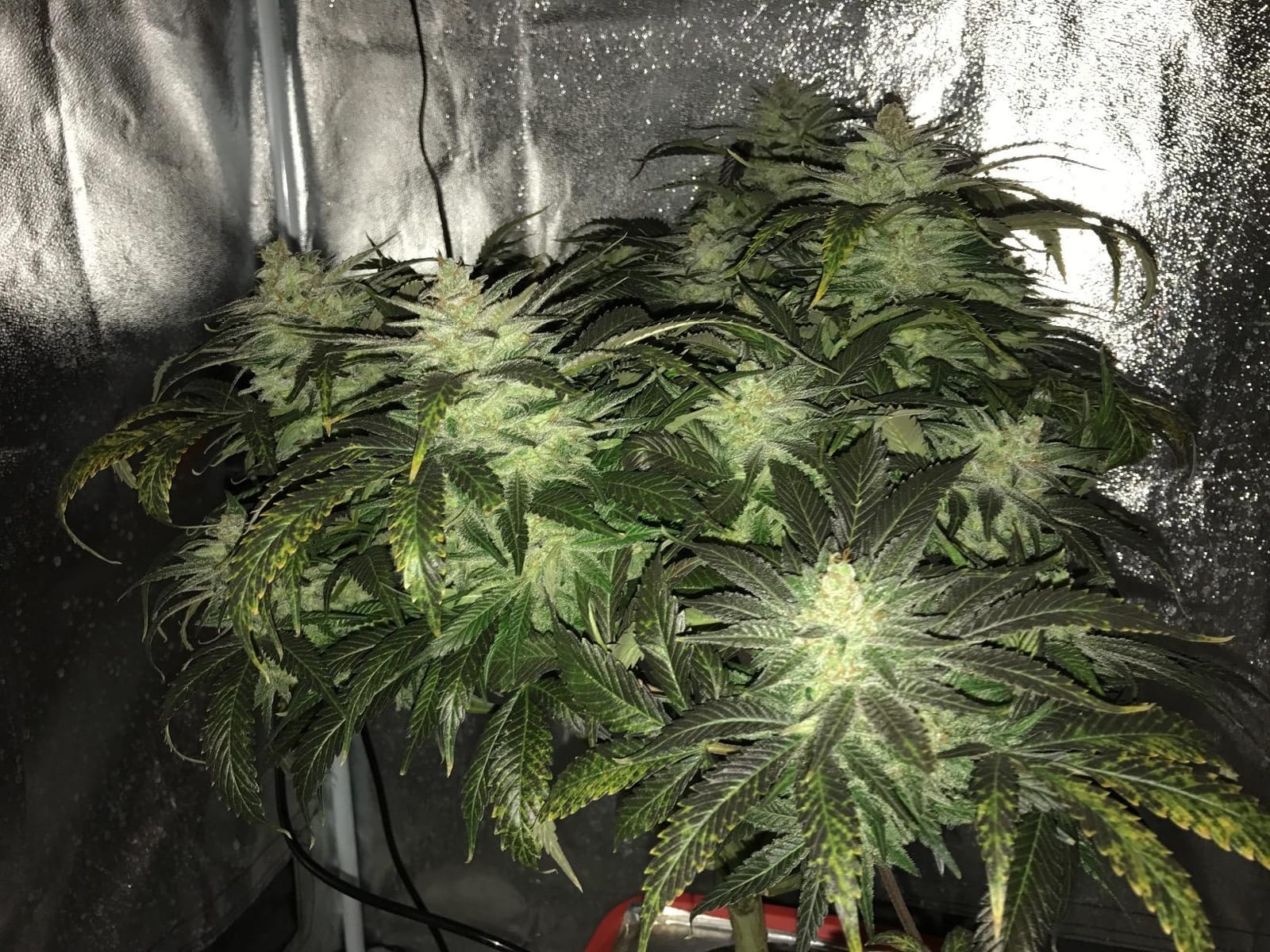
The feature that changes routine is pH Perfect. Reviewers credit it with removing daily pH adjustment, which in a recirculating system is the difference between checking occasionally and babysitting the reservoir.
Carrier molecules move nutrients into the plant efficiently, and a published nutrient calculator means you are not guessing ratios. A liter per component covers substantial reservoir volume before reordering.
Our reservation is packaging rather than formula. Some buyers report the bundle arriving with only one component, which makes the listing confusing even though the feed performs as advertised.
Who this suits
Growers on long indoor cycles who want pH drift handled for them. It suits a mixed reservoir running peppers alongside herbs, because 1:1:1 holds steady through the transition.
It is also the choice for anyone wanting stage control without weighing dry powder late at night.
Where it falls short
Three bottles means three measurements, and each needs a hard shake first. Skip that and sediment collects at the bottom, which is where uneven dosing comes from.
Reviewers also note plants on this feed outgrow the space you set up for them faster than expected. Plan the footprint first.
3. FoxFarm Grow Big Hydroponic – one bottle built specifically for hydroponics
FoxFarm Grow Big Hydroponic Plant Food – 3-2-6 Liquid Plant Fertilizer for Lush Vegetative Growth in Hydroponic Systems – Liquid Concentrate with Earthworm Castings & Micronutrients – 1 Pint
Liquid
16 fl oz
1.3 lb
3-2-6 NPK
2-3 tsp per gallon
Pros
- Single-part concentrate with no A/B mixing schedule
- Formulated for hydroponic systems rather than adapted from a soil line
- Includes earthworm castings and micronutrients
- Offered from one pint up to 2.5 gallons
Cons
- Vegetative-stage only
- so fruiting crops need a separate bloom formula
- Dose has to be verified with a conductivity or ppm meter
A 3-2-6 vegetative formula in a single bottle, dosed at two teaspoons per gallon generally and three for heavy feeding. It is one of the few entries explicitly formulated for hydroponic systems rather than adapted from a soil line.
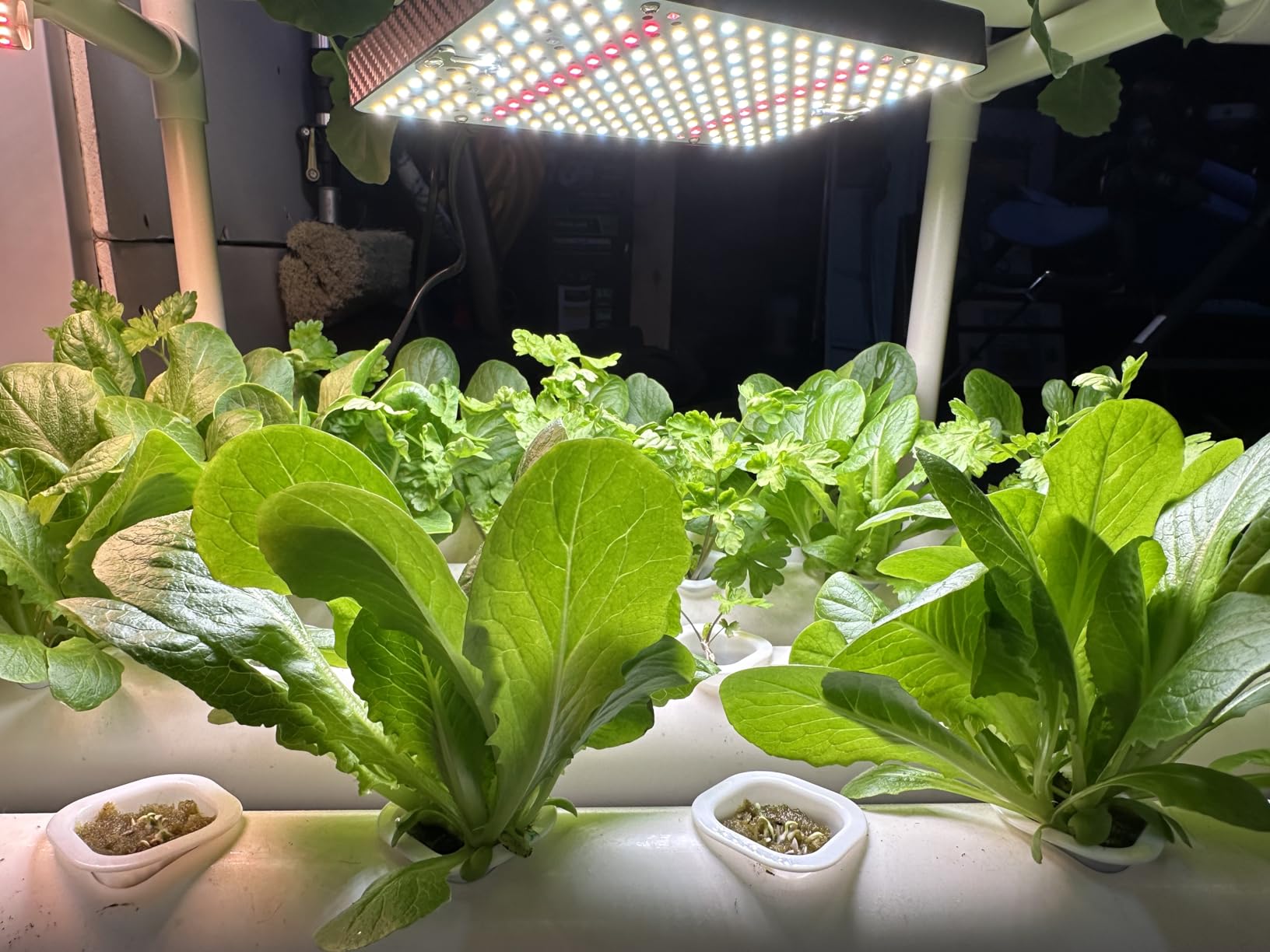
That nitrogen-heavy ratio earns it the leafy green slot. Lettuce, spinach, kale and basil all want steady vegetative growth and a low phosphorus load, which is exactly what 3-2-6 delivers.
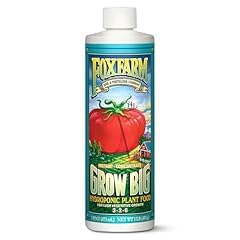
About 80% of ratings sit at five stars, and reviewers keep returning to the same point: one bottle, one measurement, no schedule to memorize. The maker also instructs you to verify strength with a conductivity or ppm meter.
Earthworm castings and micronutrients are folded into the concentrate, so it is not a stripped-down NPK salt. Larger sizes run up to 2.5 gallons for bigger reservoirs.
Who this suits
New growers who want one decision made for them. Growing salad greens and herbs with no measuring experience, the dose is simple enough to get right on the first attempt.
It pairs naturally with a fruiting setup too, since the guidance is to switch to Tiger Bloom or Big Bloom around week five when flowers appear.
Where it falls short
It is a vegetative formula. Run it unchanged through a tomato crop and you under-supply phosphorus and potassium at the exact stage that needs them.
Because dosing is volume-based rather than EC-based, small measuring errors accumulate. Pair it with a real EC or TDS meter.
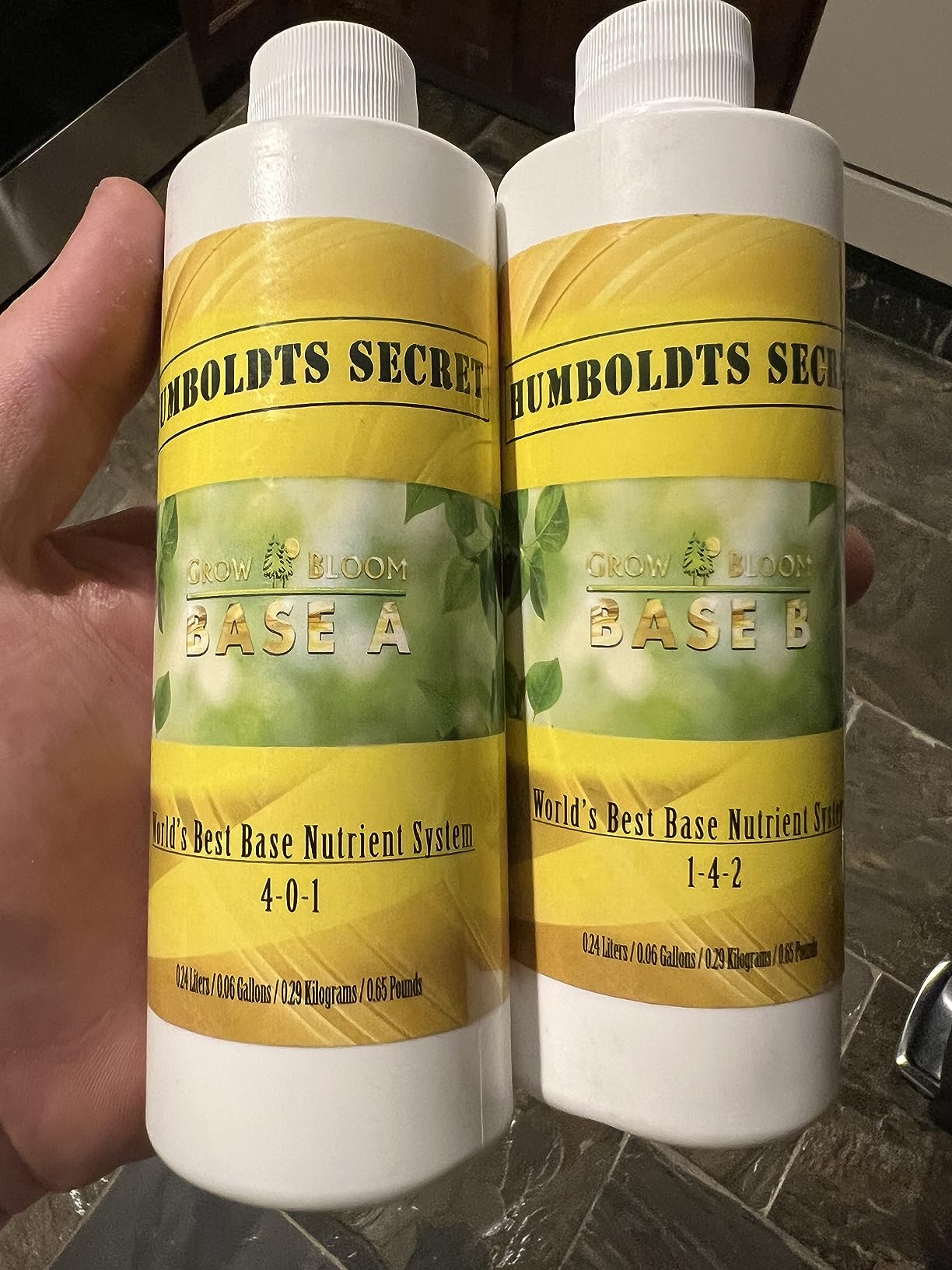
4. Humboldts Secret Base A and B – equal-parts dosing with no schedule to learn
Humboldts Secret Base A & B Liquid Fertilizer, Hydroponic, 32 Ounce Set
Liquid
64 fl oz set
4 lb
1:1 mix ratio
pH balanced
Pros
- Equal-parts dosing with no stage-specific schedule
- Full-spectrum two-part base including calcium and magnesium
- Mixes clean and fast without clogging lines
- Works in DWC aquaponics coco soil and containers
Cons
- Widest spread of critical ratings in this group at 4.5
- Two-part system needs separate dilution before combining
- Packaging design is in transition between versions
Base A and Base B in equal parts at every feeding, with no stage schedule to memorize. That single design decision removes the most common source of beginner dosing errors.
The formula is described as a complete NPK including calcium and magnesium, pH-balanced and fully water soluble. Reviewers note it mixes fast and leaves minimal residue, which matters when feeding automated drip.
Compatibility is broad: deep water culture, aquaponics, coco coir, pots, raised beds and soil are all named, making it a reasonable single choice across mixed systems.
At 4.5 stars across more than 3,400 ratings, this is the lowest average in our group, though 76% of those are still five-star. The spread is wider than the other two-part options here.
Who this suits
Anyone wanting more control than a one-part bottle without managing a three-part schedule. One ratio feeds both leafy greens and flowering plants, which makes it good for a mixed reservoir.
It is a sensible middle step for a grower moving up from single-bottle feeding.
Where it falls short
A small number of growers report needing supplemental calcium and magnesium in demanding systems despite both being in the formula. Watch for early blossom-end symptoms rather than assuming coverage.
Packaging is mid-transition, so units may arrive in older or updated designs. Dosing is unaffected, but two bottles can look mismatched.
5. TPS Nutrients Liquid Plant Food – the countertop tower refill
Liquid Plant Food – Fertilizer for AeroGarden & Hydroponic Systems, 8 oz
Liquid
8 fl oz
1 tsp per gallon
Herbs and vegetables
Pre-mixed single bottle
Pros
- Single pre-mixed bottle with no A and B to store separately
- Simple 1 teaspoon per gallon dose
- Ranks number one in its hydroponic nutrients category
- Sized and labelled for countertop towers
Cons
- Only 8 oz in the base size
- so it runs out fast in multi-pod towers
- Less stage-by-stage control than multi-part systems
This one does a specific job: filling a small countertop reservoir. It is formulated for AeroGarden-style systems and similar towers, dosed at one teaspoon per gallon, aimed at herbs, lettuce and compact indoor plants.
It holds the number one sales position in its category with roughly 78% five-star ratings across more than 2,000 reviews. Buyers treat it as an easy refill for a system they already own.

Root development is called out alongside general growth support, which makes sense in a small volume of solution. The formula is pH-balanced and made in the USA, and larger sizes run to 32 oz, 128 oz and twin packs.
So the small bottle is a starting point, not a hard ceiling, if you pick the right size up front.
Who this suits
Countertop and tower growers raising herbs and salad greens who want a refill that takes seconds to measure. In a system holding a few gallons, one teaspoon per gallon is a dose you can measure by eye.
It is also a sound first purchase for someone who has never fed a hydroponic plant.
Where it falls short
Eight ounces goes quickly in a multi-pod tower, so plan on reordering well before a long grow or start with a larger size.
As a one-part formula it gives no bloom-stage control, making it a poor fit for tomatoes or peppers even though the label mentions vegetables generally.
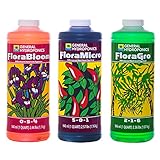
6. General Hydroponics Flora Series – the most stage control per bottle
General Hydroponics Flora Series: FloraMicro, FloraBloom, FloraGro – 3-Part Hydroponic Nutrient System, 1 qt. Bottles
Liquid
Three 1 quart bottles
96 fl oz total
2:1:6 mix ratio
Pros
- Highest five-star share in the group at 87%
- Long-running formula many growers have used for years
- Three components give precise stage-by-stage control
- Mixes cleanly and holds a stable pH
Cons
- Most growers add Cal-Mag to complete the base
- Feed charts can over-feed if followed without watering in between
- Three bottles cost more than granulated water-soluble alternatives
FloraGro, FloraMicro and FloraBloom in quart bottles, mixed 2:1:6. Micro supplies nitrogen and calcium with trace minerals, Bloom adds phosphorus, potassium, magnesium and sulfur for fruit development, and Gro provides extra nitrogen and potassium for structural growth.
That separation is the point. When a tomato sets fruit you change what is in the reservoir by changing the ratio rather than switching products, which is finer control than a fixed formula gives you.
It ties for the highest rating in the group at 4.8, with 87% five-star and only 1% one-star. Reviewers describe long-term repeat use across vegetables, herbs and hanging baskets, and note clear measurement markings and tight seals.
It is also a legacy formula, which matters practically: dosing examples and troubleshooting advice for this line are easier to find than for anything newer here.
Who this suits
Growers who want one product line from seedling to harvest with ratios adjusted at each stage. It fits a mixed reservoir where leafy greens share a system with one fruiting crop.
If you have read conflicting advice online, most of it refers to this line, which makes troubleshooting easier.
Where it falls short
Most buyers add a Cal-Mag supplement to complete the base, so three bottles are not a finished solution on their own. Budget for a fourth product.
The published chart can push a plant past target strength if followed without watering in between feeds. Treat it as a ceiling and confirm with an EC meter.
7. Haligo A and B Nutrient Pack – two-part volume at the low end
Hydroponics Nutrients for Aerogarden(800ml in Total), Plant Food A & B Hydroponics Supplies, Indoor Plant Fertilizer for Hydroponics Growing System, Hydroponic Solution for Vegetables Thrive
Liquid
800ml total
A and B pairs
5ml each per litre
Dispensing cup included
Pros
- Largest total volume in the group for the money
- Simple 5ml A plus 5ml B per litre dosing with a cup included
- Compatible with AeroGarden and other indoor towers
- Water soluble and pH balanced for even uptake
Cons
- Dosing instructions vary across the listing
- Individual pack sizes mean several bottles per reservoir refill
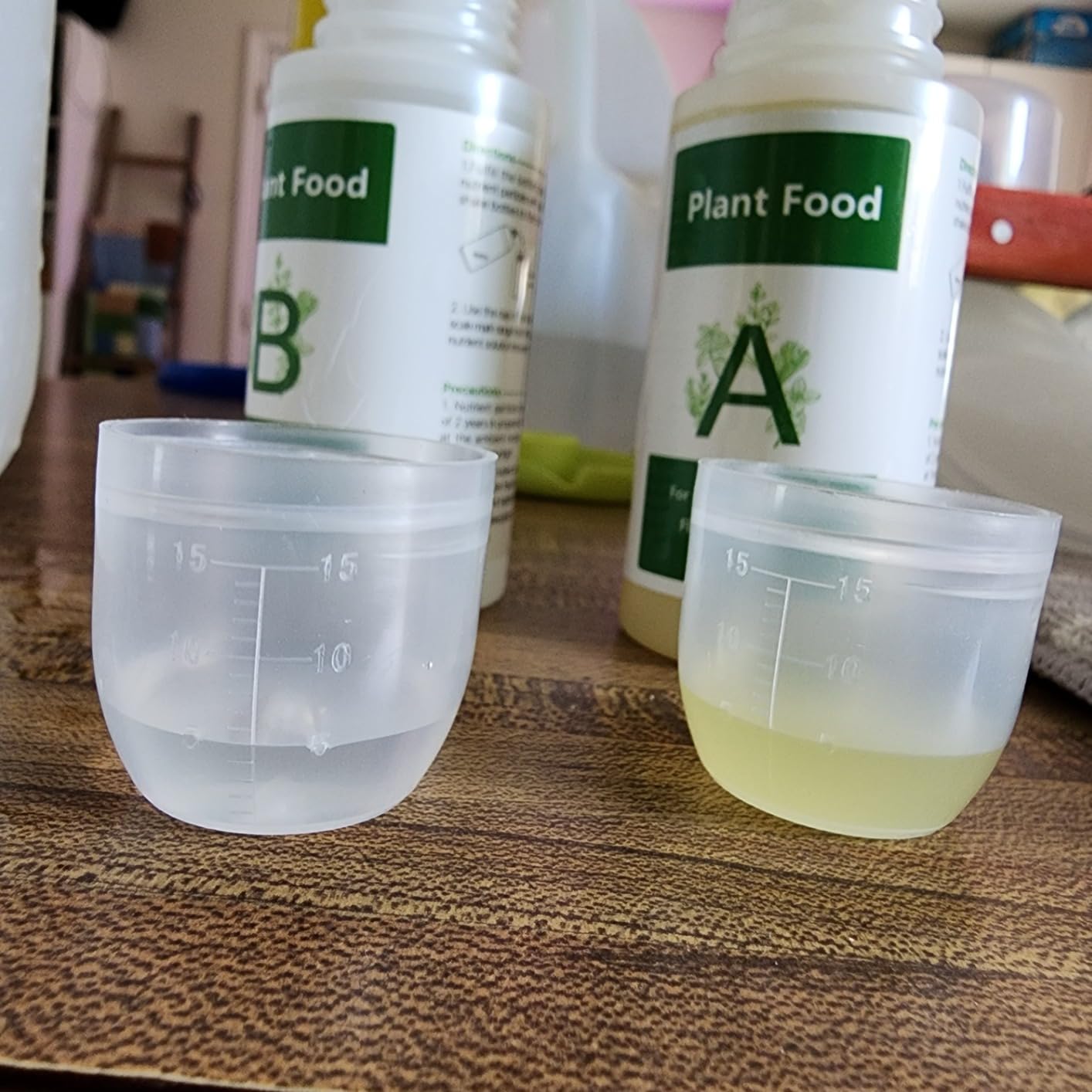
An eight-pack of A and B pairs totalling 800ml, dosed at 5ml of A and 5ml of B per litre. A measuring cup is included, which most two-part sets in this group do not provide.
It holds 4.7 stars with 83% five-star ratings. The value argument is simple – more total volume than any other two-part entry here, which matters when topping up a small reservoir every couple of weeks.
The formula is described as 100% water soluble and pH balanced, compatible with AeroGarden and a wide range of indoor systems, and also sold for outdoor use.
One practical caution: the listing shows more than one dilution instruction. Pick a ratio, write it down, and use it consistently rather than blending variants.
Who this suits
Tower growers who want two-part control at the lower end, especially if you already measure in millilitres and prefer an even A to B ratio to a fixed one-part formula.
It is a reasonable first two-part purchase, since two bottles teach the same discipline a three-part system demands without stage management.
Where it falls short
Small pack sizes mean several bottles per refill, so you handle more containers than the count suggests.
Inconsistent dilution instructions are the most common complaint. Easy to fix once you settle on a single ratio, but a real stumbling block for first-time users.
8. Greenleaf Mega Crop – one bottle from seedling to fruiting
Mega Crop 1-Part Complete Base Nutrient – Hydroponic and Soil Fertilizer for Plants with Organics – Easy to Use for Max harvests – makes 100+ Gallons
Powder
400 g
1:225 mix ratio
Makes about 90 gallons
One-part complete
Pros
- Simplest dosing in the group with no A and B split
- Seven supplements combined into one bottle
- 400g container makes roughly 90 gallons of solution
- Works in hydroponics and soil for mixed setups
Cons
- Less stage-by-stage control than multi-part systems
- Organic components leave more residue than mineral-only formulas
A one-part complete base folding at least seven separate products into a single bottle, mixed at 1:225. The 400 g size makes about 90 gallons of solution.
What goes in is unusually broad for a one-part formula: multiple forms of calcium and magnesium, sulfur, trace elements, amino acid chelates, soluble silica from potassium silicate, kelp extract, fulvic acid, enzymes, 18 L-amino acids, B-vitamins and oligosaccharides.
At 4.6 stars with 81% five-star ratings, reviewers favour the one-bottle simplicity and the volume produced per unit of cost. The chelates and multiple calcium forms are cited as the reason uptake holds in a plain reservoir.
It is listed for tomatoes, fruits, vegetables and flowers, and works in hydroponics and soil, so moving between systems costs you no decision.

Who this suits
Beginners wanting one bottle that covers the whole cycle without weighing separate salts. It suits lettuce, mixed greens and a first tomato attempt in the same season.
It also handles seedlings well, where half strength of a full one-part formula is an easy starting point.
Where it falls short
Everything sits at a fixed ratio, so you cannot shift the feed as a fruiting crop enters flower. Some growers move to a multi-part line at that point.
Organic and kelp components leave more residue than a mineral-only formula, and that residue settles in NFT channels over time.
9. VIVOSUN Base A and B Set – two-part control for existing towers
VIVOSUN Liquid Nutrients Base A & B Bundle, Set of 8oz
Liquid
16 fl oz total
1:1 mix ratio
8 oz per bottle
Soil hydro aquaponics coco
Pros
- Dosing matches VIVOSUN towers and grow cabinets many growers own
- No unpleasant odor and concentrate tolerates sitting for days
- Water soluble and pH stabilizing
- Easy to dial strength with a syringe for milliliter measuring
Cons
- 8 oz bottles run out fast on extended grows
- A and B must be diluted separately before combining
Two eight-ounce bottles dosed in equal parts, diluted separately and then combined. The base carries nitrogen, phosphorus, potassium, calcium, magnesium and micronutrients, and the maker is explicit that concentrates should never be mixed undiluted.
It rates 4.6 with 81% five-star ratings and almost no one-star feedback, one of the more consistent profiles in the group. Reviewers single out the clean smell and how easily strength is dialled in.
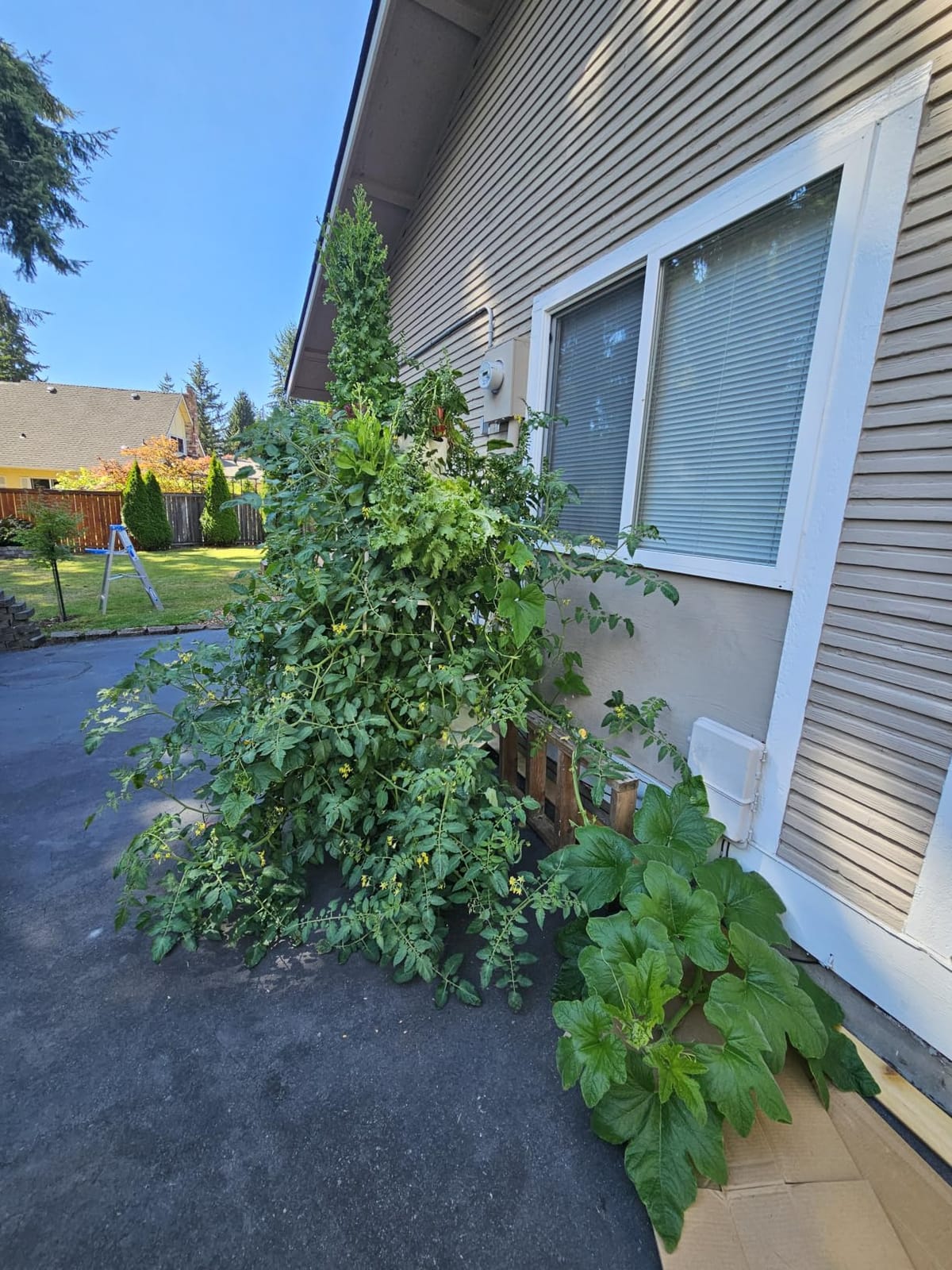
Compatibility is the strongest selling point: soil, hydroponics, aquaponics and coco coir. In an aquaponic loop that matters, because the base has to stay stable alongside fish.
A syringe makes milliliter measuring accurate, and the concentrate tolerates sitting for days, which cuts waste on small systems.
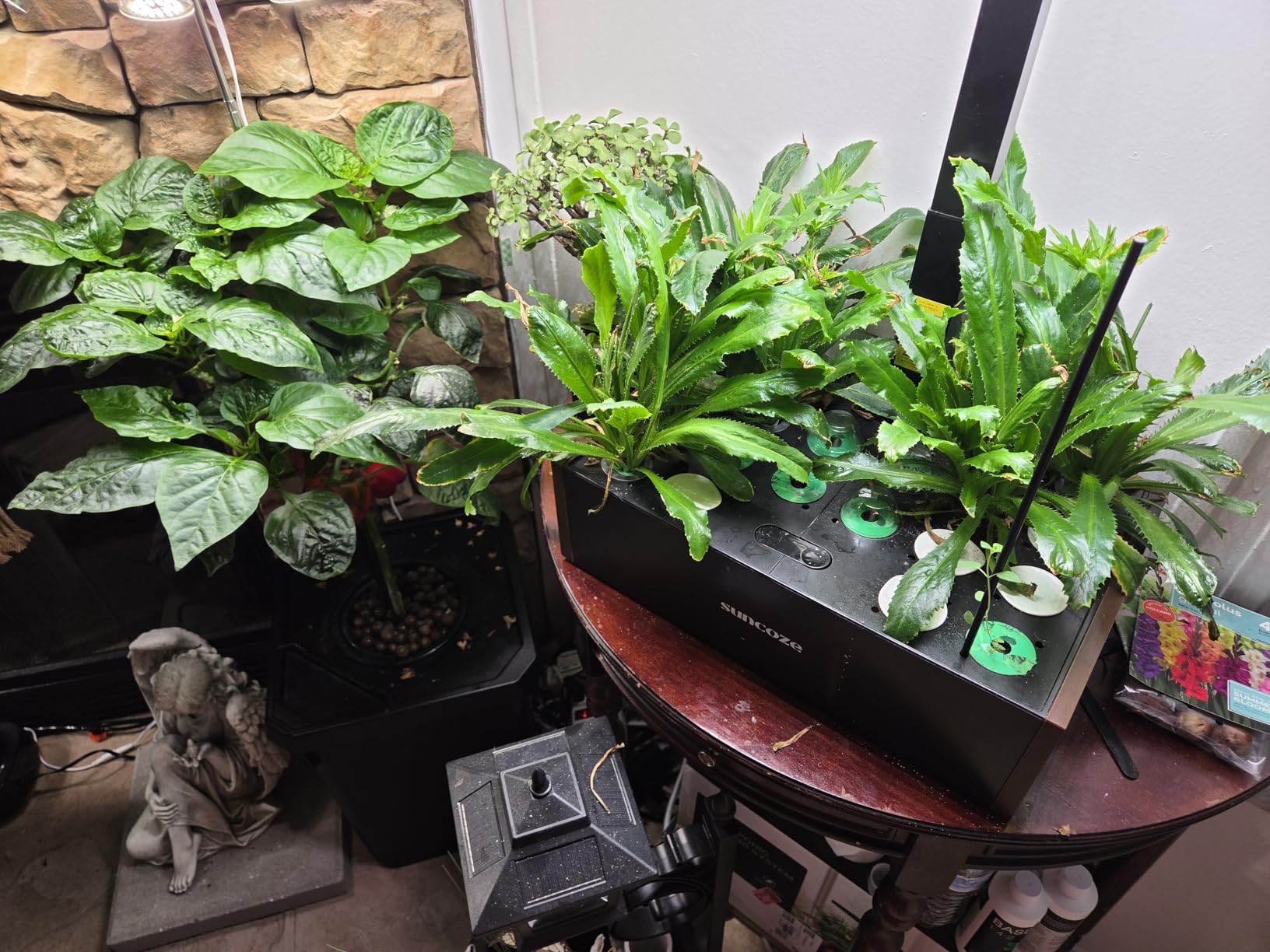
Who this suits
Home growers who already own VIVOSUN towers or cabinets and want dosing that matches their hardware. The equal-parts ratio also makes it forgiving on a mixed planting.
Aquaponic setups are the clearest case, since the same base works with fish and in soil.
Where it falls short
Eight ounce bottles are the limiting factor. For anything beyond a short cycle, the 32 oz or 128 oz sets make more sense.
Diluting A and B separately is an extra step versus a one-part formula, and skipping it is the classic way to precipitate nutrients out of solution.
10. HiThrive 4-3-6 Fertilizer – clear reservoir water and steady leafy growth
Aeroponics & Hydroponic Fertilizer, 4-3-6 NPK Formula, 32oz
Liquid
32 fl oz
4-3-6 NPK
1 tsp per quart
Up to 96 feedings
Pros
- Single liquid bottle that does not cloud reservoir water like powder mixes
- Higher 4-3-6 nitrogen ratio suits leafy greens and steady vegetative growth
- One bottle covers up to 96 feedings
- Simple 1 teaspoon per quart dosing that growers report does not burn plants
Cons
- No separate control over bloom-stage nutrition
- Some reviewers start below the label dose out of caution
A 4-3-6 liquid formula with micronutrients, mixed at one teaspoon per quart. It targets both aeroponic misters and recirculating reservoirs, making it one of the few entries suited to high-pressure aeroponics as well as standard hydroponics.
The nitrogen-heavy ratio again points to vegetative crops, and the dose works out to roughly three standard growing pods every two weeks. The 32 oz bottle is advertised as covering up to 96 feedings.
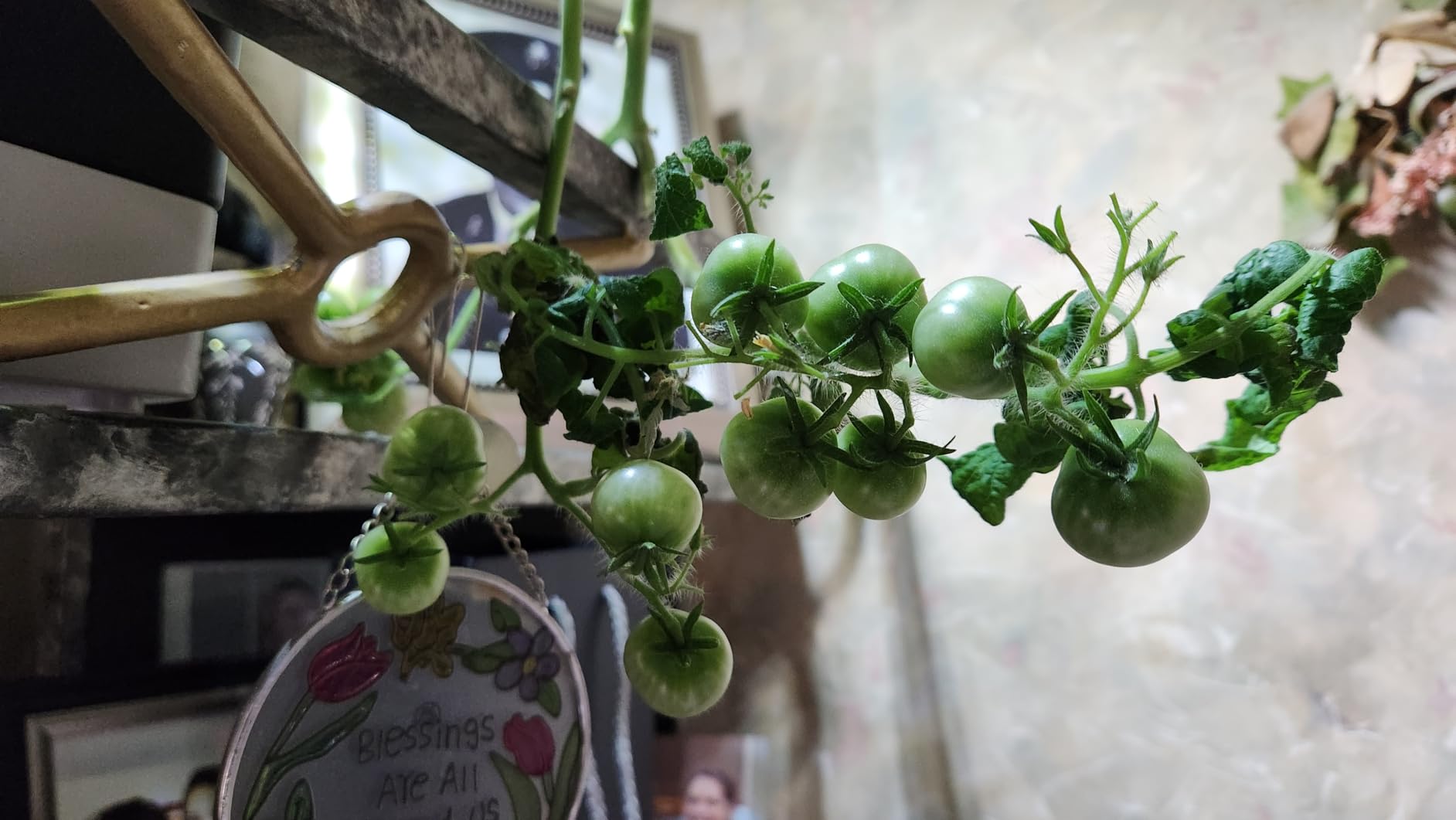
It holds 4.6 stars with 83% five-star ratings, though across the smallest review count here at 627, so give that rating slightly less weight than the others. Reviewers report larger vegetables and clear reservoir water in countertop towers.
Clarity is the point mentioned most. A liquid concentrate leaves no suspended solids, which matters in a mist line where particle fouling shuts the pump down.
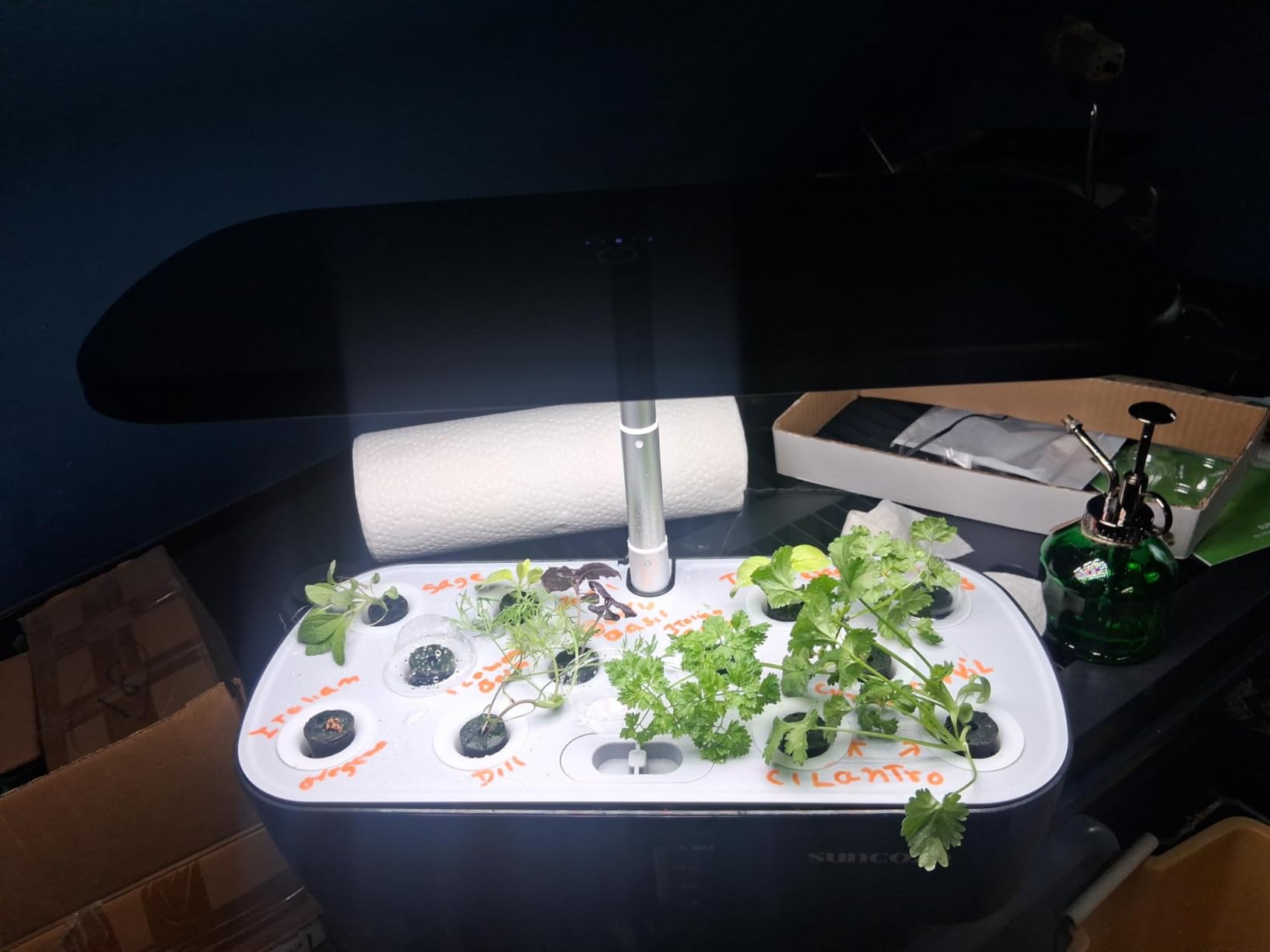
Who this suits
Aeroponic growers, and anyone fighting sediment in a recirculating line. Lettuce, herbs and other fast vegetative crops are the natural fit for the ratio.
A 16 oz pint version exists as a better starting size for a small reservoir.
Where it falls short
One concentrate means no separate bloom nutrition, so tomatoes and peppers run out of useful options halfway through a cycle.
Some reviewers start below the label dose out of caution, suggesting perceived strength runs slightly hot. Measure with an EC meter and adjust rather than treating the label as a target.
One-Part vs Two-Part vs Three-Part: Which Formula Fits Your Setup
Form matters more than the marketing suggests and less than the bottle count implies. One-part locks every element into a single ratio, so it is simplest and least flexible. Two-part separates calcium from the rest, which is what stops those two binding into an insoluble precipitate. Three-part adds a dedicated bloom component on top of that separation.
Start with one-part if you have never fed a plant in water. Move to two-part when more than one crop type shares a reservoir, since conflicting needs become a real problem at a fixed ratio. Go three-part for tomatoes, peppers or cucumbers over a long cycle. Dry salts versus liquid is a separate question: dry costs less per gallon and stores longer, liquid doses more precisely in millilitres and leaves less sediment in narrow channels.
EC and pH Targets by Crop
Hold reservoir pH between about 5.5 and 6.5. Outside that range nutrients stop becoming available to roots even when they are present, which is nutrient lockout – the plant starves while the meter reads fine. EC measures strength, and a TDS meter reporting ppm is the same number on another scale, roughly a 700 multiplier on the 2.0 setting most meters default to.
Lettuce runs about 0.8 to 1.2 mS/cm, basil 1.0 to 1.6, spinach 1.2 to 1.8, strawberry 1.0 to 1.6, cucumber 1.8 to 2.5, tomato climbing from 2.0 toward 3.0 as fruit sets, and pepper highest at 2.2 to 3.5. Seedlings and transplants want roughly half the target strength. In a mixed planting, aim at the lowest-value crop in the system, since that is the one that suffers when you push higher.
How to Mix Nutrients Without Causing Precipitation
Never combine concentrated A and B before diluting. Calcium and phosphate bind into an insoluble solid the moment they meet at concentration, and that solid settles in your reservoir and clogs lines. Dilute each into its own bucket first, then combine.
Start with the water. Hard tap water carries carbonate that buffers pH upward and makes the pH drop you need harder to hold, so let it sit overnight or treat it. Reverse osmosis strips that buffer entirely, which means you also need a Cal-Mag supplement. Add nutrients to water rather than water to concentrate, stir between additions, add the calcium-bearing component last, and check pH only after everything dissolves.
How Often to Change Your Reservoir by System Type
Topping off is the mistake that ruins most first-year grows. You replace water the plants drank, but the salts stay and EC climbs until tip burn and salt buildup appear. Full changes reset that. Deep water culture reservoirs typically need a full change every one to two weeks in warm conditions, closer to monthly when cool.
NFT and drip systems stay cleaner because the volume is small and recirculating, so two to three weeks is usually enough. Kratky systems are top-dosed as the level drops, with a partial change every few weeks to keep the ratio honest. Countertop towers change small volumes quickly, so check EC and pH every two or three days and replace the water rather than only topping it up.
Why Hydroponic Lettuce Tastes Bitter and How to Fix It
Bitter lettuce in hydroponics is usually a nutrition and light problem, not a variety problem. High nitrogen drives growth faster than the plant can photosynthesise, and the resulting nitrate accumulation creates bitterness. Low light makes it worse, because there is less sugar to offset the nitrate.
Lower the nitrogen rate rather than raising it, hold a slightly weaker feed in the final week, and give plants the strongest light the space allows. A change to plain water a few days before harvest stops new nitrate input while the plant finishes. Harvest timing matters most of all: pull a head at peak size and full maturity rather than leaving it past that point.
Hard Water, Soft Water and Cal-Mag
Your water source decides whether you need a supplement. Hard tap water already carries calcium and magnesium, so adding more pushes those past the point the plant can use and locks out other nutrients. Soft or reverse osmosis water carries almost none, so without a supplement new growth shows calcium deficiency even when the label lists calcium.
Because the symptoms look similar either way, measuring beats guessing. Test plain reservoir water before dosing. If pH climbs on its own over a day, your water is alkaline and buffering hard, so treat it or blend in lower-mineral water first. Note that the MasterBlend kit and the Flora Series need attention from opposite directions: one ships with calcium and magnesium included, the other is widely used with Cal-Mag added on top.
Common Nutrient Mistakes and How to Correct Them
Concentrated A and B mixed together precipitate into solids that settle in lines and can block a pump. Dilute each separately and flush any affected channel with plain water before reuse. Topping off instead of changing the reservoir concentrates salts until plants show tip burn, so schedule full changes and check EC weekly. Feeding seedlings at full strength stunts them, so use roughly half for the first week or two after transplant.
Ignoring pH and dosing by label volume alone produces plants that look fed but grow poorly, since water hardness alone can swing your effective dose widely. Measure at every refill. And running residue-heavy organic-style blends through narrow NFT channels blocks emitters and starves the system, so keep channels short and flush them on a schedule.
Frequently Asked Questions
What is the best nutrient solution for hydroponics?
The best nutrient solution is the one that matches your crop, your system and your experience level. For beginners and countertop towers, a one-part pre-mixed liquid is safest because there is no ratio to get wrong. For mixed crops or longer cycles, a two-part base gives control without a stage schedule. Three-part systems add bloom-stage control worth having once you grow tomatoes or peppers. Track pH between 5.5 and 6.5 and check EC rather than dosing by label volume alone.
What are the best nutrients for hydroponic vegetables?
Hydroponic vegetables need nitrogen, phosphorus, potassium, calcium, magnesium and sulfur as macronutrients, plus trace elements including iron, manganese, boron, zinc, copper, molybdenum and chlorine. Nitrogen drives leafy growth, phosphorus supports roots and flowering, and potassium handles fruit development and stress tolerance. Calcium and magnesium are supplied separately in two-part and three-part systems so they do not bind into an insoluble precipitate. Every product in our roundup supplies all of these in soluble form.
What are the ideal nutrient levels for hydroponic vegetables?
Lettuce runs at roughly 0.8 to 1.2 mS/cm, basil 1.0 to 1.6, spinach 1.2 to 1.8, strawberry 1.0 to 1.6, cucumber 1.8 to 2.5, tomato climbing from 2.0 to 3.0, and pepper 2.2 to 3.5. Hold pH between 5.5 and 6.5, because outside that range nutrients stop being available to roots even when present. Seedlings want about half the target strength. For a mixed planting, aim at the lowest-value crop in the system.
What is the best nutrient solution for hydroponic lettuce?
Lettuce wants a nitrogen-forward vegetative formula and a low phosphorus load, so a 3-2-6 or 4-3-6 ratio suits it better than a bloom-heavy feed. FoxFarm Grow Big Hydroponic at 3-2-6 and HiThrive at 4-3-6 both match that profile, while Greenleaf Mega Crop works as a one-part option when you also want a simple dose. Run lettuce at roughly 0.8 to 1.2 mS/cm and hold pH between 5.5 and 6.5.
What is the best hydroponic fertilizer for tomatoes?
Tomatoes need far more strength and stage control than leafy greens. A three-part system such as MasterBlend 4-18-38, the General Hydroponics Flora Series or Advanced Nutrients Grow Micro Bloom lets you shift the ratio as fruit sets, and a 4-18-38 base carries the potassium and phosphorus that fruiting demand. Run the feed up from about 2.0 mS/cm toward 3.0, and keep calcium and magnesium in the base to reduce blossom-end rot.
Why does my hydroponic lettuce taste bitter?
Bitter lettuce is usually a nitrogen and light problem rather than a variety problem. High nitrogen drives growth faster than the plant can photosynthesise, and the resulting nitrate accumulation creates bitterness, while low light makes it worse because there is less sugar to offset it. Reduce the nitrogen rate, hold a slightly weaker feed in the final week, maximise light, and change the reservoir to plain water a few days before harvest. Harvesting at peak size and maturity removes most remaining bitterness.
Do I need Cal-Mag if I am using tap water?
It depends on your water. Hard tap water already carries calcium and magnesium, so adding a supplement can push those elements past the point the plant can absorb and lock out other nutrients. Soft or reverse osmosis water contains almost none, and a base feed alone will leave new growth showing calcium deficiency. Test the pH and EC of plain reservoir water first. If pH climbs on its own over a day, your water is alkaline and buffering hard, so treat it before dosing.
How often should I replace my nutrient solution?
Deep water culture reservoirs generally need a full change every one to two weeks in warm conditions, and closer to monthly when cool. NFT and drip systems hold a smaller, recirculating volume and can usually go two to three weeks. Kratky systems are top-dosed as the level drops, with a partial change every few weeks to keep the ratio honest. Countertop towers change small volumes quickly, so check EC and pH every two or three days and replace the water rather than only topping it up.
What does Epsom salt do for hydroponics?
Epsom salt is magnesium sulfate, and it supplies magnesium, which plants need to move nitrogen and activate enzymes. It also provides sulfur for amino acid and protein synthesis. Magnesium is mobile in the plant, so a shortage shows first on older leaves as interveinal yellowing, while immobile calcium shortage shows on new growth. Shortages are often caused by lockout at high pH rather than an actual absence, so check pH before adding more magnesium.
How can I make my own hydroponic nutrient solution?
You can build a working solution from three raw salts. Per gallon of water, use roughly 2.4 to 3.0 g each of a MasterBlend-style base for a vegetative or fruiting cycle, and 1.2 g of calcium nitrate plus 0.6 g of Epsom salt as a lighter version suited to lettuce and salad greens. Dissolve each component fully in its own bucket before combining, and never combine calcium and phosphate at full concentration or they will precipitate out. Adjust with an EC meter and pH meter rather than trusting the recipe alone.
Where to Start With Hydroponic Nutrients in 2026
If you have never fed a plant in water, start with a one-part formula such as Greenleaf Mega Crop or FoxFarm Grow Big Hydroponic, hold pH between 5.5 and 6.5, and check EC rather than dosing by volume. Measure consistently for a few weeks until the numbers stop surprising you.
Once that becomes routine, move up. A two-part base like Humboldts Secret or VIVOSUN handles a mixed planting without a stage schedule, and a three-part system such as our Editor’s Choice, the MasterBlend 4-18-38 Combo Kit, takes over when you run tomatoes and peppers through a full cycle.
Full reservoir changes, measured pH and a weekly EC check will do more for your plants than any bottle on this list. That is the real difference between the best nutrient solutions for hydroponic vegetables and a feed that only ever gets used correctly once.