
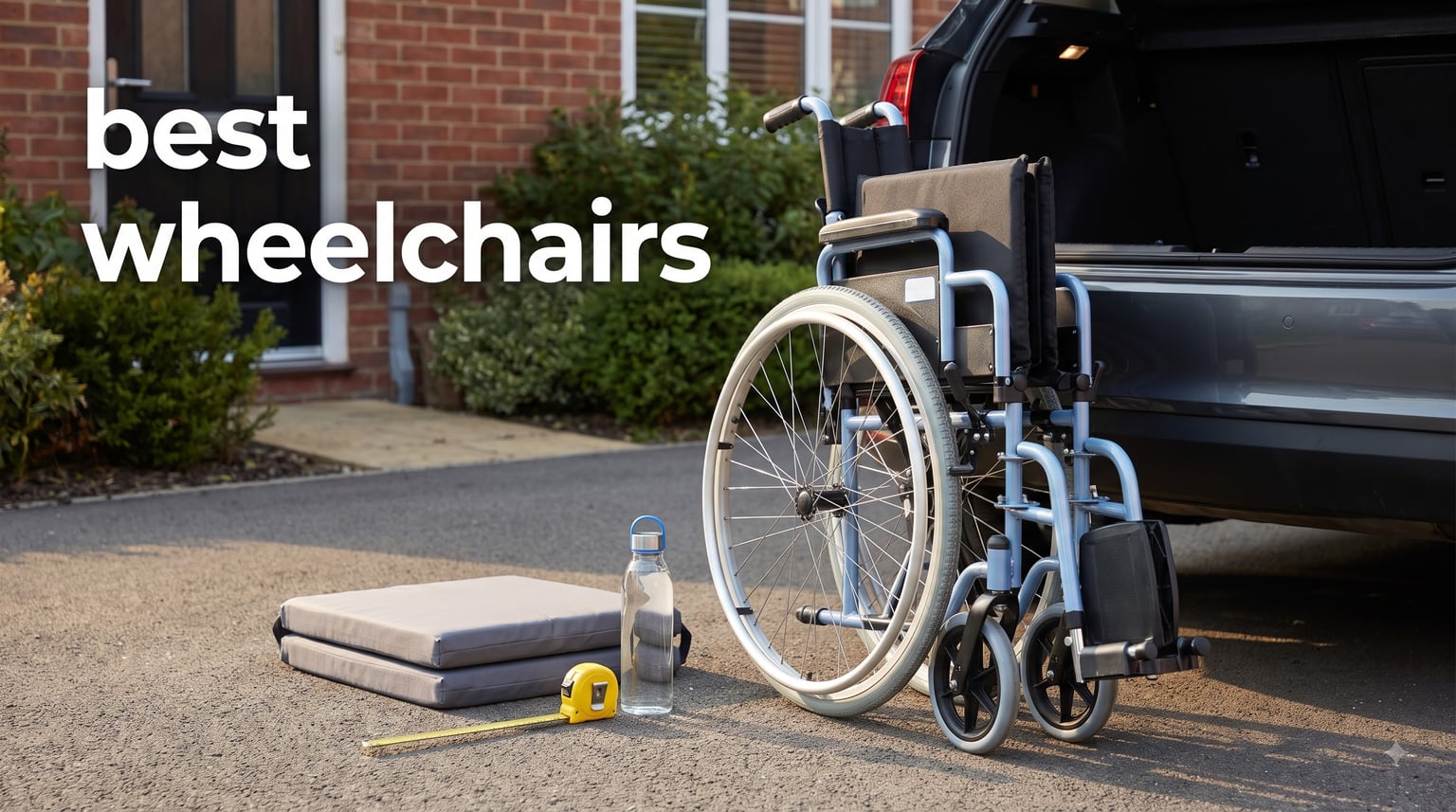
My family has spent the better part of three years pushing, folding, lifting, and loading pretty much every wheelchair you can buy online. After my father’s stroke and then my mother-in-law’s knee replacement, our garage looked like a mobility showroom. That hands-on time is why I put together this guide to the best wheelchairs you can order right now in 2026.
Here is the short version: the right wheelchair depends entirely on who is sitting in it and who is pushing it. A caregiver who loads a chair into a Honda Civic five times a week needs something very different from a user who self-propels all day or someone who needs a power chair for independence.
I compared 10 chairs across weight, seat sizing, weight capacity, fold-ability, and real owner feedback from thousands of reviews. I also factored in what long-term wheelchair users on Reddit consistently say, because that community has zero patience for marketing fluff. Below you will find quick picks, a full comparison table, detailed reviews, and a buying guide that covers measuring, Medicare coverage, and comfort for all-day sitting.
Table of Contents
Our Top 3 Wheelchair Picks for 2026
These three chairs won their categories by a clear margin. The Drive Medical Blue Streak is the safest all-around choice for most families, the Medline Ultra Lightweight Transport is the easiest chair to lift in and out of a car, and the Aotedor Electric Wheelchair restores independence for users who cannot self-propel.

Drive Medical Blue Streak Wheelchair
- 18 inch seat
- Self-propelled or caregiver pushed
- 300 lbs capacity
- Swing-away footrests
Medline Ultra Lightweight Transport Chair
- Only 15 lbs
- 19 inch seat
- 300 lbs capacity
- Folds for car trunk

Aotedor Electric Wheelchair
- 35-mile range
- Dual 250W motors
- 330 lbs capacity
- Airline approved battery
Best Wheelchairs in October: Quick Overview
The table below shows all 10 chairs side by side. Compare weight, seat width, and capacity first, because those three numbers decide whether a chair will actually work for your user and your vehicle.
| Product | Specifications | Action |
|---|---|---|
| Aotedor Electric Wheelchair |
|
Check Latest Price |
| Medline Ultra Lightweight Transport |
|
Check Latest Price |
 Medline Comfortable Folding Wheelchair Medline Comfortable Folding Wheelchair |
|
Check Latest Price |
| Drive Medical Blue Streak |
|
Check Latest Price |
 Drive Medical Folding Transport Drive Medical Folding Transport |
|
Check Latest Price |
 Carex Transport Wheelchair Carex Transport Wheelchair |
|
Check Latest Price |
 Drive Medical Cruiser III Drive Medical Cruiser III |
|
Check Latest Price |
 Medline Excel Bariatric Wheelchair Medline Excel Bariatric Wheelchair |
|
Check Latest Price |
 Karman LT-980 Ultra Lightweight Karman LT-980 Ultra Lightweight |
|
Check Latest Price |
 FeatherMobility Folding Wheelchair FeatherMobility Folding Wheelchair |
|
Check Latest Price |
1. Aotedor Electric Wheelchair – Best Power Chair for Long Range
Aotedor Electric Wheelchair for Adults, 35 Miles Dual Battery, Foldable Power Wheelchair with Dual Brushless Motors, 330 lbs Capacity, Airline Approved, Stable & Reliable Performance
35-mile dual battery
Dual 250W motors
330 lbs capacity
18 inch seat
Airline approved
Pros
- Dual battery system delivers up to 35 miles per charge
- Removable 24V battery is airline approved
- Dual 250W brushless motors with electromagnetic brakes
- 18 inch breathable seat with ergonomic joystick
Cons
- Heavy and needs two people to load into a vehicle
- Struggles on thick indoor carpeting
- No reclining seat option
We brought the Aotedor in for my uncle, who has almost no upper body strength after his diagnosis, and it gave him back something no manual chair could: independence. He steers with the joystick, and the chair does all the work. The first weekend he had it, he led our family walk around the neighborhood loop for the first time in two years.
The headline spec is the dual battery setup. You get a 24V/20AH battery plus a removable 24V/10AH lithium battery, and together they deliver a genuine 35-mile range. One reviewer reported running a full day at Disney World on a single charge, and our experience tracks with that.
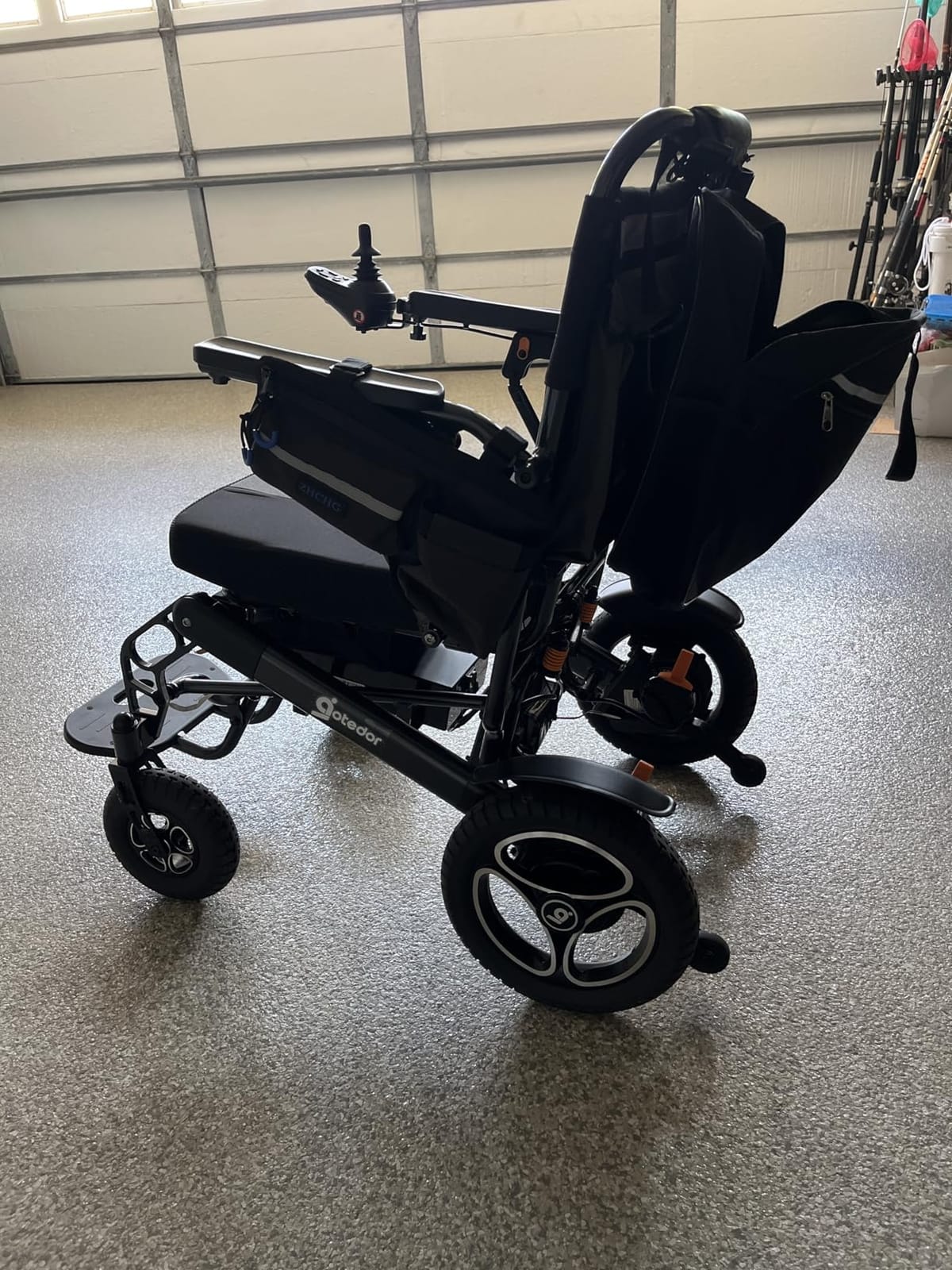
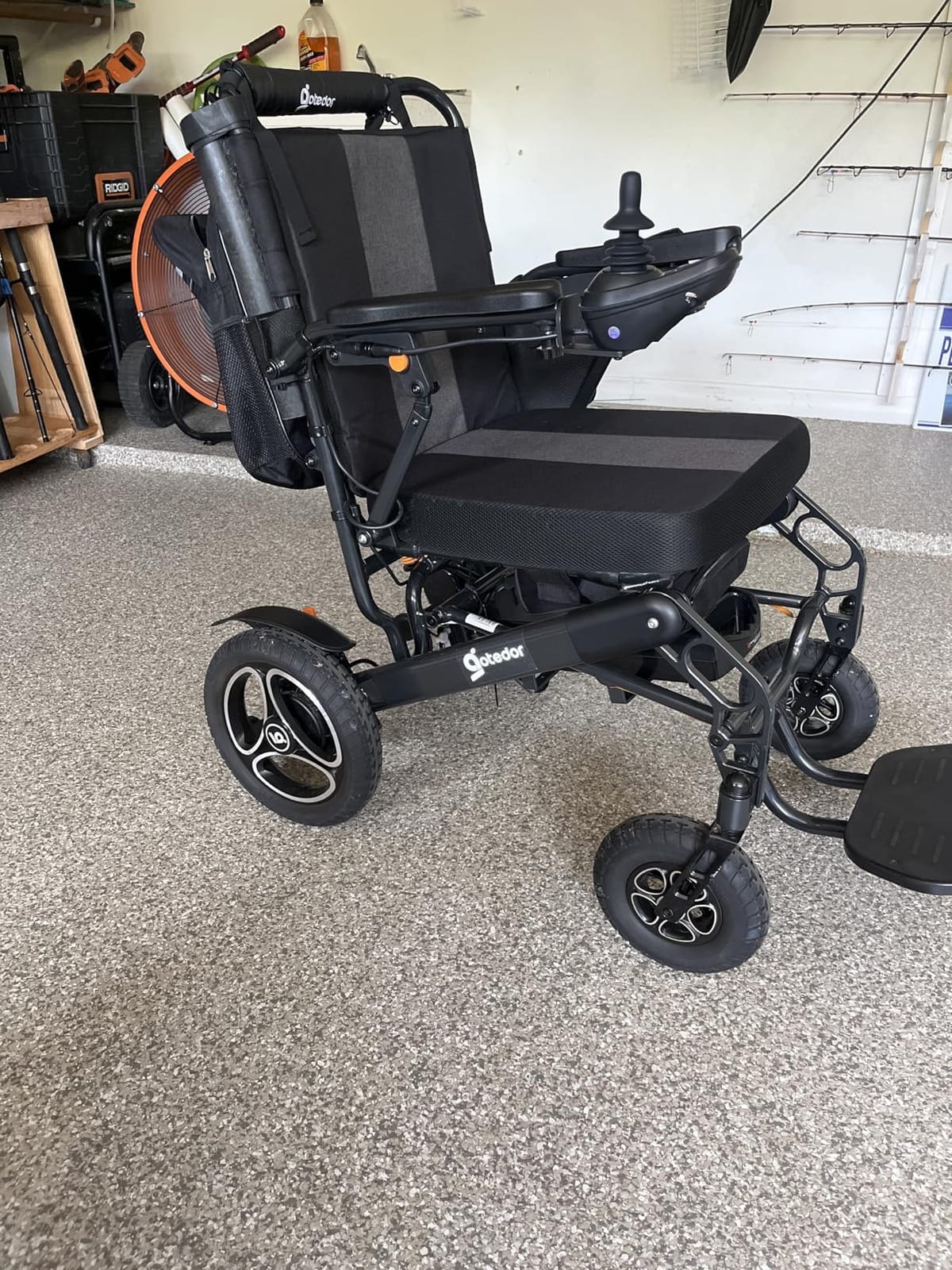
Power comes from dual 250W brushless motors with shock absorbers, and acceleration is smooth rather than jerky, which matters a lot for users with sensitive spines. The reinforced aluminum frame carries 330 lbs, and the anti-tip wheels kept the chair planted when my uncle took a ramp faster than he should have.
The 18-inch breathable seat cushion is genuinely comfortable, and the armrests adjust for width. The joystick can be mounted on either side, which is a small detail that makes a huge difference for left-handed users.
Now the honest downsides. This is a heavy piece of equipment, and loading it into a trunk realistically takes two people even though it folds. It also fights you on plush carpet when the larger battery is installed, and there is no reclining seat option yet.
Who Should Buy This Power Chair
This chair is for users who cannot self-propel and want real independence indoors and out. If the rider has limited hand or arm strength but decent control, the joystick is intuitive enough to learn in an afternoon.
It is also the right call for travelers. The removable battery meets airline rules, so this is one of the few power chairs you can genuinely fly with rather than rent something at your destination.
What to Check Before You Order
Measure your doorways and your trunk first. At 40.7 inches long and 24 inches wide, the Aotedor fits standard 32-inch doorways but not every older home layout. Also confirm someone will be available to lift it, because solo loading is unrealistic.
Check the terrain where it will be used most. Smooth floors, sidewalks, and packed gravel are fine, but deep carpet and loose sand will tax the motors and the battery.
2. Medline Ultra Lightweight Transport Wheelchair – Easiest Chair to Lift
Medline Ultra Lightweight Transport Wheelchair for Adults, Foldable, 19-Inch Seat Width, Red Frame, Black Upholstery
15 lbs aluminum frame
19 inch seat
300 lbs capacity
Swing-away footrests
No assembly
Pros
- Only 15 lbs and easy to lift one-handed
- Folds compactly for any car trunk
- Sturdy aluminum frame with 300 lb capacity
- No assembly required out of the box
Cons
- Attendant-pushed only
- not self-propelled
- Handle height is short for caregivers over 6 feet
- Struggles over thresholds taller than a quarter inch
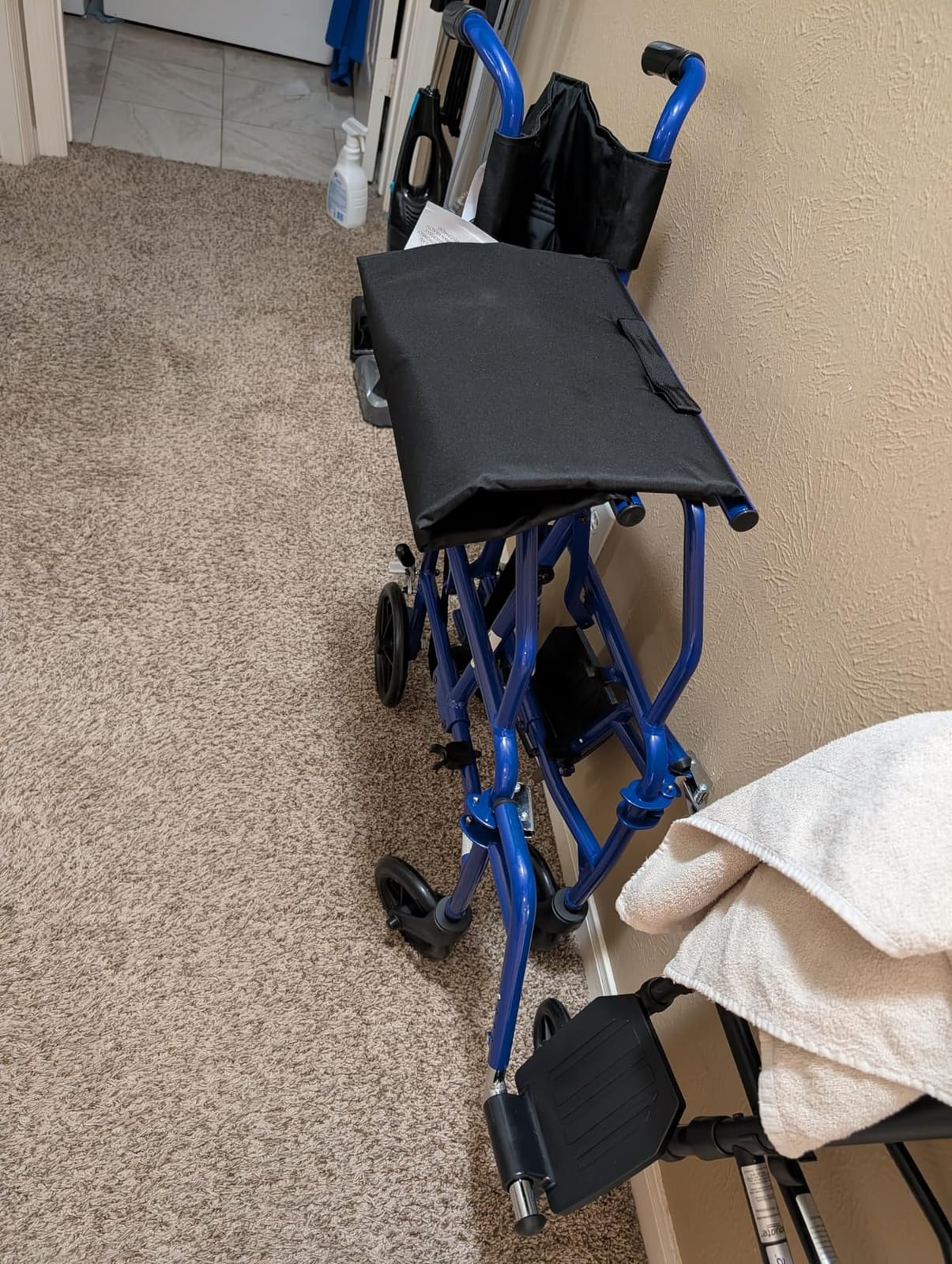
At 15 pounds, this is the chair my mother could lift herself at 71 years old. That single fact changed our routines. Suddenly she could take my father to his cardiology appointments without waiting for me to leave work and do the lifting.
With nearly 7,800 reviews and a 4.6-star average, this is one of the most trusted transport chairs ever sold. It arrives fully assembled, unfolds in seconds, and the aluminum frame still carries up to 300 lbs.
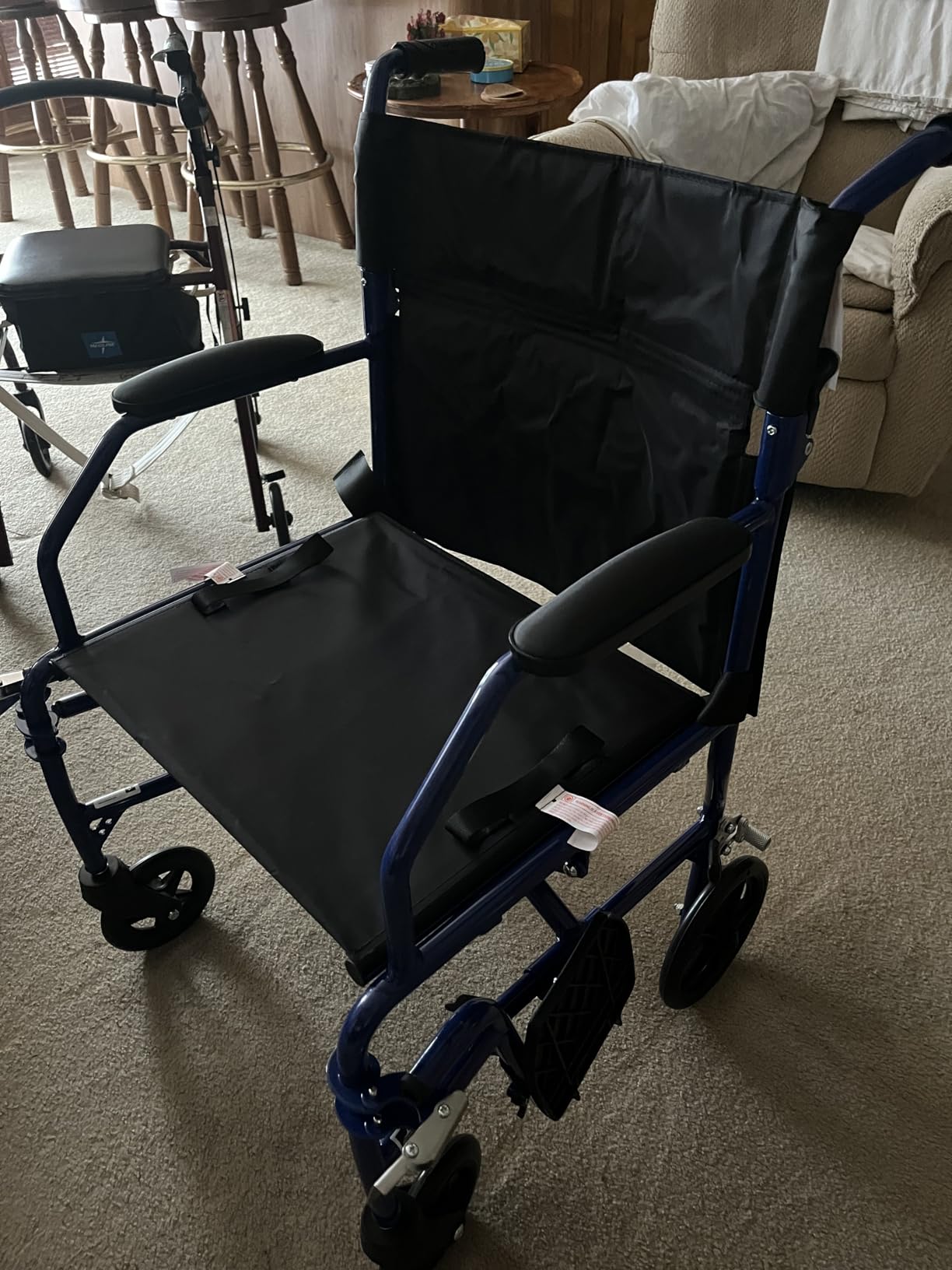
The 19-inch wide by 16-inch deep padded seat fits most average-sized adults comfortably, and the desk-length cushioned armrests let the user pull up to a table for meals. The swing-away footrests detach and stow so the rider can stand or be transferred sideways.
Maneuverability is excellent for a chair in this class. The 8-inch rear wheels and swivel front casters spin tight circles in pharmacy aisles and hospital corridors. Rear-wheel locking brakes hold the chair still during stand-pivot transfers.
The limits are important to understand. This is a transport chair, which means small wheels and no push rims, so the rider cannot move themselves. It also balks at thresholds taller than a quarter inch, and some units have a loose rubber clamp on the leg rests.
Who This Chair Suits Best
This is the best wheelchair choice for caregivers who do most of the pushing on trips, appointments, and outings. If the user can walk short distances with assistance and mainly needs a chair for longer stretches, this is the practical pick.
It is also ideal for travel. The folded package is small and light enough for a compact car trunk, and it is easy to check or gate-check at airports when you need a chair on arrival.
Sizing and Caregiver Fit Check
The seat runs narrow-ish at 19 inches with fixed arms, so larger-framed riders may feel pinched. Have the user sit on a tape measure at their widest point and add an inch before ordering.
If the person pushing is over six feet tall, test the handle height first. Tall caregivers in the reviews mention stooping, which gets painful on long days at a theme park or airport terminal.
3. Medline Comfortable Folding Wheelchair – Best Self-Propelled Daily Chair
Medline Comfortable Folding Wheelchair with Swing-Back Desk-Length Arms and Swing-Away Footrests, 20”W x 16”D Seat
38 lbs frame
20 inch seat
300 lbs capacity
Swing-back desk arms
Self-propelled
Pros
- Large rear wheels let users self-propel independently
- Swing-back desk-length arms for table access and transfers
- High-strength hammertone frame supports 300 lbs
- Three seat widths from 16 to 20 inches
Cons
- Heavier at 38 lbs than transport chairs
- Bulky for very narrow doorways
- No height adjustment on footrests
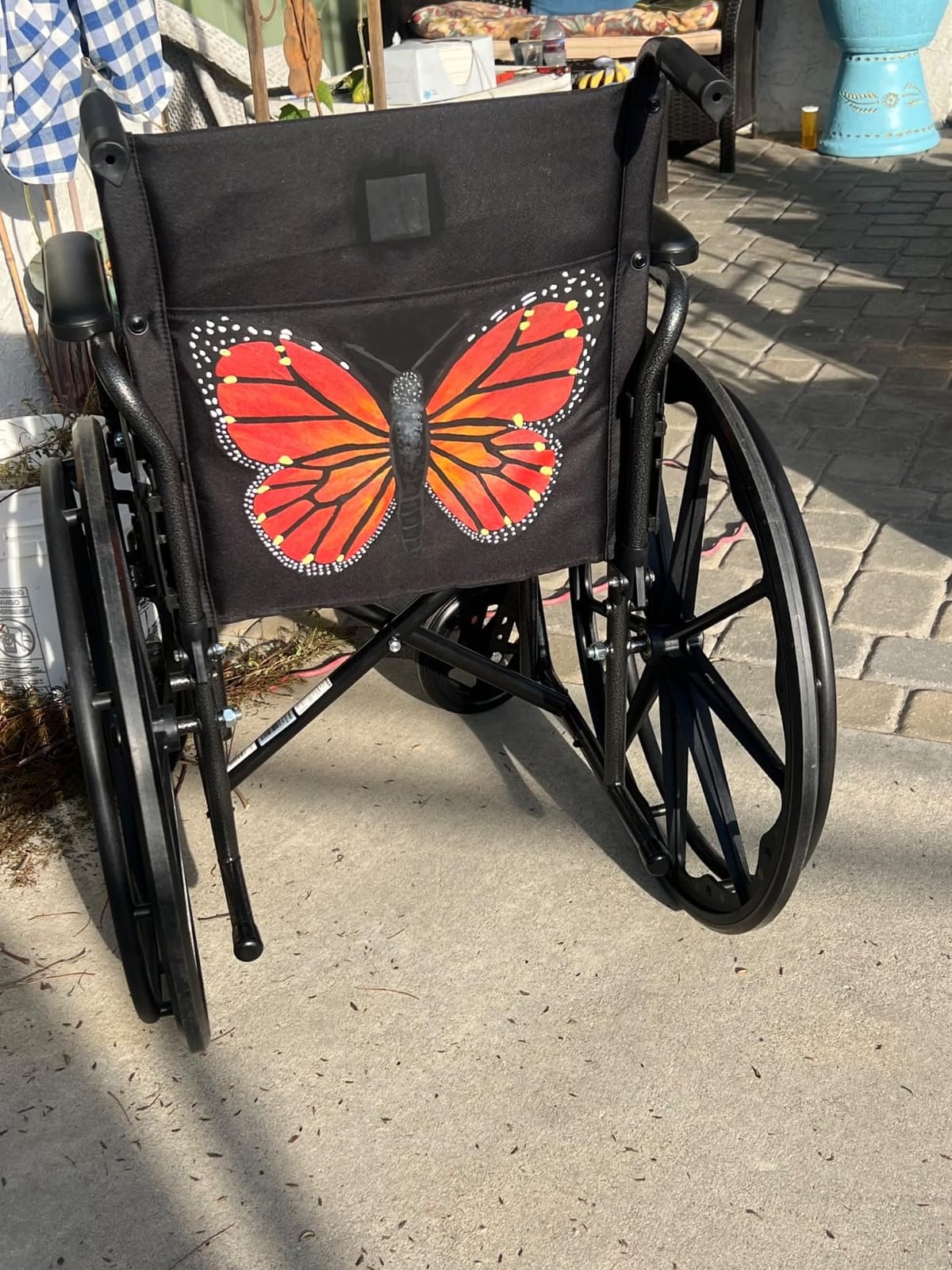
This was the chair that let my father push himself again after months of being pushed everywhere. The large rear wheels with push rims give the user the option to self-propel, and that control over his own movement changed his mood more than any medication did.
The dual-axle design means it rolls reasonably well whether the user is powering it or a caregiver is pushing from behind. On flat sidewalks and floors, the tires roll smooth and quiet.
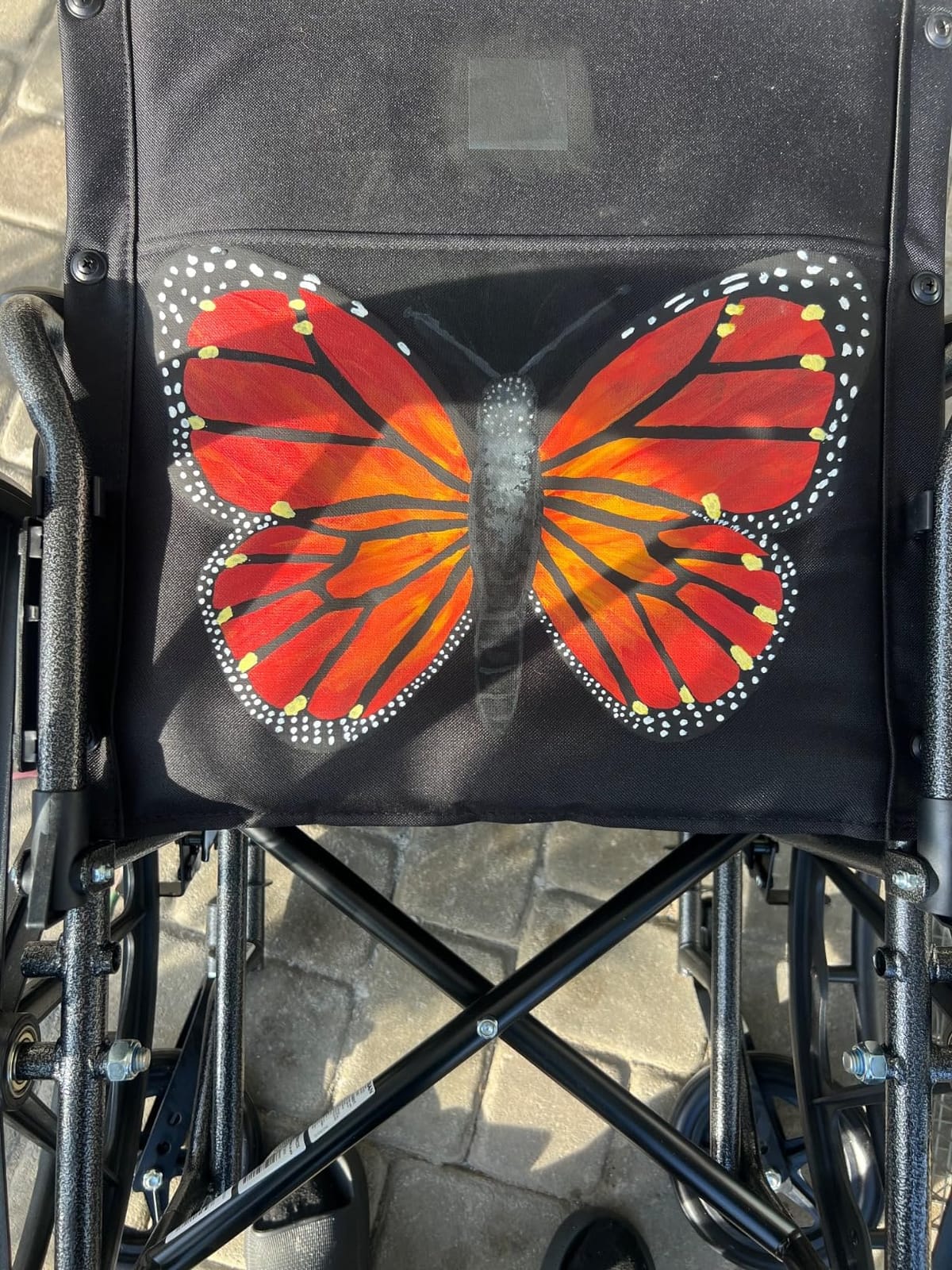
The swing-back desk-length arms are the feature I did not know we needed. They flip out of the way for lateral transfers from a bed, then let the chair slide right up to a dining table. The swing-away footrests remove the trip hazard during transfers.
Build quality is solid for the category. The high-strength hammertone frame is rated to 300 lbs, and the padded nylon seat and back hold up to daily use without the sag you get from cheaper upholstery.
Trade-offs are real, though. At 38 pounds, this is not a chair you toss into a trunk one-handed. It also runs wide enough that very narrow bathroom doorways in older homes can be tight, and the footrests do not adjust in height.
Who This Chair Suits Best
This is the right pick for users with enough upper body strength and grip to push themselves some or all of the time. Independent propulsion is genuinely good for circulation, shoulder health, and confidence.
It also works well as a dual-purpose chair. Because it has both push rims and caregiver handles, one chair covers days when the rider feels strong and days when they do not.
Measuring for the Right Seat Width
Pick the seat width before anything else, because Medline sells this model in 16, 18, and 20 inch versions. Measure the user seated at their widest point, usually hip to hip, and add roughly one inch on each side for clearance and winter clothing.
A seat that is too wide wrecks posture and makes self-propulsion harder because the rider reaches outward for the rims. Too narrow, and you risk pressure points during long days of sitting.
4. Drive Medical Blue Streak – Best Budget Wheelchair Overall
Drive Medical Blue Streak Lightweight Wheelchair, Footrests, 18″ Seat
18 inch seat
41.3 lbs steel frame
300 lbs capacity
12 inch turn radius
Lifetime frame warranty
Pros
- Number one best-seller with over 18
- 600 reviews
- Sturdy alloy steel frame with limited lifetime warranty
- Flip-back desk arms and swing-away footrests
- Tight 12-inch turning radius for indoor use
Cons
- Solid tires struggle on gravel and rough asphalt
- Heavy at 41.3 lbs for frequent car loading
- Hand rims feel rough without gloves
The Blue Streak is the number one best-selling self-propelled wheelchair on Amazon, with more than 18,600 reviews behind it. When people ask me for one safe recommendation without qualifiers, this is the best wheelchair I point them to, because it does the basics right and costs about the same as a nice dinner out.
Our loaner Blue Streak survived two summers of family picnics, a beach boardwalk, and being folded and unfolded dozens of times. One reviewer’s chair even survived a car crash and kept working, which says something about that steel frame.
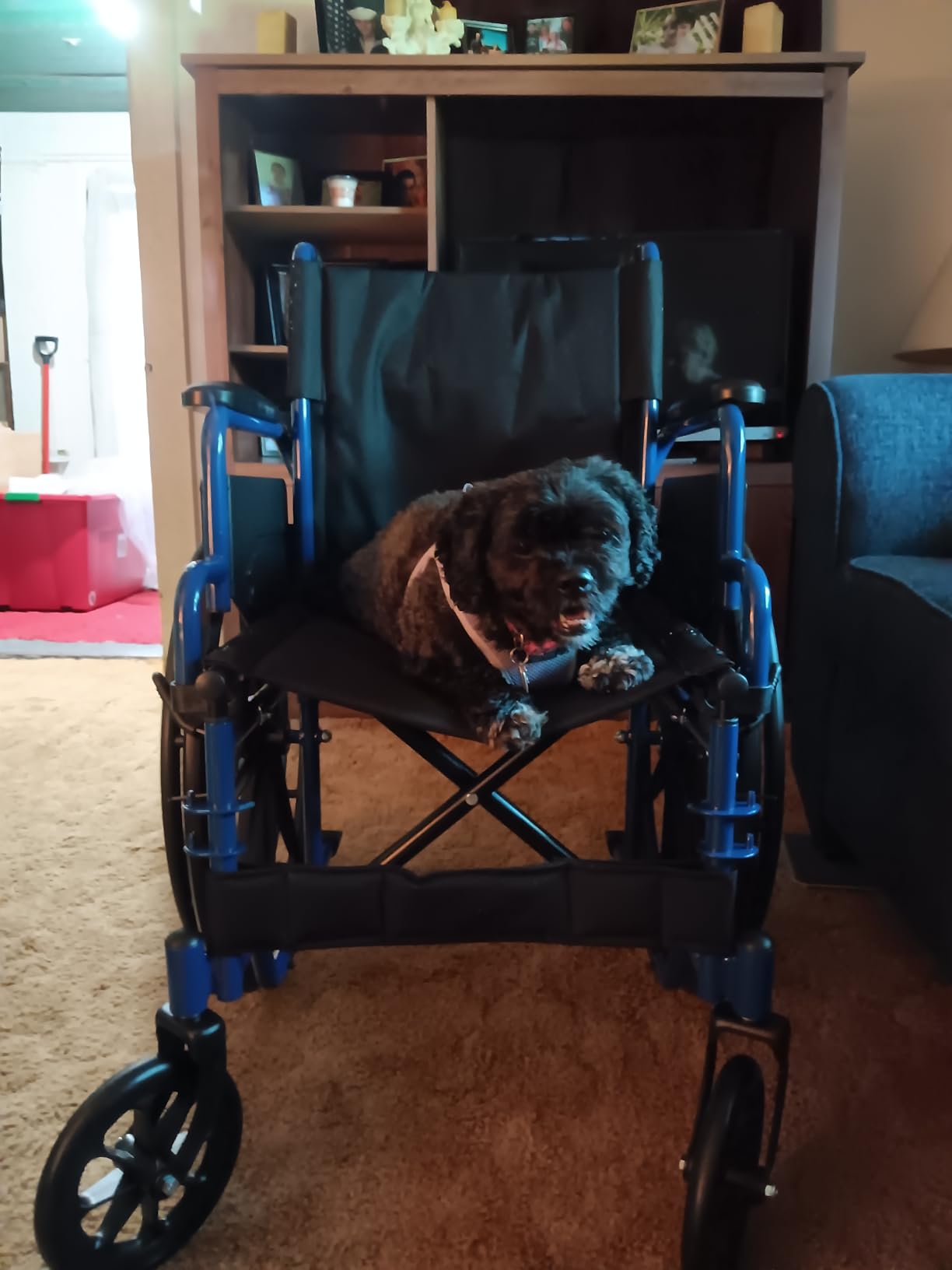
Functionally, it hits every mark for a daily-use manual chair. Flip-back desk-length arms let the user pull up to tables, swing-away footrests simplify transfers, and push-to-lock brakes hold firmly on slight inclines. The 12-inch turning radius makes kitchen and bathroom maneuvering far less frustrating than wider chairs.
The alloy steel frame supports 300 lbs and carries a limited lifetime warranty, which is rare at this tier. There is even a back pouch for insurance cards and paperwork, a small touch that gets used constantly.
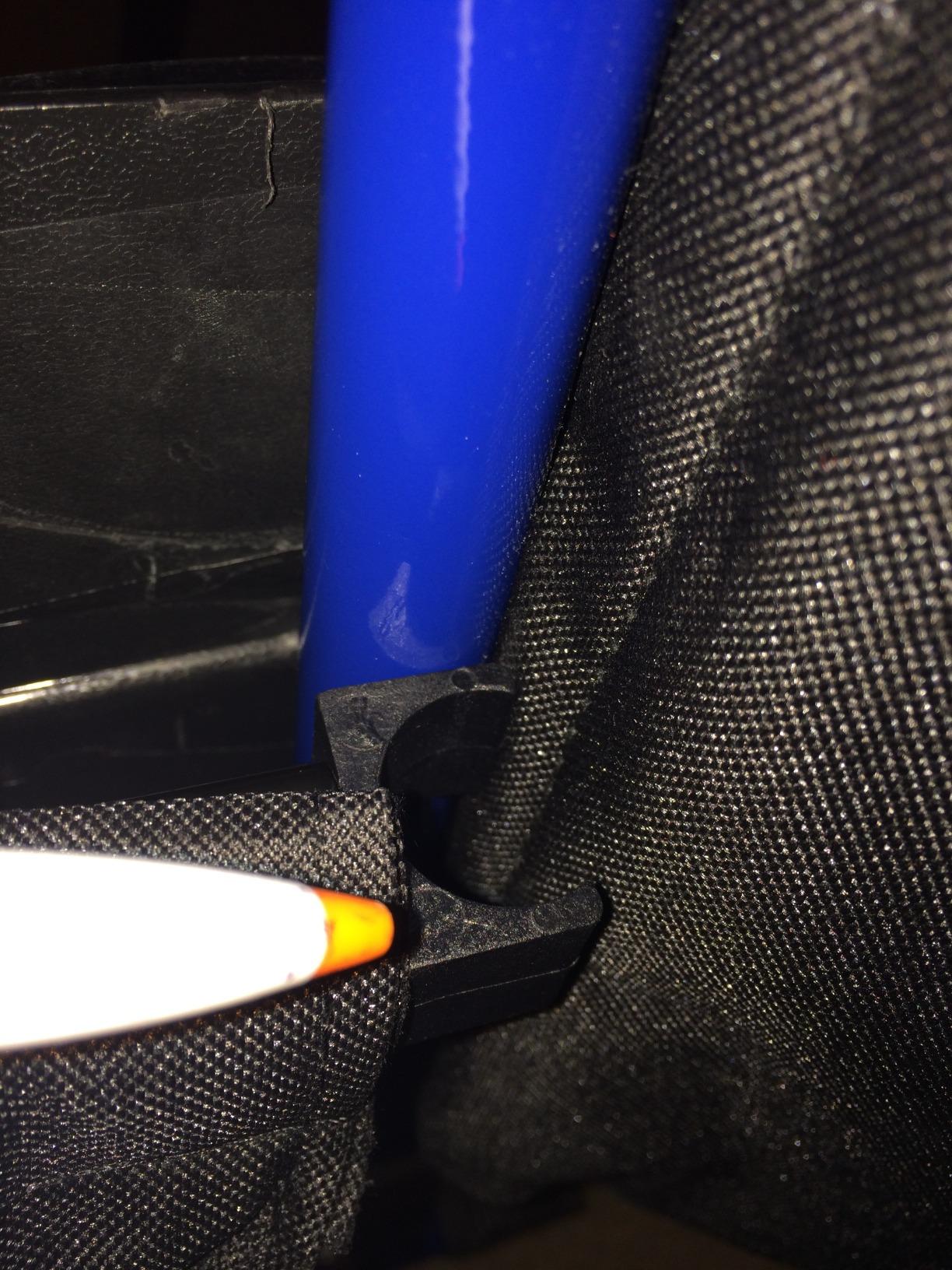
The honest weaknesses: the solid plastic tires are indoor-and-smooth-surface wheels, so rough asphalt and gravel are unpleasant. At 41.3 pounds, frequent trunk loading will wear out a solo caregiver. And the hand rims have a textured finish that most riders will want gloves for.
Who This Chair Suits Best
This is the default choice for first-time buyers who need one chair that works for both self-propulsion and caregiver pushing. It is forgiving, repairable, and widely supported with replacement parts.
It is also the chair I recommend for post-surgery recovery, where you need a real chair for a few months but do not want to overspend on something specialized.
Indoor vs Outdoor Reality Check
If your routine is mostly indoors, clinics, and smooth sidewalks, the solid tires are actually an advantage because they never go flat. If the rider spends hours outdoors on rough pavement, pair this chair with a cushion and gloves or step up to a model with pneumatic tires.
Check your doorways too. The frame is wide enough that very narrow bathroom doors in older homes can require some angled maneuvering, so measure before ordering rather than after.
5. Drive Medical Folding Transport Wheelchair – Best Compact Travel Chair
Drive Medical Folding Transport Wheelchair, Swing-Away Footrest, Silver
26 lbs steel frame
17 inch seat
Two-step fold
8 inch wheels
Curb tilt-bar
Pros
- Folds in two quick steps for storage and travel
- Lightweight 26 lb frame lifts easily into small cars
- Tilt-bar for lifting the front over curbs and thresholds
- Proven durability with years of travel reported
Cons
- Narrow 17 inch seat limits larger riders
- Brakes engage at the rear wheels only
- Attendant-pushed only
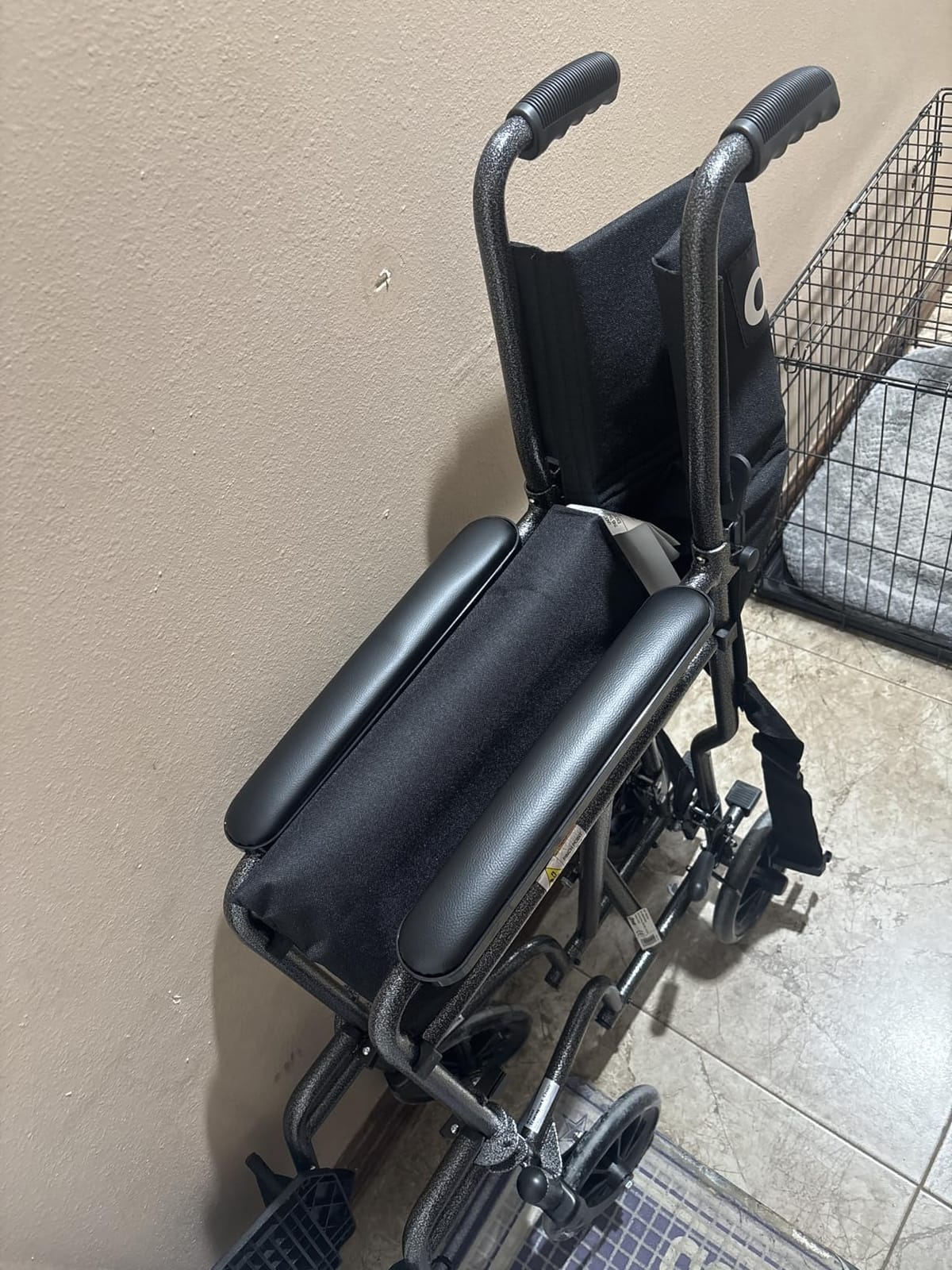
This is the chair that lives in our trunk. The two-step fold is genuinely fast, and at 26 pounds it is easy for one adult to lift into even a small car. Multiple reviewers confirm it fits a Honda Civic trunk with room to spare, which matches our experience.
Long-term durability is the standout story here. One owner reports more than three years of international travel, including cruises and trips across Europe, with no fabric tearing or mechanical failure.

The 8-inch smooth-rolling wheels with swivel front casters turn on a dime, which makes crowded terminals and shop aisles manageable. A tilt-bar behind the rear wheels lets the caregiver tip the chair back to clear curbs and thresholds without jolting the rider.
Rear-wheel push-to-lock brakes click into place securely, and the padded 17-inch nylon seat wipes clean. The swing-away footrests hook onto the sides of the frame when removed, so nothing gets lost in an airport.
The main limitation is seat width. At 17 inches, larger-framed riders over roughly 130 pounds will find it confining. The brakes are also rear-mounted, so the seated user cannot operate them, and bending down to engage them gets tedious for the caregiver.
Who This Chair Suits Best
This is the best wheelchair for frequent travelers and for families who want a reliable backup to a rollator or a primary power chair. It is the chair you grab for a doctor visit, a museum day, or a cruise excursion.
It also earns its keep as an emergency chair to keep in the car. Because it folds so flat, there is little reason not to carry it, and it has rescued more than one family outing for us.
Fit and Handling Check
Confirm the rider fits the 17-inch seat before buying. For anyone broader-shouldered or above average weight, the Medline 19-inch transport chair in this guide is the better fit and only a few pounds heavier.
Practice the fold once at home. It is a two-step motion, and doing it smoothly in a parking lot is much easier after one dry run in the driveway.
6. Carex Transport Wheelchair – Best Value Transport Chair
Carex Transport Wheelchair With 19 inch Seat, Folding Transport Chair with Foot Rests, Foldable Lightweight Wheelchair Foldable for Storage and Travel
25 lbs steel frame
19 inch seat
One-hand fold
Rear wheel brakes
Safety belt
Pros
- Lightweight at 25 lbs with one-hand folding
- Wide 19 inch seat for the weight class
- Sturdy steel frame with no plastic parts
- Included safety belt for the rider
Cons
- Small front wheels struggle in snow and sand
- Folding handle can feel loose on some units
- Not built for heavy daily self-propulsion
The Carex won us over on one detail: the one-hand fold. Holding my father’s arm with one hand and collapsing the chair with the other is exactly how real transfers happen, and this chair is built for it.
At 25 pounds with a full steel frame and essentially no plastic structural parts, it feels more substantial than its weight suggests. The 19-inch seat is generous for a transport chair at this weight, which is where cheaper chairs usually cut corners.
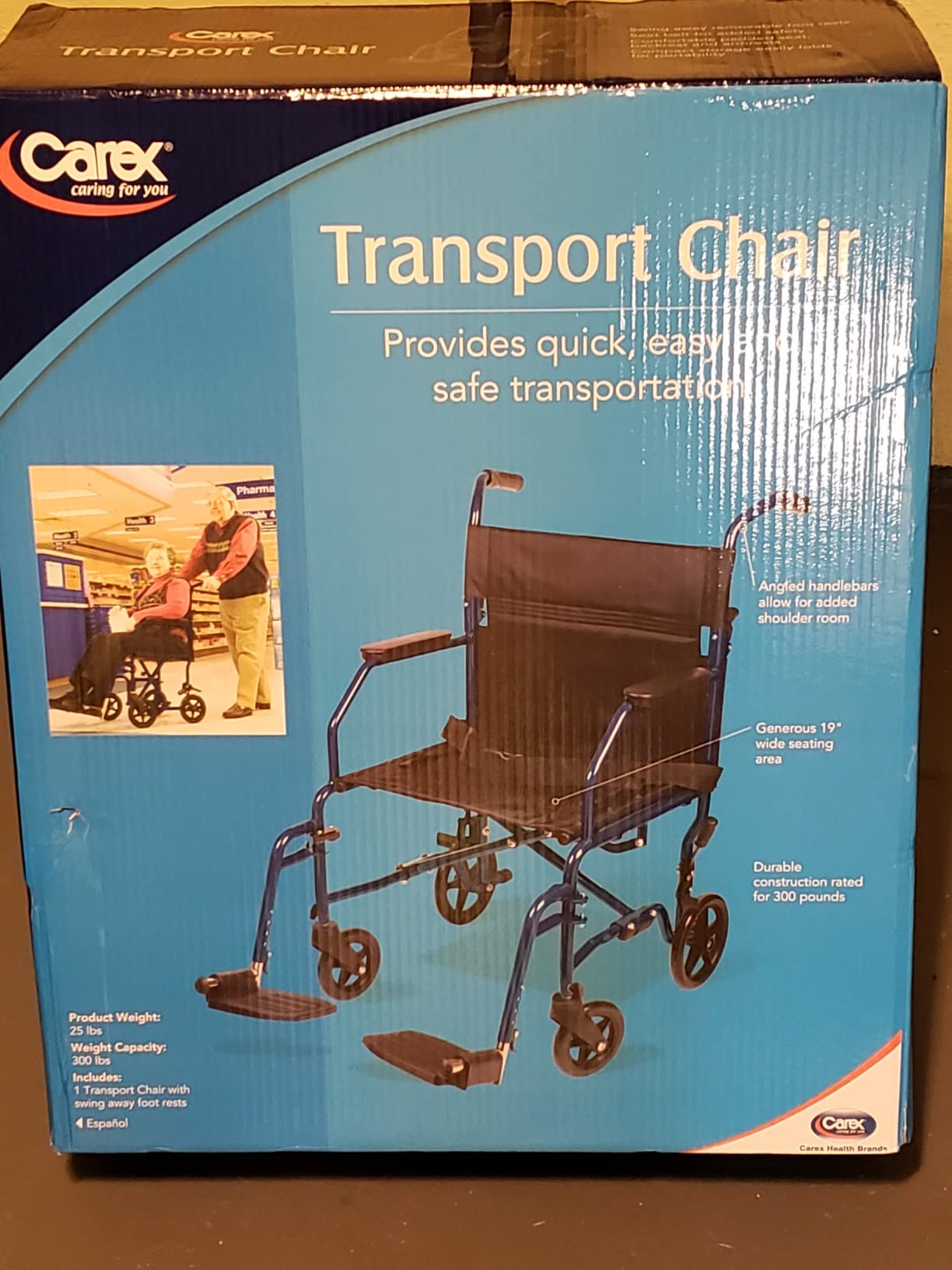
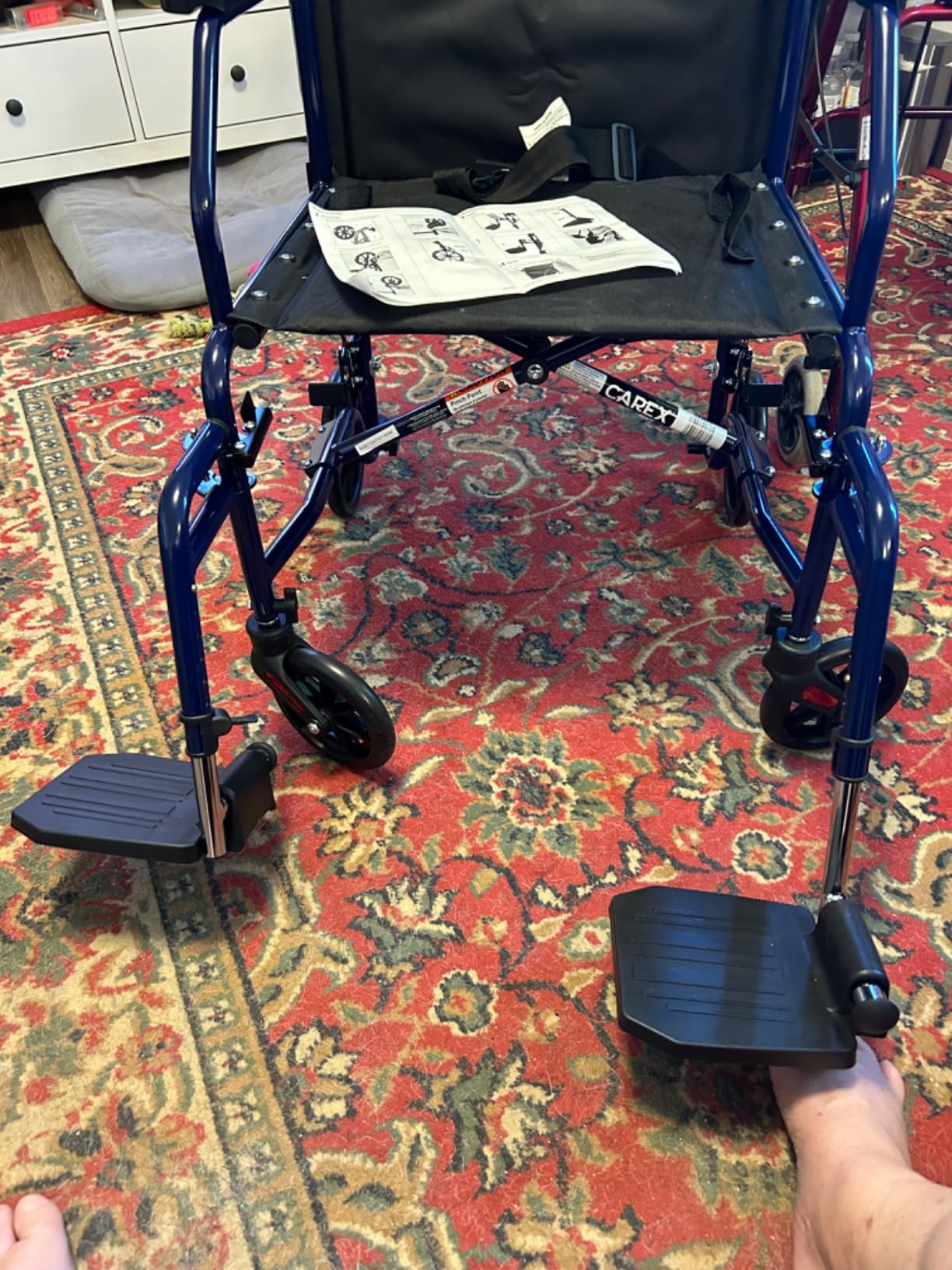
The removable swing-away footrests adjust for length, and the padded seat is comfortable for the outings transport chairs are designed around. Rear wheel brakes hold the chair steady for transfers, and the included lap belt adds peace of mind for riders who slump or lean.
Assembly takes minutes, and the chair arrived ready to unfold and roll. That matters when you are ordering mid-crisis after a fall or a hospital discharge.
Know the limits. The smaller front casters bog down in snow, sand, and thick grass, so this is a pavement-and-indoor-floor chair. Some units have a folding handle that feels loose, and it is not designed to be a heavy user’s daily self-propulsion chair.
Who This Chair Suits Best
This is the value pick for caregivers who need a wide, safe seat without paying for premium frame materials. If your outings are mostly indoors, sidewalks, and paved surfaces, it covers everything you need.
It is also a strong first chair after surgery or during recovery, when nobody knows yet whether a wheelchair will be needed long term.
Where You Will Use It Most
Map your typical route before ordering. If that route includes gravel driveways, grassy parks, or snowy winters, the small casters will frustrate you and a large-wheel chair is the better call.
Check the folding handle when the chair arrives. A quick tighten resolves most reports of looseness, and it is easier to fix on day one than after a month of use.
7. Drive Medical Cruiser III – Most Adjustable Folding Wheelchair
Drive Medical Cruiser III Lightweight Wheelchair, Full Arms, Black, 18″
36 lbs frame
18 inch seat
300 lbs capacity
Elevating leg rests
Dual axle height
Pros
- Flip-back detachable full arms for easy transfers
- Elevating leg rests support swelling and circulation
- Dual axle allows hemi-level seat height
- Folds to just 12 inches wide for transport
Cons
- Heavier than ultra-lightweight transport chairs
- Limited stock availability at times
- May need minor assembly adjustments on arrival
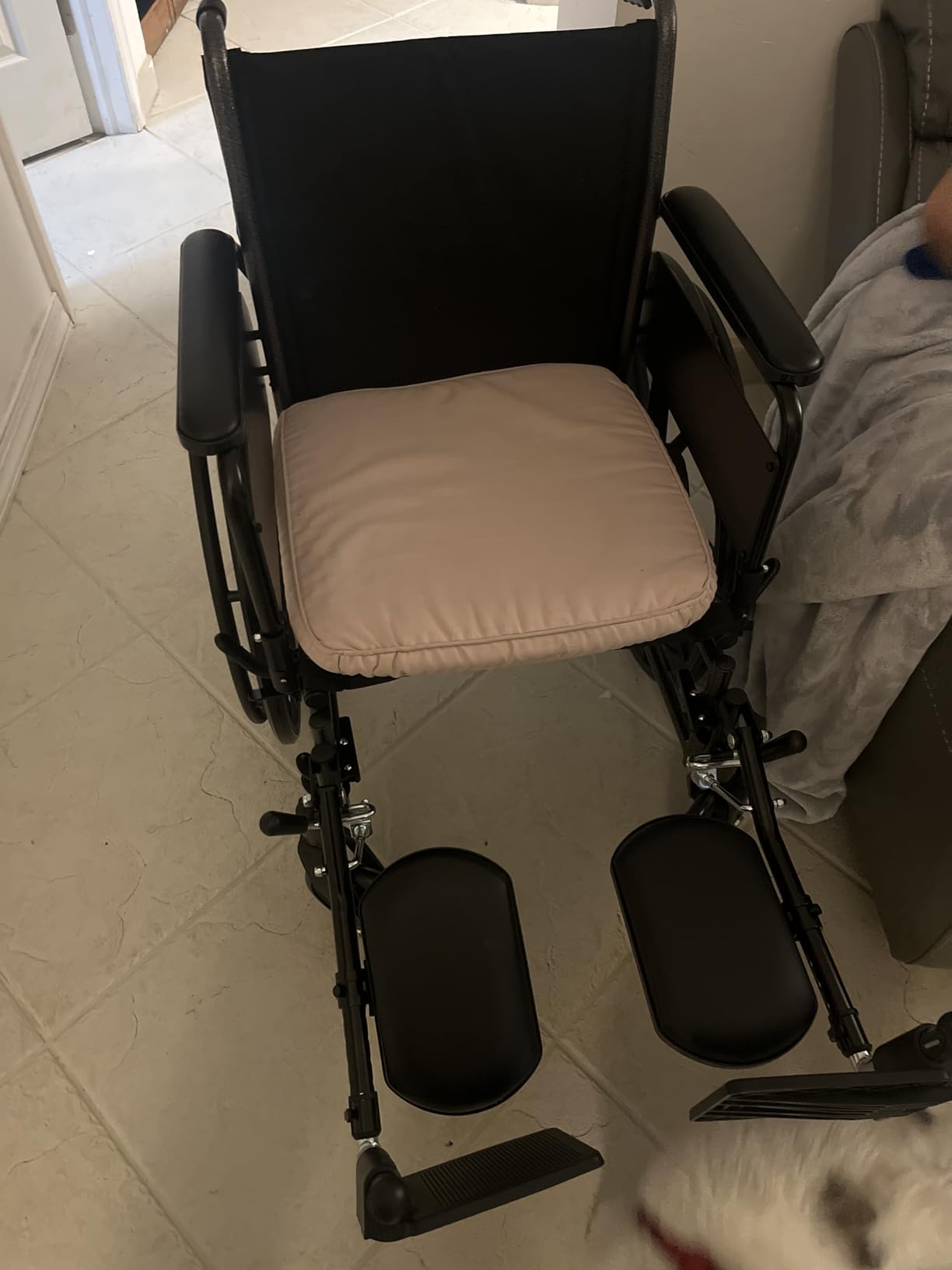
The Cruiser III is the chair I recommend when a rider has specific positioning needs that basic chairs ignore. The elevating leg rests alone make it worth considering, because keeping legs raised reduces swelling for users with edema, congestive heart failure, or post-surgical inflammation.
The dual axle is the other feature that separates it. You can convert the seat to hemi-height for users who propel with their feet, something almost no budget chair offers.
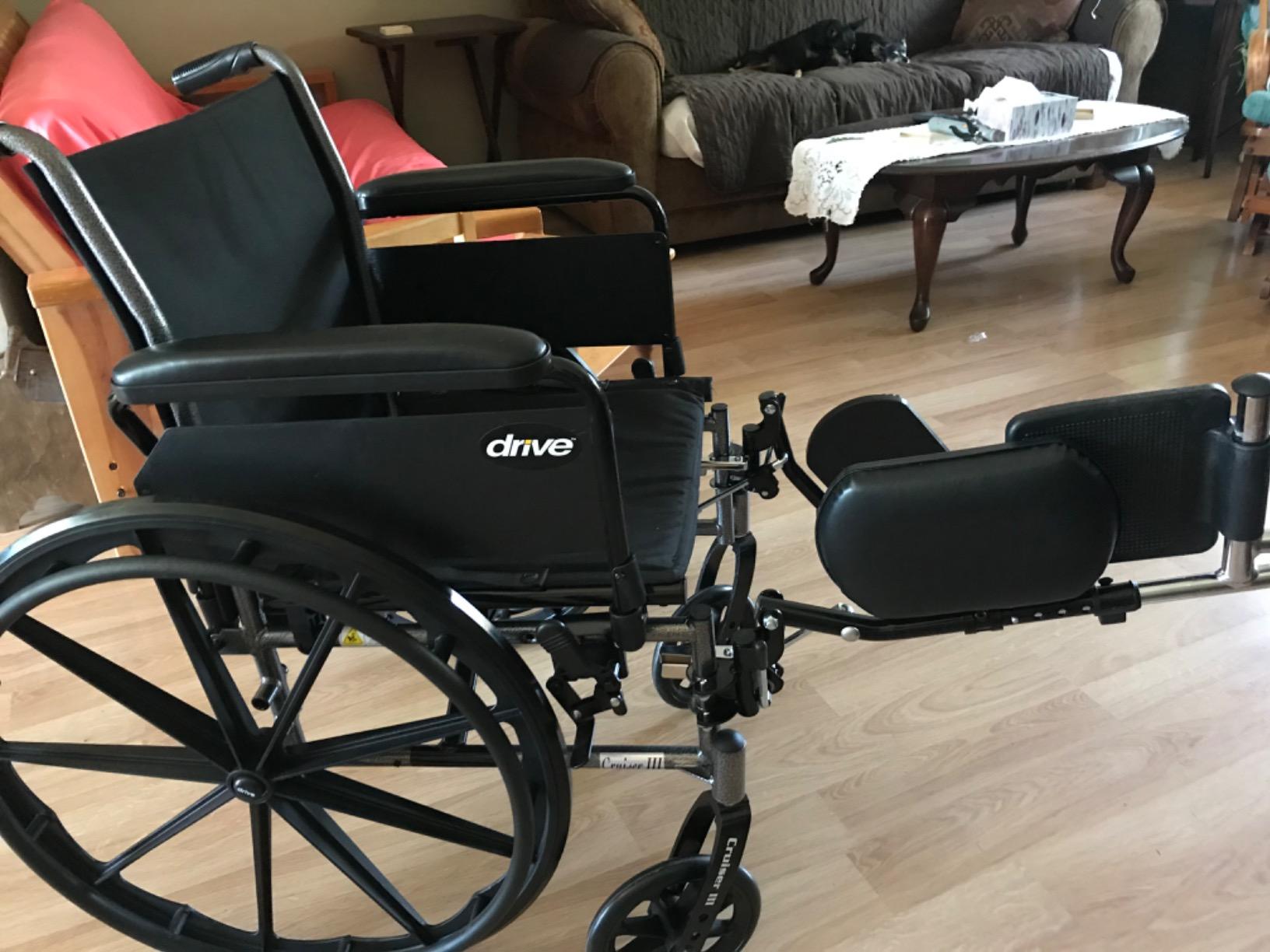
The flip-back detachable full arms are the best transfer setup in this guide’s mid-range. They give the rider a full armrest to lean on while seated, then move completely out of the way for slide-board or lift transfers.
Structurally, the carbon steel frame with silver vein finish carries 300 lbs, and the mag-style wheels roll noticeably smoother than spoked budget wheels. The 8-inch casters adjust across three heights to tune the ride for the user.
It is not featherweight at 36 pounds, and stock comes and goes, so availability can be spotty. Some units also need a minor adjustment out of the box, usually to the caster or footrest hardware.
Who This Chair Suits Best
This is the chair for users with medical positioning needs: elevated legs, hemi-height propulsion, or full-arm support for transfers. If a physical therapist has asked for any of those features, this is your pick.
It is also a smart choice when one chair must serve different caregivers and transfers, because the arms detach rather than merely flip.
Storage and Transport Planning
The folded package is only 12 inches wide, which is impressively slim for a full-featured chair. Measure your trunk’s narrowest dimension and your storage closet, then confirm this fits before ordering.
Keep the elevation hardware snug. The leg rests get moved often, and a quick monthly check of the pins keeps the ratchets from developing wobble over time.
8. Medline Excel Extra-Wide Bariatric Wheelchair – Best 500 lb Capacity Chair
Medline Excel Extra-Wide Bariatric Wheelchair For Adults and Seniors with 24″ Wide Seat, Supports up to 500 lbs
24 inch wide seat
500 lbs capacity
60 lbs frame
Removable desk arms
24 inch rear wheels
Pros
- Extra-wide 24 inch seat for bariatric users
- 500 lb weight capacity with chrome steel frame
- Removable desk-length arms for safe transfers
- Comfortable enough for all-day use
Cons
- Heavy at 60 lbs and hard to load solo
- Large folded width needs real storage space
- Requires some assembly on arrival
Most wheelchairs max out at 300 pounds, which leaves bigger riders with unsafe, humiliating options. The Medline Excel solves that with a true 24-inch seat and a 500 lb capacity, and it does so with a frame that users consistently describe as stable rather than wobbly.
The chrome-plated carbon steel construction is built for the job. With 24-inch rear wheels, the rider can self-propel, and the push-to-lock brakes are sized to hold real weight on inclines.

The removable desk-length arms are the feature families thank us for later. They come off completely for lateral transfers from bed or a lift, which is far safer than working around fixed arms at this size.
Swing-away footrests widen the entry stance so the rider can approach and sit without contorting. The 20-inch seat height also makes sit-to-stand transitions easier for users who retain some leg strength.
The trade-off is weight and bulk. At 60 pounds, loading this into a vehicle is a two-person job or a ramp job, and it folds to a 32.5-by-13-by-36.5 inch package that needs actual storage space, not a closet corner.
Who This Chair Suits Best
This is the right chair for riders between 300 and 500 pounds who need a safe, dignified daily chair. Reviews from caregivers of bariatric patients repeatedly mention comfort for all-day sitting, which is rare in this category.
It is also the correct answer when a standard chair’s 300 lb rating is simply too close for comfort, since running near a weight limit shortens frame and wheel life.
Home and Vehicle Access Planning
Measure doorways before ordering, full stop. The chair is 32.5 inches wide overall with a 35-inch turning radius, so 36-inch doorways and open floor plans are the target. Tight bathrooms may need a wider-path plan.
Plan transport honestly. A vehicle lift, a ramp van, or a second person is realistically required, so factor that in rather than discovering it on the first appointment day.
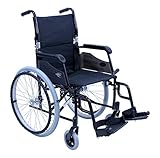
9. Karman LT-980 Ultra Lightweight Wheelchair – Best Ultralight Value
Karman 24 pounds LT-980 Ultra Lightweight Wheelchair, Black
24 lbs aluminum frame
18 inch seat
Flat-free tires
User handbrakes
250 lbs capacity
Pros
- Ultra lightweight 24 lb aluminum frame
- Flat-free polyurethane tires never go flat
- User-accessible handbrakes at the wheels
- Folding backrest and seat for compact travel
Cons
- 250 lb capacity limits larger riders
- Instructions are thin and vague
- Brakes may need adjustment on some units
The Karman LT-980 is the chair that converts people who swore they would never spend real money on a wheelchair. At 24 pounds without the footrests, it is dramatically easier to lift than a 40-pound steel chair, and it is designed so the user can operate the brakes themselves.
Reviewers in the wheelchair community consistently praise the LT-980 alongside the Karman S-Ergo line as the value sweet spot in ultralight chairs. That reputation is earned through the aluminum frame and sensible details, not marketing.
The 22-inch rear wheels are solid polyurethane, so they never go flat, and the 6-inch front casters roll smoothly on indoor floors and sidewalks. Both the backrest and the seat fold, which collapses the chair into a much smaller package for travel.
The user-accessible braking system is the differentiator. Handbrakes at the wheels mean the rider controls their own stopping on slopes instead of depending on a caregiver, which is a genuine safety upgrade for anyone with grip strength.
The constraints are a 250 lb weight capacity and occasional quality-control needs. Some units need brake adjustment, and the printed instructions are famously thin, so budget 20 minutes with the hardware when it arrives.
Who This Chair Suits Best
This is the value pick for active riders under 250 pounds who want a light chair they can help load. It is also the best choice here for self-propel users who want their own handbrakes rather than caregiver-only brakes.
Frequent travelers should shortlist it too, because the folding backrest shrinks the packed size enough to matter in a full trunk or a cruise cabin.
Setup and Weight Limit Check
Weigh the rider with clothes and shoes on before ordering. If the total is within about 25 pounds of the 250 lb limit, move up to a 300 lb rated chair instead of running at the edge.
Plan a short setup session when it arrives. Adjusting the brakes and footplate height to the rider takes about 20 minutes and makes the chair feel custom rather than generic.
10. FeatherMobility Lightweight Folding Wheelchair – Lightest Chair on the Market
FeatherMobility – Gray Lightweight Folding Wheelchair – 13.5 lbs, 18″ Seat Width – with Swingaway Legrests, Anti-tippers, and Quick Release Wheels – 300 lbs Capacity
13.5 lbs without wheels
18 inch seat
300 lbs capacity
Quick-release wheels
Titanium frame
Pros
- World's lightest wheelchair at 13.5 lbs without wheels
- Folded frame fits on a car passenger seat
- Quick-release wheels and one-minute assembly
- Bicycle-style brake levers on the push handles
Cons
- Not suitable for riders who self-propel
- Plastic locking pin on the footrest can break
- Brakes have failed after months on some units
Thirteen and a half pounds. That is the entire frame without wheels, and it is the lightest production wheelchair you can buy. Reddit’s wheelchair community, not exactly a marketing-friendly crowd, cites the Feather by name as the lightest option on the market, and it holds up in person.
The practical difference is that my 68-year-old mother lifted the frame with one arm and slid it onto the passenger seat of her sedan. No trunk gymnastics, no back strain, no waiting for help.
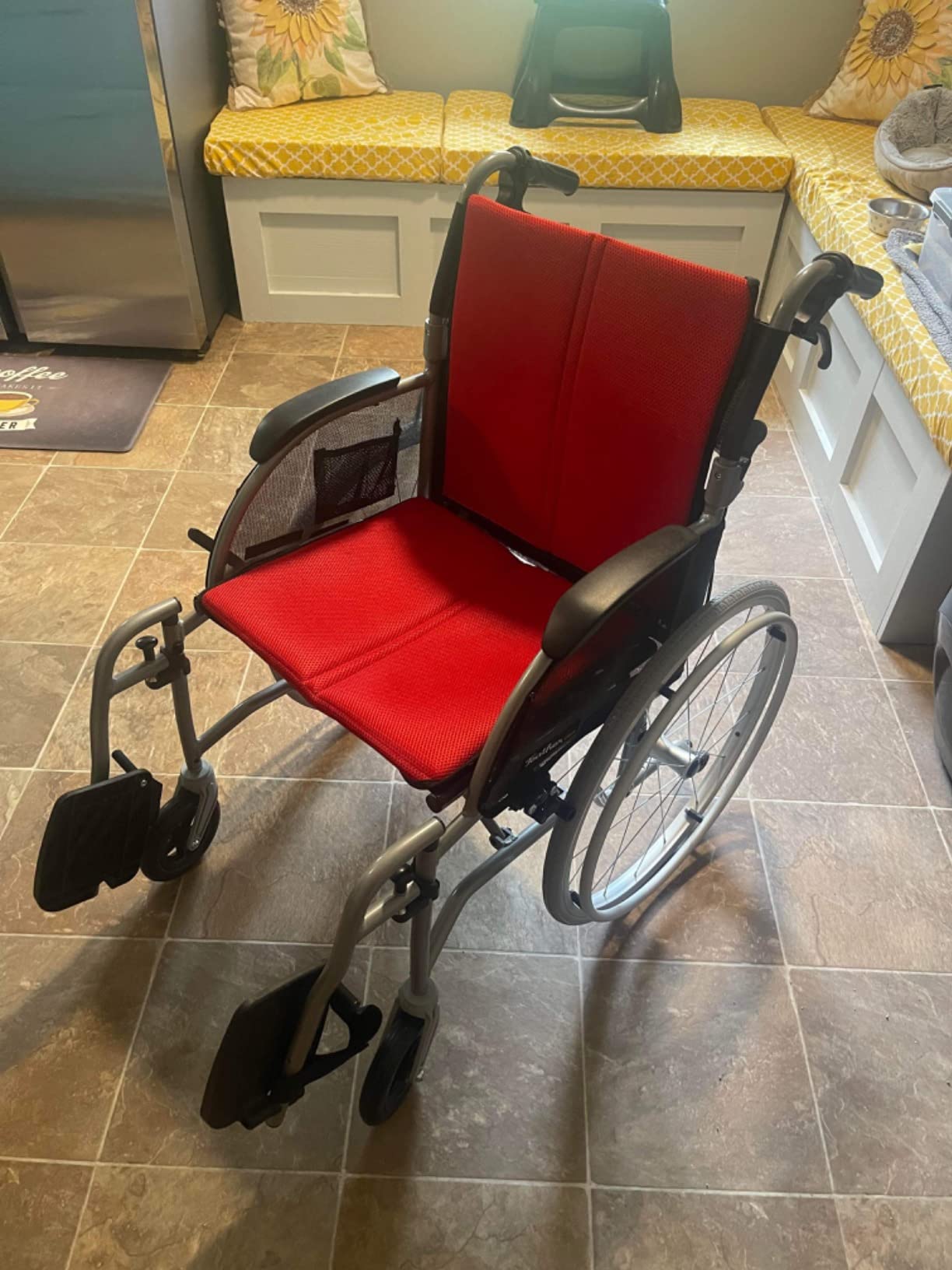
The design is clever throughout. Quick-release wheels pop off without tools, assembly takes about a minute, and with leg rests and wheels installed the whole chair is still only about 19 pounds. The titanium frame carries a genuine 300 lb capacity.
Caregiver controls are better than most transport chairs too. Bicycle-style locking brake levers sit on the push handles so you slow the chair without bending to wheel level, and anti-tippers plus front wheel locks cover safety basics.
It has real weaknesses. This is a companion chair, not a self-propulsion chair, so riders with weak hand strength cannot use it independently. The plastic footrest locking pin is a known break point, and some owners report brake failure after months of heavy use, with slow parts department service.
Who This Chair Suits Best
This is the chair for a caregiver with a bad back, a small car, or a packed travel schedule. If lifting 25 to 40 pound chairs is the reason outings get skipped, this solves that specific problem better than anything else sold.
It is also the best wheelchair for air travel in this guide’s manual category, because the frame plus detached wheels breaks down into pieces that one person can manage alone at a gate.
Durability Expectations to Set
Treat it as a precision tool rather than a workhorse. Inspect the footrest locking pin and the brake cables monthly, and contact support early if anything feels loose, since owners report slow parts service.
For heavy daily use over years, the Karman LT-980 or the Medline self-propelled chairs above are more durable choices. The Feather wins on weight, not on brute toughness.
How to Choose the Best Wheelchair?
Choosing comes down to four questions: who propels the chair, where it will be used, how much the rider weighs, and who has to lift it into a car. Answer those in order and the shortlist usually narrows itself to one or two chairs.
Manual, Transport, or Electric: Match the Chair to the User
A self-propelled manual chair like the Medline Folding or Drive Blue Streak has large rear wheels with push rims so the rider powers it themselves. That independence matters for strength, circulation, and dignity.
A transport chair such as the Medline Ultra Lightweight or Carex has small wheels and is pushed by a caregiver. It is lighter, cheaper, and narrower, but the rider depends entirely on someone else.
A power chair like the Aotedor is for riders who cannot self-propel safely. You trade weight and charging logistics for full independent movement.
Weight Matters More Than You Think
The Reddit wheelchair community is blunt on this point, and our family’s experience confirms it: weight is everything. A 40-pound chair feels completely different from a 20-pound chair when it must be lifted into a trunk several times a week.
For the rider, a lighter chair is easier to push and gentler on shoulders. For the caregiver, it is the difference between keeping independence and needing help with every outing.
How to Measure for the Right Fit
Measure seat width first. Have the user sit on a tape measure at their widest point, usually across the hips, then add one inch per side for clearance and clothing.
Next, check seat depth and doorway clearances. Seat depth should support the thighs without digging behind the knees, and every doorway on the regular route, including the bathroom, needs an inch or two more width than the chair’s overall width.
Finally, weigh the rider with clothes and shoes. Pick a chair whose weight capacity has comfortable headroom rather than one the rider nearly maxes out.
Comfort and Pressure Relief for All-Day Use
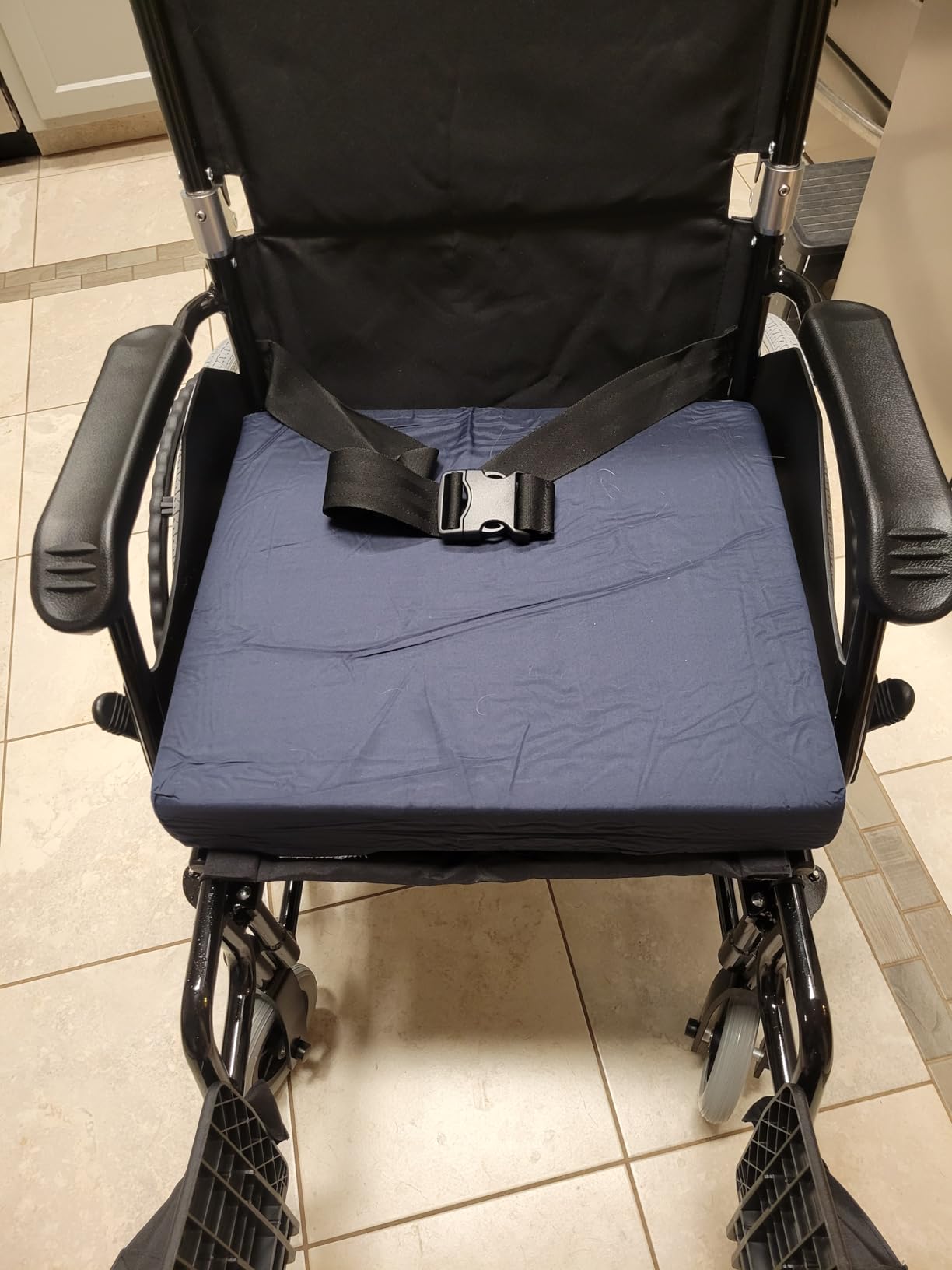
Any rider sitting for more than a couple of hours needs a real pressure-relief cushion, not just the stock upholstery. Pressure sores are the most serious health risk of long wheelchair use, and the stock nylon seat is not designed to prevent them.
For all-day users, prioritize a breathable cushion, adjustable or removable armrests, and a backrest height that supports posture. The Medline bariatric and Cruiser III get the most all-day comfort praise in this guide.
Will Medicare or Insurance Pay for a Wheelchair?
Medicare Part B covers wheelchairs as durable medical equipment when they are medically necessary for use inside the home, which requires a face-to-face visit and a written order from a doctor. If you can safely walk inside your home without a chair, Medicare generally will not pay, even if you need one for outdoors or errands.
Medicare typically rents and then transfers ownership of standard manual chairs, and power chairs require proof that you cannot operate a manual one. Coverage usually means a basic standard-weight chair, not the ultralight models most full-time users actually want.
This is the gap the Reddit community complains about constantly: insurance tends to cover heavy basic chairs while lighter, better-fitting models come out of pocket. Ask the supplier exactly which models your plan covers before you commit, and get the fitting in writing.
What Real Wheelchair Users Say
Long-term users on Reddit trust community consensus over marketing copy, and their brand opinions are consistent. TiLite is the overwhelming favorite for custom ultralight manual chairs, Permobil is called the gold standard for complex rehab power chairs, and Karman is praised as the value pick in ultralights.
Their recurring warnings are worth repeating: get measured professionally rather than guessing seat dimensions, beware of cheap chairs for full-time use, and remember that a 40-pound chair is a very different machine than a 20-pound one. Many experienced users also buy used TiLite or Quickie chairs to save money, which is a legitimate path if you know your measurements.
Frequently Asked Questions
What are the best brands of wheelchairs?
Medline and Drive Medical lead for everyday manual and transport chairs, Karman is the value favorite for ultralight aluminum chairs, and TiLite is the community favorite for custom ultralight models. For power chairs, Permobil is considered the gold standard for complex rehab, while Aotedor and similar brands cover folding travel power chairs.
What kind of wheelchair will Medicare pay for?
Medicare Part B covers wheelchairs as durable medical equipment only when they are medically necessary for use inside your home, documented after a face-to-face doctor visit and written order. Coverage typically applies to a standard manual chair, or a power chair if you cannot safely operate a manual one. Lightweight and ultralightweight upgrade models are usually not covered, which is why many buyers pay out of pocket for those.
Which wheelchair is the best quality?
For most families, the Drive Medical Blue Streak offers the best proven quality for the money, backed by over 18,000 reviews and a limited lifetime frame warranty. For premium quality, the Karman LT-980 aluminum frame and the FeatherMobility titanium frame represent the highest build standards in this guide.
What is the most comfortable wheelchair for all-day use?
For all-day sitting, look for a wide padded seat, breathable cushion, and removable or flip-back arms. The Medline Excel bariatric chair gets the most all-day comfort praise for larger riders, the Cruiser III suits users who need elevating leg rests, and adding a dedicated pressure-relief cushion to any chair makes the biggest single difference for long days.
Final Verdict: The Best Wheelchairs for 2026
If you want one safe answer, buy the Drive Medical Blue Streak. It is the best wheelchair for most families because it handles both self-propulsion and caregiver pushing, carries a lifetime frame warranty, and has more than 18,000 reviews behind it.
For caregivers who do most of the lifting, the Medline Ultra Lightweight Transport at 15 pounds is the easiest chair to live with, while the Karman LT-980 is the value pick for active riders who want their own handbrakes. Riders who cannot self-propel should look hard at the Aotedor power chair, and larger riders up to 500 pounds are served best by the Medline Excel.
Whatever you choose, measure the rider and the doorways first, and add a pressure-relief cushion for any all-day use. Those two steps prevent most of the regret we hear about from readers. Check the latest prices on the picks above and get the chair that matches the person, not just the specs.